Author: Paranjay Dutt
Photographs: Mercedes-Benz
Concluding our tribute to the W123, here’s a guide to owning one
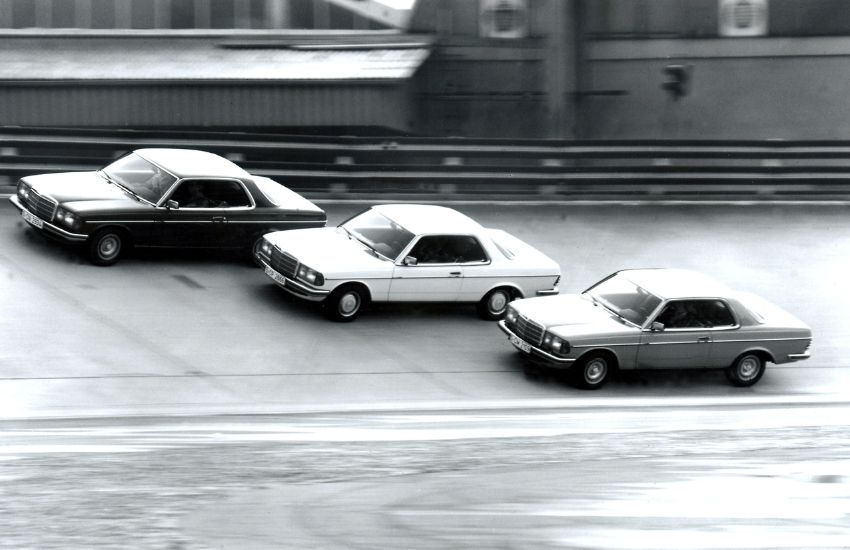
Launched in 1976, the Mercedes-Benz W123 went on to prove what a great Mercedes-Benz is supposed to be like. Its prolonged use as a taxi in markets like Africa proved the car’s ability to handle just about everything, while its emergence as a veritable classic shows that nearly no one is unaffected by the phenomenon the 123 series turned out to be. Following the brief introduction of the car in the part 1 of this feature, we take a look at what makes the 123 easy to live with, especially as a classic.
Swathed in your choice of material (from the hard-wearing MB-Tex, cloth, leather, to even the ultra-fancy velour), it’s highly unlikely to talk about the W123 and not get nostalgic about its cabin. The capacious interior wouldn’t just enable its occupants to travel in maximum comfort, owing to Mercedes-Benz’s continued focus on safety, it would also ensure they’re safely cocooned in the unfortunate event of a collision. The passenger cell was stronger than its predecessor, benefitting from crumple zones, the large padded steering wheel was complemented by a collapsible feature, and ABS was offered as an option on later models.
Mechanically, the 123 shared many things with the preceding Stroke Eight, including the platform, its engine range, etc. But at the same time Mercedes-Benz managed to pass on many of the S-Class novelties to the new middleweight challenger. The W123 also got disc brakes on all four corners, a semi-trailing arm rear axle and a double wishbone front suspension.
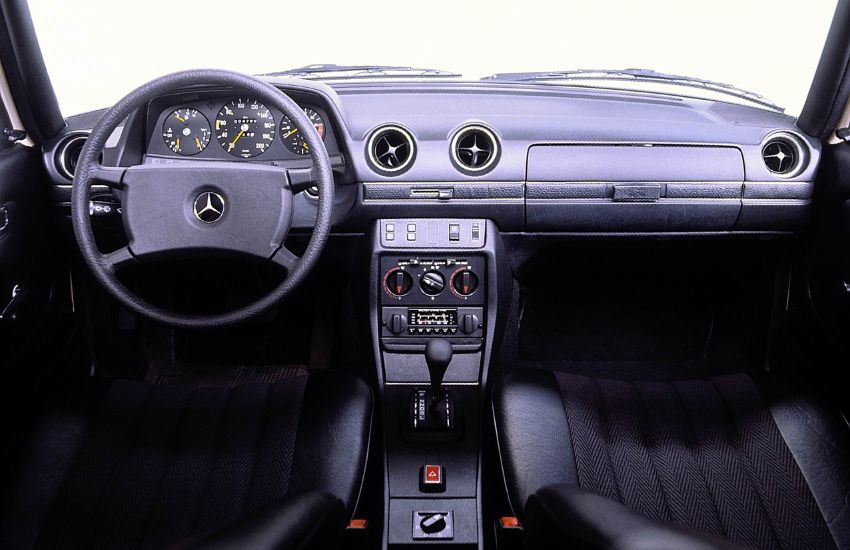
From behind the wheel, the 123 series is a revelation. It’s approachable, and despite its age, a well-maintained example is unlikely to feel antique. There’s of course no soft-touch buttons or touchscreens to whet your appetite for tech, but we reckon you’re unlikely to miss all that. The optional, variant-specific self-levelling suspension makes things better, but even in the standard spec, it’s impossible to ignore how with complete suppleness the 123 rides. It’s hardly a surprise these things tend to brave nearly all kinds of road surfaces without missing a beat.
The 123 isn’t quite the kind of car which likes to be rushed; it can maintain decent speed and cruise all day long, but traffic light GPs aren’t exactly what you’d enjoy in one. But at the same time, it’s not exactly delicate; just that its approach to making progress is vastly different from say a BMW of the same vintage.
With about 2.7 million cars produced, part availability isn’t exactly an issue like you would face with some of the preceding models. Making its case even stronger is the ever-strengthening presence of specialists who can take care of the car. Running it everyday is unlikely to be a challenge, especially with amenities like disc brakes, optional ABS, climate control, etc. If cared for well, a 123 series car is expected to run trouble-free for ages, and with reliability in its favour, buying, working on, and eventually driving a 123 regularly is not going to be a regrettable experience.
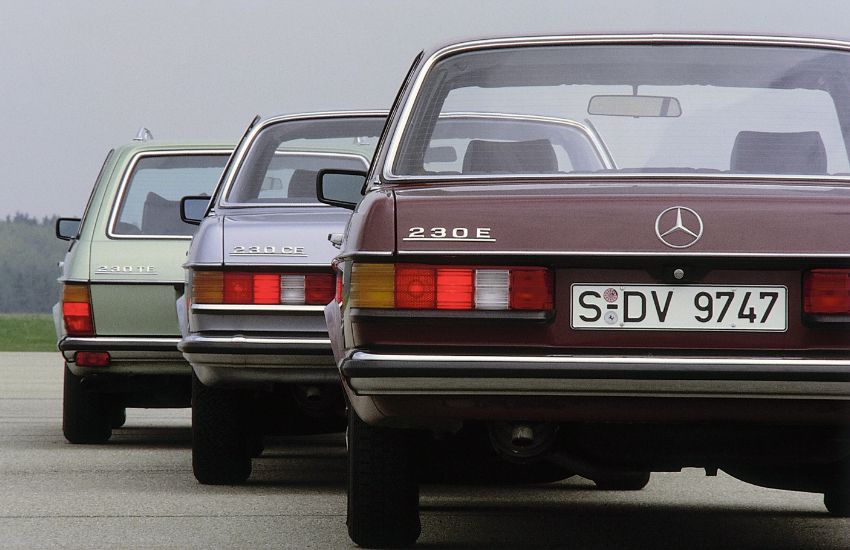
Where the W123 — or any of the 123 series cars, for that matter — gets a definite stamp of approval is in the way its residuals have stayed strong. You can still start with an acceptable car from under £10k, but well-maintained cars with history are likely to be about twice that. Getting the right car is crucial, and keeping an eye on values is a good starting point. The 123 Coupes, which were more expensive than other versions, can still command a premium, and so is the case with 280Es.
The more practical — and more appealing, to many — estates are pretty sought after, too, and you’d be surprised that one of the most expensive 123s to be sold in the last few years, was an S123, at over £40k. A completely restored car by a specialist is going to fetch more money, and the same can be said about examples with the right options ticked — or even AMG parts. The regular AMG upgrade was advertised to make the straight-six more powerful, but engine swaps weren’t ruled out, either: AMG did a handful of V8-engined estates, too.
The biggest pitfall here can be rust, but with improved rust protection somewhere in the midst of its life, the later examples are known to be much better. If you’re ready to buy a W123, it’s crucial that you don’t just rely on the MoT data but conduct a thorough check as well. Dashboard cracks can occur in certain climates, so it’s a good idea to keep an eye on that, too.
If you’re going ahead with a full restoration, the roster will include replacement of rubber seals, etc., but ageing rubber and plastic is an issue common with every ageing car and is not limited to a five-decade-old Mercedes-Benz. Some parts or components might be difficult to source, like the self-levelling suspension. In many cases, you might find it easier to get the existing part rebuilt rather than sourcing an entirely new component. The Internet might make you believe that working on the K-Jet fuel injection would be a challenge, but as long as you have a specialist well-versed with these, you don’t have to scour online for what could possibly go wrong with it.
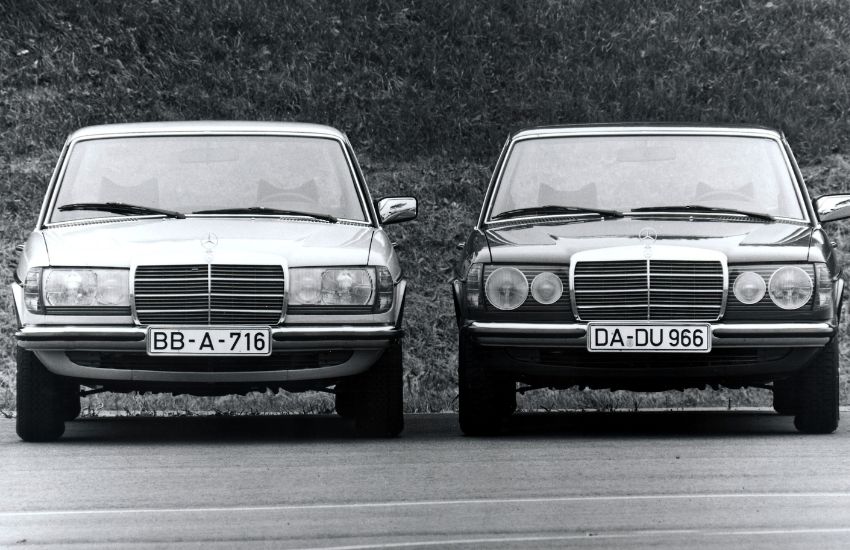
Between petrol and diesel, it might seem more sensible to choose the latter, owing to the decent torque and relatively fewer possible issues. Petrol W123s will always charm — in any flavour — and if it’s going to be occasional use, these must be considered, too. Previously, you could make out from the headlamps if it’s a larger-engined car (petrol and diesel) or a lower-spec, four-cylinder. A mid-life facelift changed that, but trained eyes can still point out the difference.
Mercedes-Benz wasn’t going to take chances with the 123, and it shows. It mightn’t be the one car that does it all, but whatever it does, you can bet it’s rather excellent at it. A well-engineered car, the 123 fares well, even after fifty years. Timeless.
Read Part 1 here.
Insure your classic with a specialist insurer
If you’re looking for cover for your pride and joy, why not consider Hagerty UK? Not only are we classic car insurance specialists, but we are enthusiasts at heart. Call us for a quote on 0333 323 1138.