Author: Dan Cogger
Photography: Freddie Atkins (@tfjj), Bamford Watch Department, The Peninsula London, Huntsman and the Royal Automobile Club
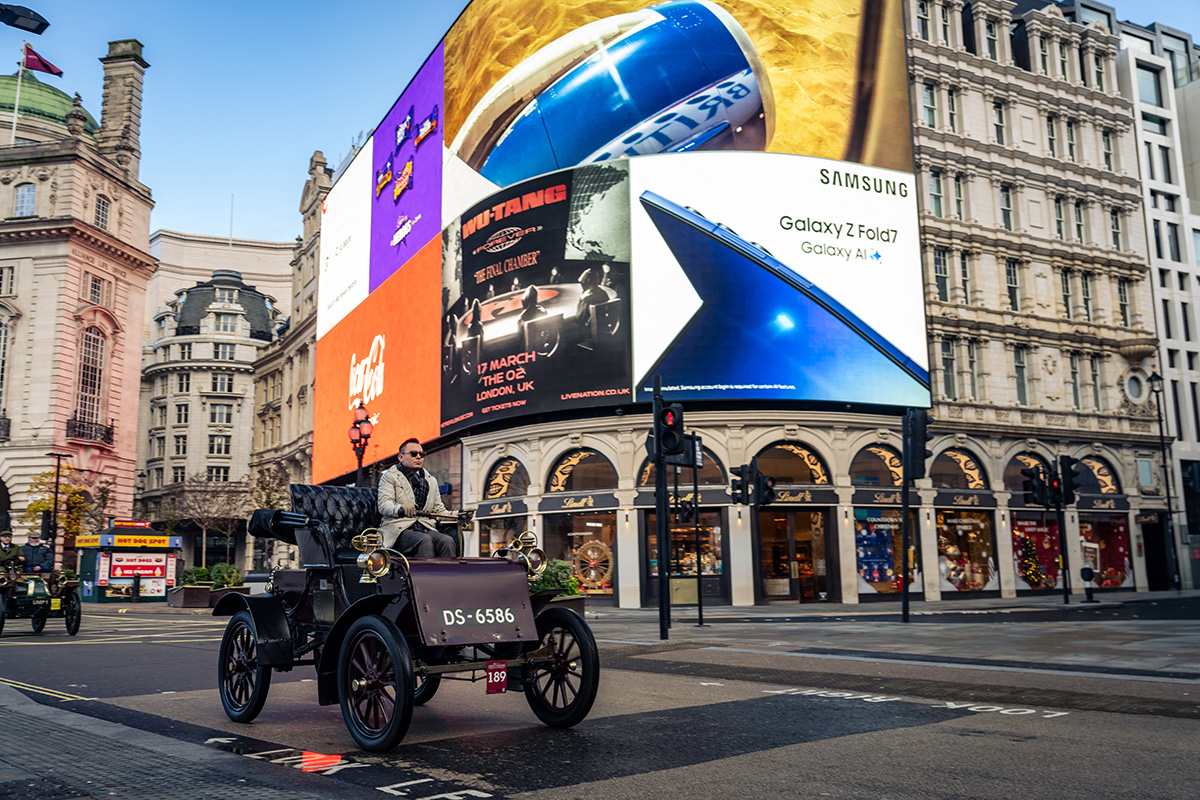
Driving in London is often tedious, sometimes stressful and almost always unenjoyable. Our capital is fast becoming a city rebuilt in spite of the motorcar, rather than evolving as one that has been shaped by it for the last 130-years. Even though the London Underground’s success has made driving largely unnecessary for quite some time, there is still something special about driving in the city. As such there is fierce debate as to what the perfect ‘London car’ might be.
During the planning of Hagerty’s entry into the 2026 London to Brighton Veteran Car Run, we set out to find if the answer could be found in something from the pages of automotive pre-history.
Reliable constants are crucial in any experiment and we were grateful to have The Peninsula London as our base throughout. This jewel in Sir Michael Kadoorie’s illustrious portfolio of hotels conceived a package for this year’s London Motor Week which catered to the needs of Veteran Car Run entrants in unique style. For starters, this highly amenable solution overcame the challenge of finding secure overnight parking in London. No easy feat given the height of many veteran cars and their often limited ability to tackle steep gradients, both up and down. Assuming you won’t be decapitated on entry to most of London’s underground car parks, sitting well above 2m high in some cases, the ramp to the subterranean may be so steep that the descent becomes a terrifying test of nerve and brakes.
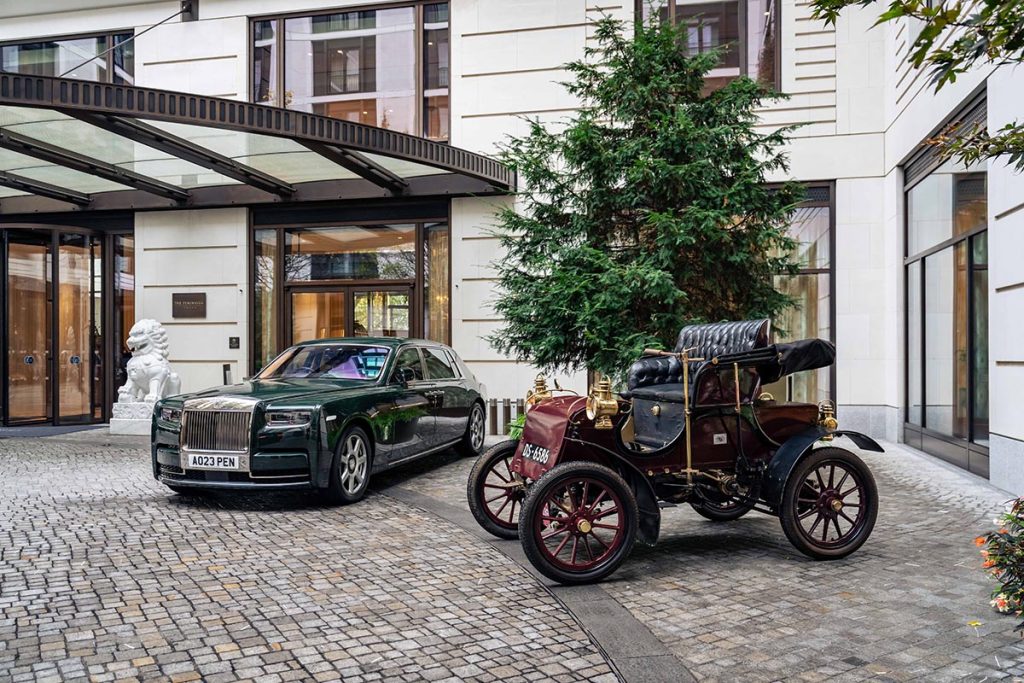
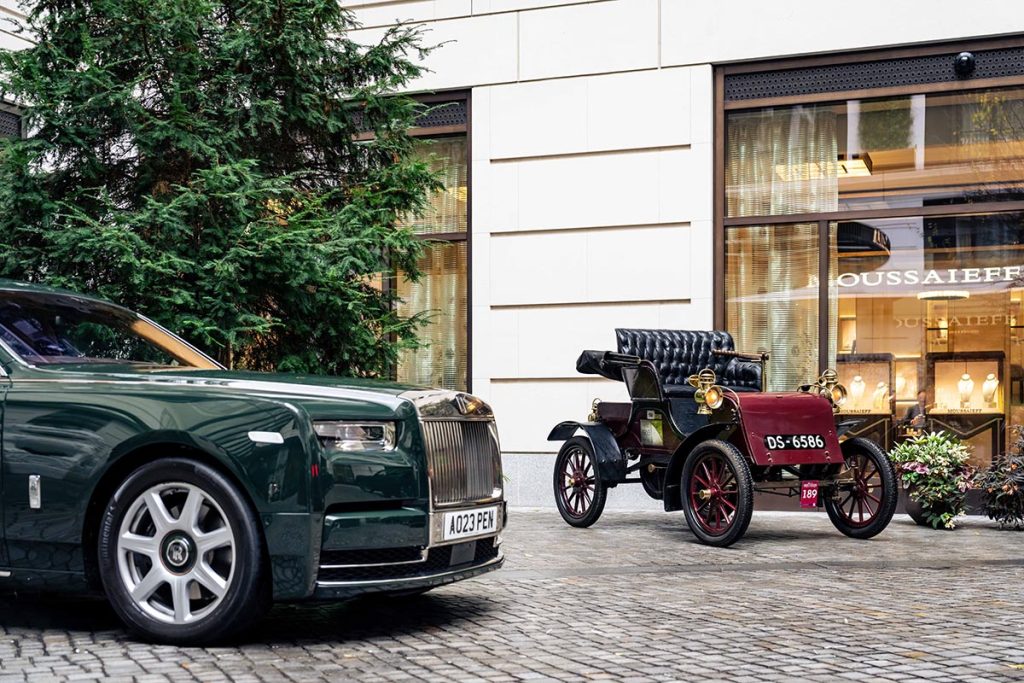
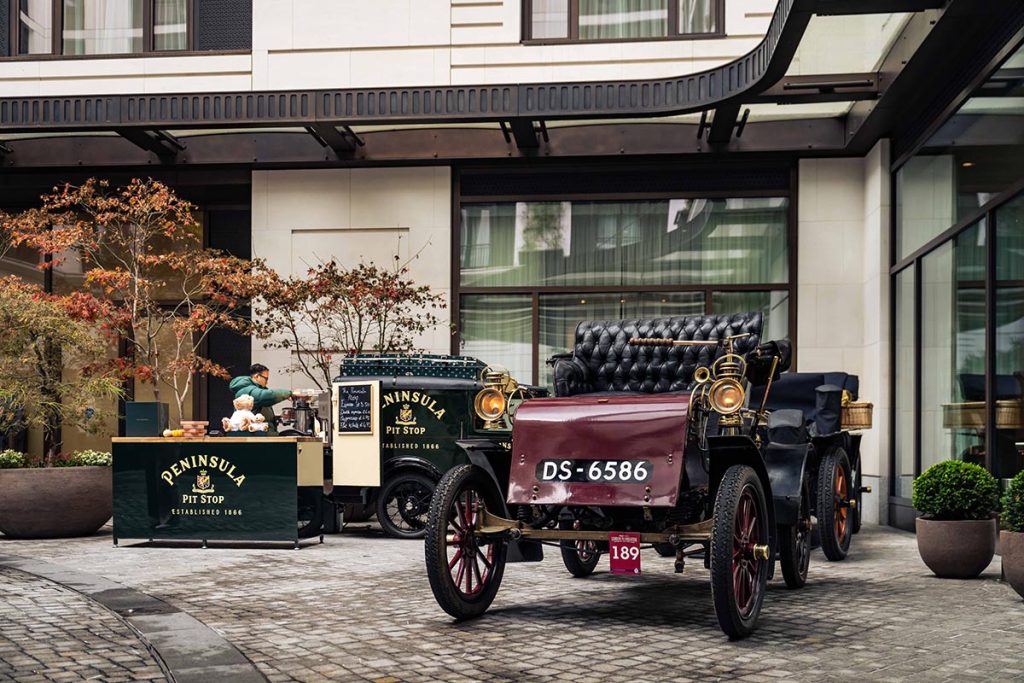
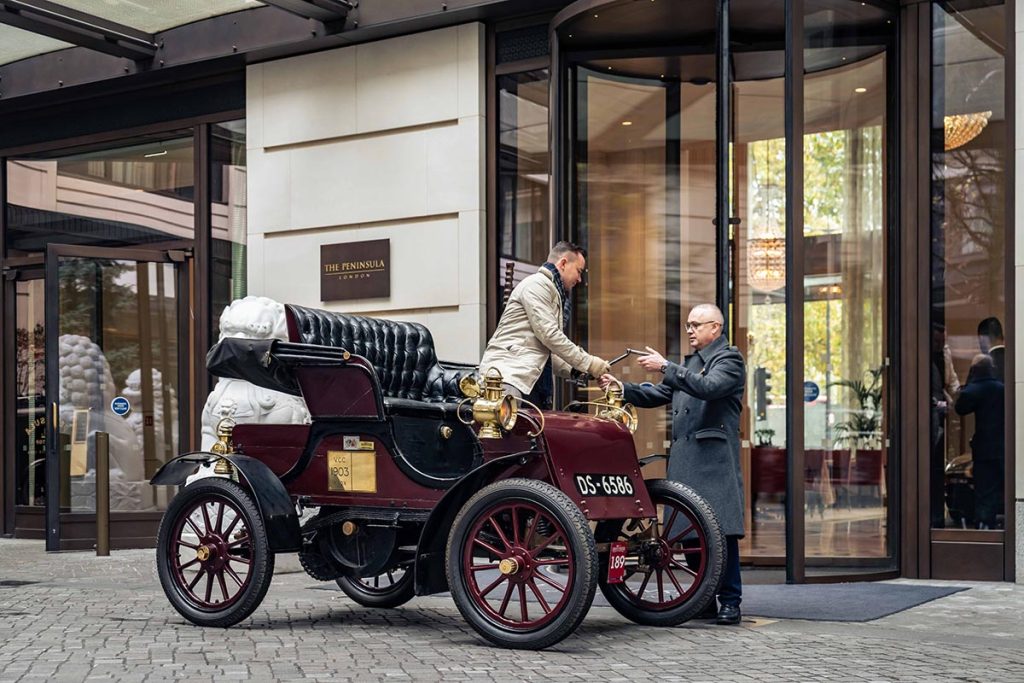
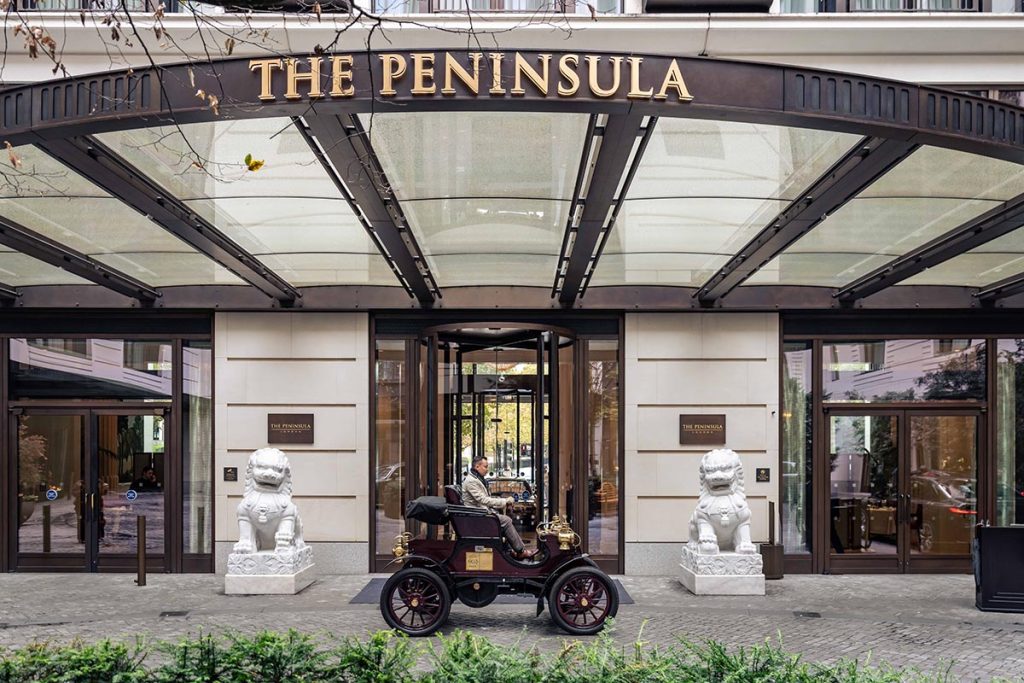
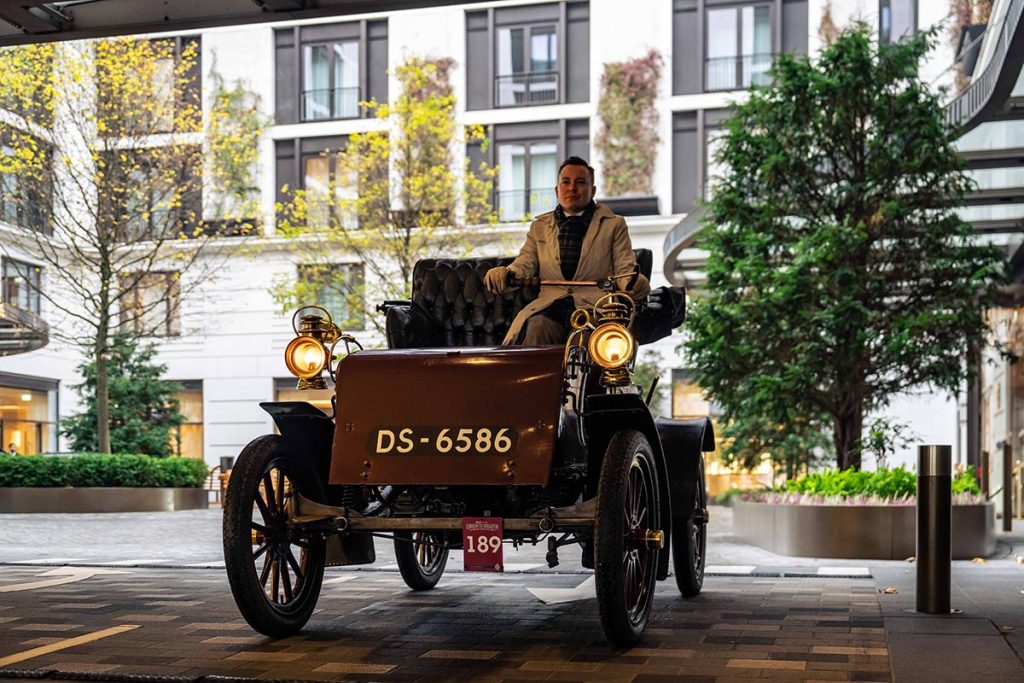
Sir Michael is no stranger to the trials of vintage and veteran motoring, the Pebble Beach Concours Best of Show winner and veteran of the Veteran Car Run has curated one of the world’s finest collections. The knowledge accumulated over decades of passion and thousands of miles did not go to waste in building London’s first billion-dollar hotel, and cars from Sir Michael’s own stable were used to develop the car park’s dimensions and gradients. ‘Attention to detail’ doesn’t quite do it justice.
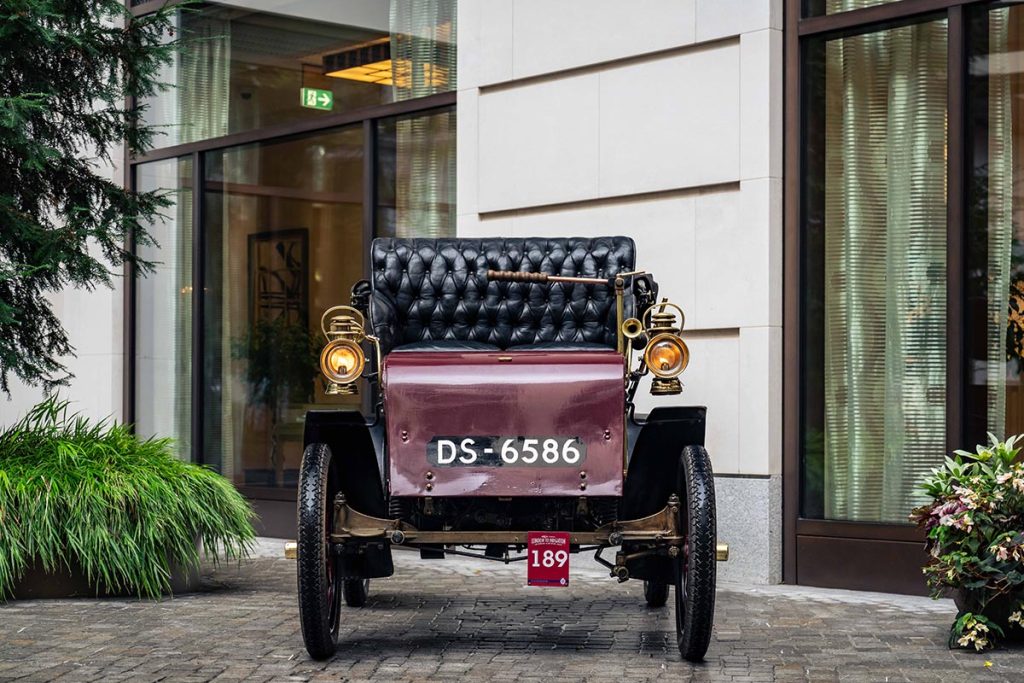
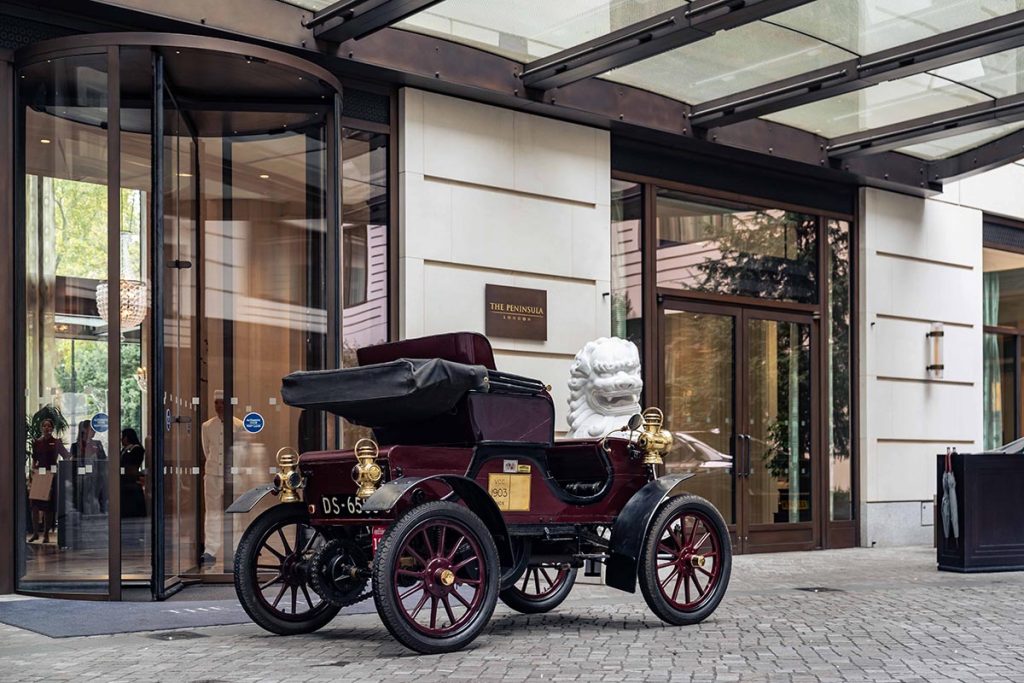
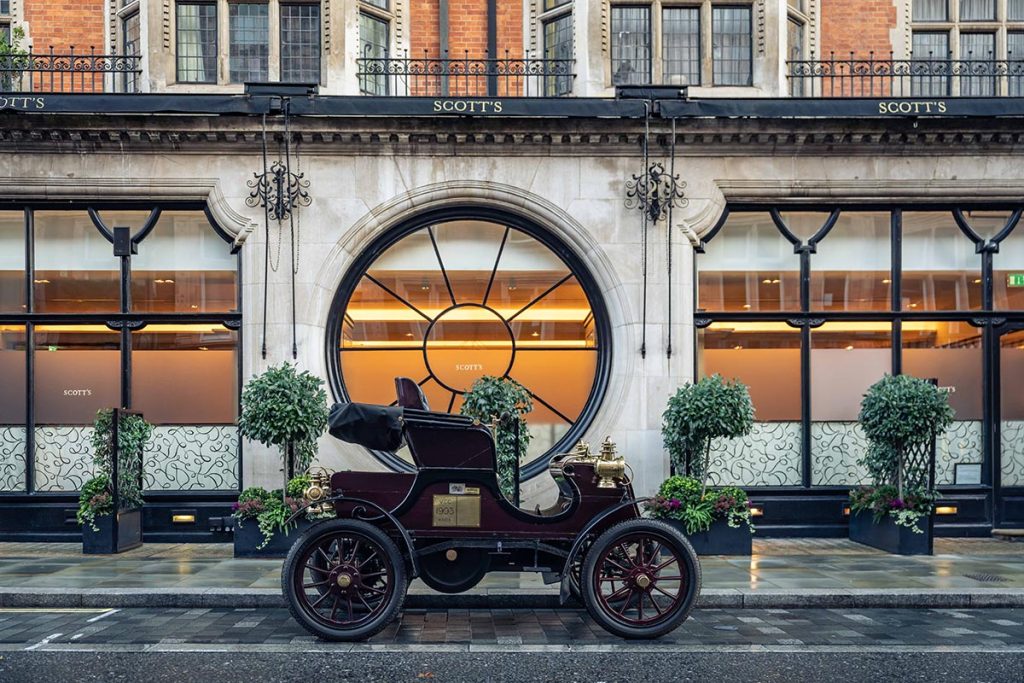
And so what of the machine which will help answer our question? Built in Massachusetts in 1903 this Knox Model C has been a part of the Hagerty Learning Garage for the thick end of a decade. It is the company’s mount for the ‘Run and serves year-round as an educational tool for members of Hagerty’s UK team, who wish to experience a car from a bygone age.
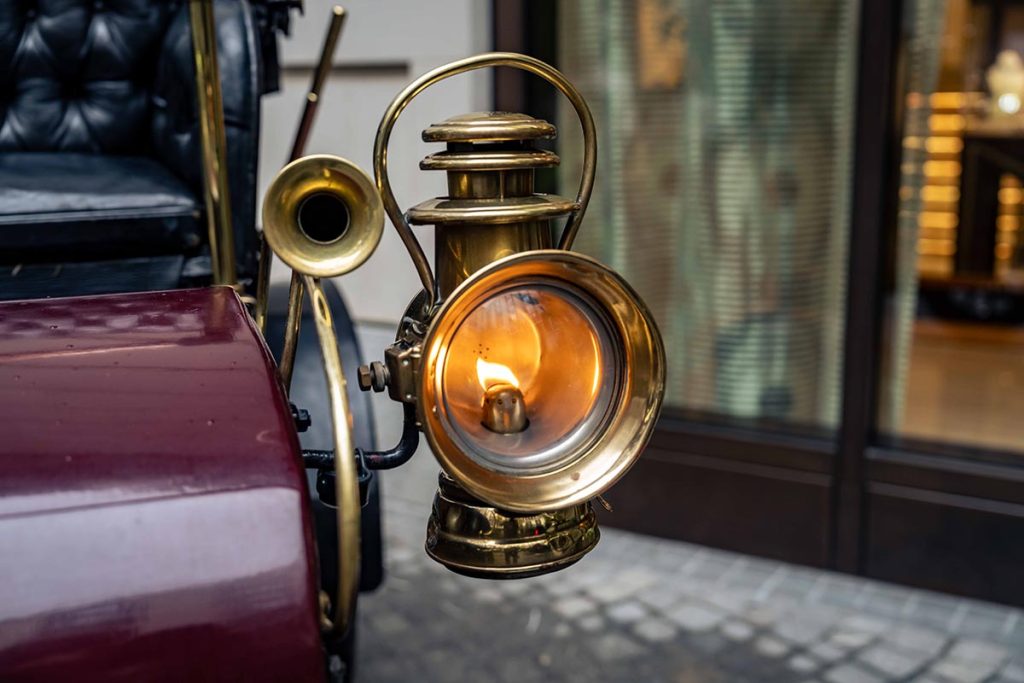
By the European standards of the day, the Knox was somewhat antiquated even when it was new. Steering is via the tiller that is mounted onto the brass control column to the driver’s left, which also houses both the throttle lever and the gear selector. With an external handbrake also on that side, it means that your left hand is kept rather busy. Don’t let the floor mounted pedals fool you: neither is an accelerator or a clutch. The left pedal engages reverse gear and the right applies the transmission brake. There is no clutch as the Knox runs an epicyclic gearbox, with the 2.2-litre single-cylinder engine driving bands rather than cogs and power – all 8hp of it – delivered to the rear via a monster single chain. Despite the alien sounding nature of all of this it is a remarkably simple car to drive, as proven by many of the Hagerty staff. Its Stanhope-style and buggy-like body rides high on two primitive leaf springs, one running each length of the chassis and, for the brave, a front clamshell opens to reveal an extra bench seat for either one or two well-acquainted additional passengers.

To find out if the Knox could be the ultimate London car, we had to do some driving to prove it. And, rather than an aimless amble, we plotted a course to see some friends we thought might share our vision. First up was George Bamford’s eponymous Watch Department.
Hailing from the family of arguably Britain’s greatest engineering export, JCB, George has grown up around machinery. His father, Lord Bamford, requires no introduction in automotive circles. George lives and breathes engineering too, with a stunning collection of his own and business more aligned with automotive than you might think. Where Eagle and Singer will reengineer an E-Type or 911 for your garage, Bamford Watch Department has generated global renown for reimagining a Chopard or Tag Heuer for your wrist.
We approach BWD from Park Lane where, perched high on the bench seat, the visibility is impeccable; photographer Freddie Atkins and I find novelty in noticing wet leaves stuck to the roof of a passing Range Rover. Peeling off the main drag at the Dorchester Hotel we’re stopped at a red light, where pedestrians get a great view of us too and are too preoccupied with the Knox’s peculiarities to chance a last-minute crossing as the lights change to green. The road empties ahead of the Knox as its single cylinder thump quickens and its speed builds, for no-one on foot wishes to be in its way.
Owing to an enormous building project opposite, parking is suspended outside BWD and it means that our visit will be brief. On this now narrowed part of the street, we’re thankful of the Knox’s small footprint. The cleverly packaged occasional seating means that the body has no unnecessary overhangs and, able to be tucked in tight to the kerb courtesy of the fisheye view of all four corners, the Knox causes no grief to the lorries arriving for the works over the road.
Simon Chambers greets us and is generous enough to show us some of BWD’s latest offerings including a GMT Titanium Heritage and the Titanium B347, both of which are of the company’s own Swiss-made brand. The Claret coloured face of the B347 is a perfect match for the Knox’s bodywork, while the GMT’s two-tone bezel and Cordura racing-inspired strap are immediately appealing to most motorist’s aesthetic.
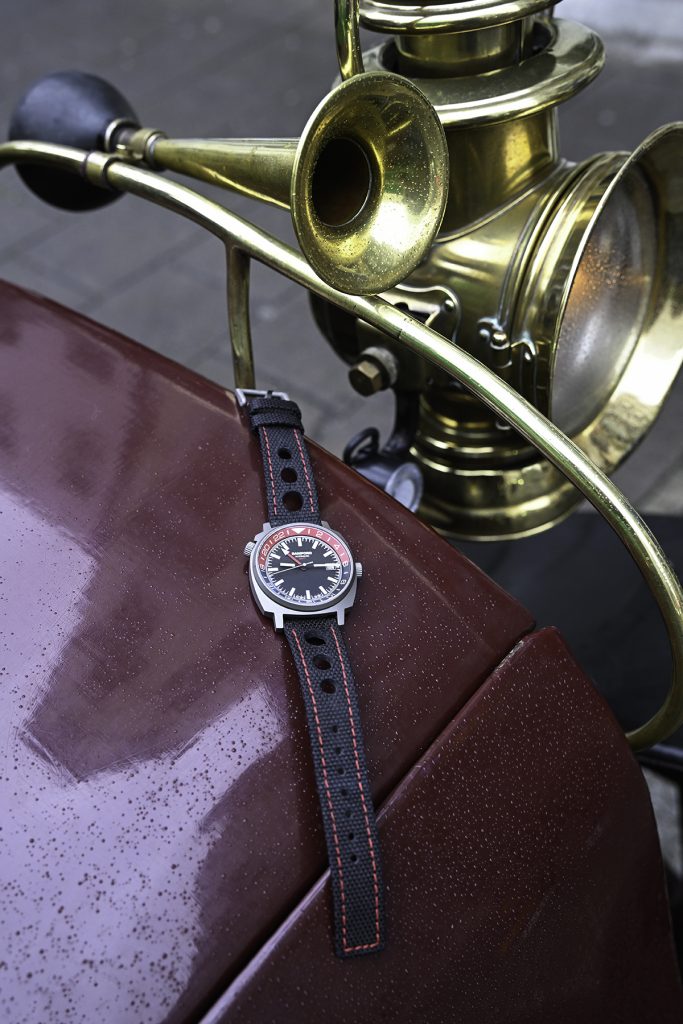
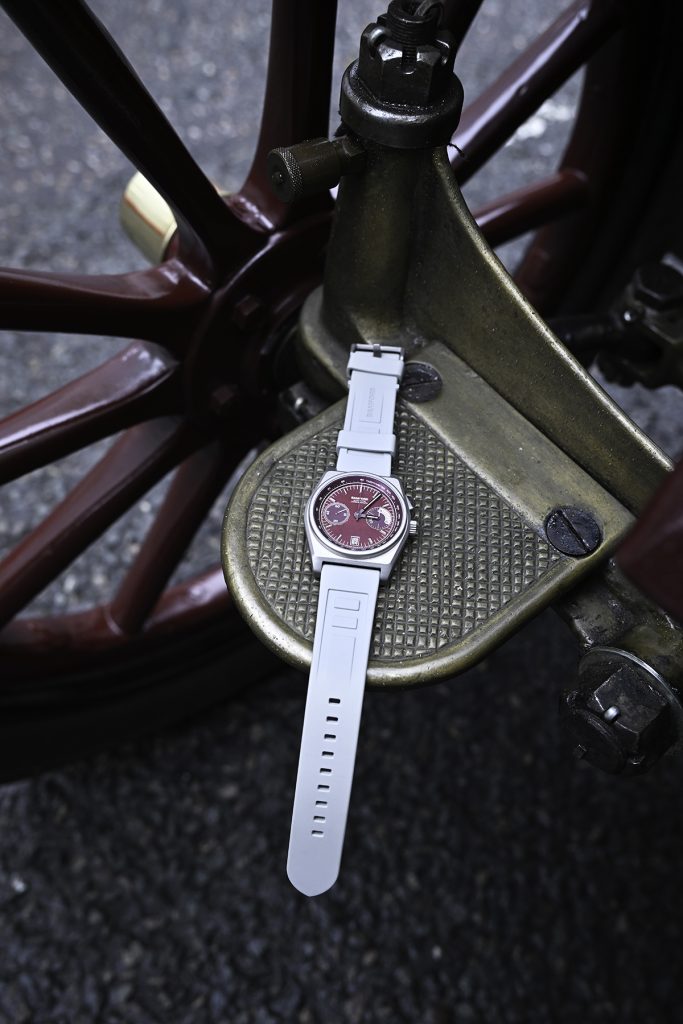
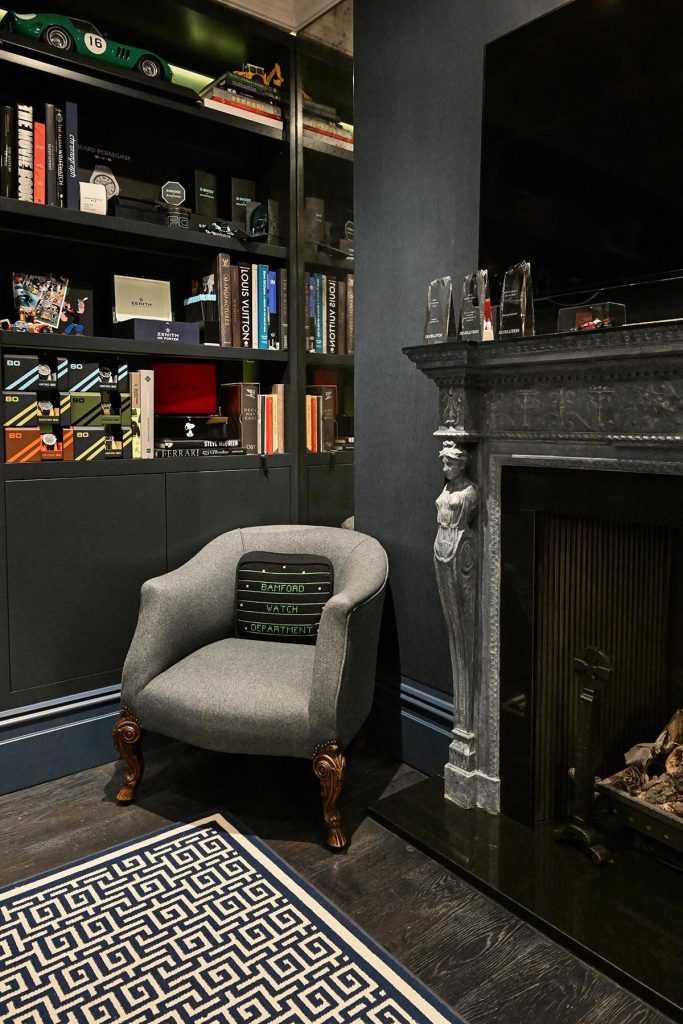
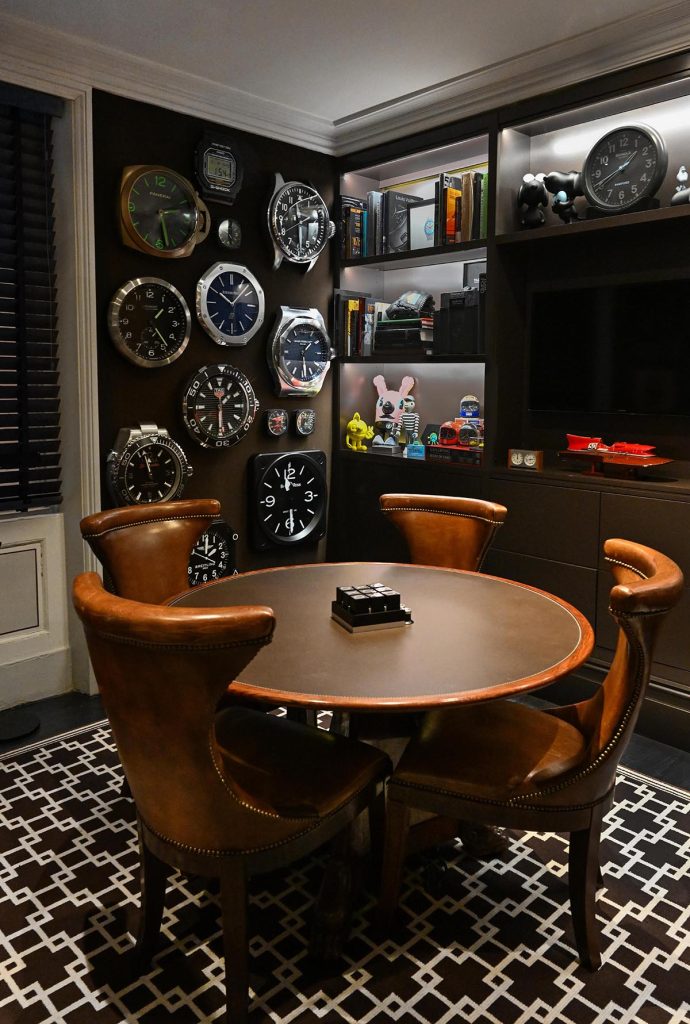
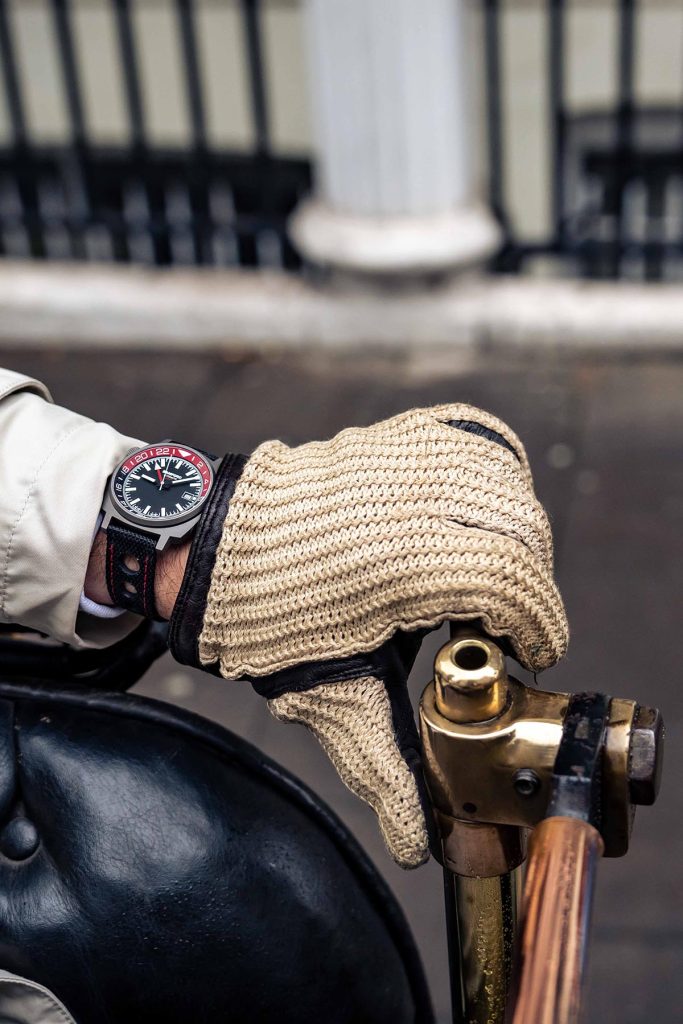
I had already prepared an “I’m sorry officer, it’s an old car and has broken down excuse”, in case we were asked to move on from South Audley Street. In the event, my excuse wasn’t needed but as we prepared to leave BWD the Knox did encounter a momentum-halting setback. The manual fuel tap had sheared… in the off position.
It is uncharacteristic of the Knox to be unreliable – later in the weekend it would notch up its 30th successful Brighton Run. Unable to fashion a solution at the roadside, Freddie and I decided we’d push the Knox back down Park Lane to a place of safety – The Peninsula, naturally. Against our earlier convictions, we can confirm that the Knox is heavier than it looks and that Park Lane is not as downhill as we remembered.
As luck would have it Gregg May of Autohistoric, the astounding team of engineers who look after the Knox and many other veteran cars besides, was heading to London imminently and would have us back up and running with a new brass tap fitted later that day. In the interim however, The Peninsula could keep us mobile with its world-famous green fleet: three Rolls-Royce Phantoms and a brace of BMWs, Bentleys and even classic motorcars for guests to get about. Although guests of a motoring persuasion would have few reasons to want to leave the hotel. Curated displays within The Peninsula for the week included both the David Hockney BMW 850 CSi art car from 1995, and the 1933 Napier Railton exhibited appropriately en route to the Brookland’s Bar.
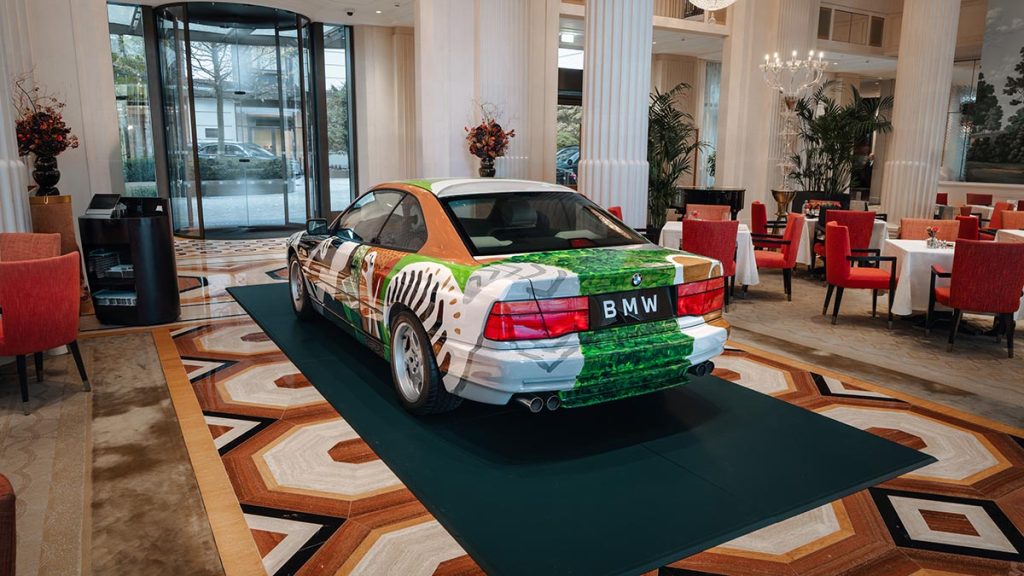

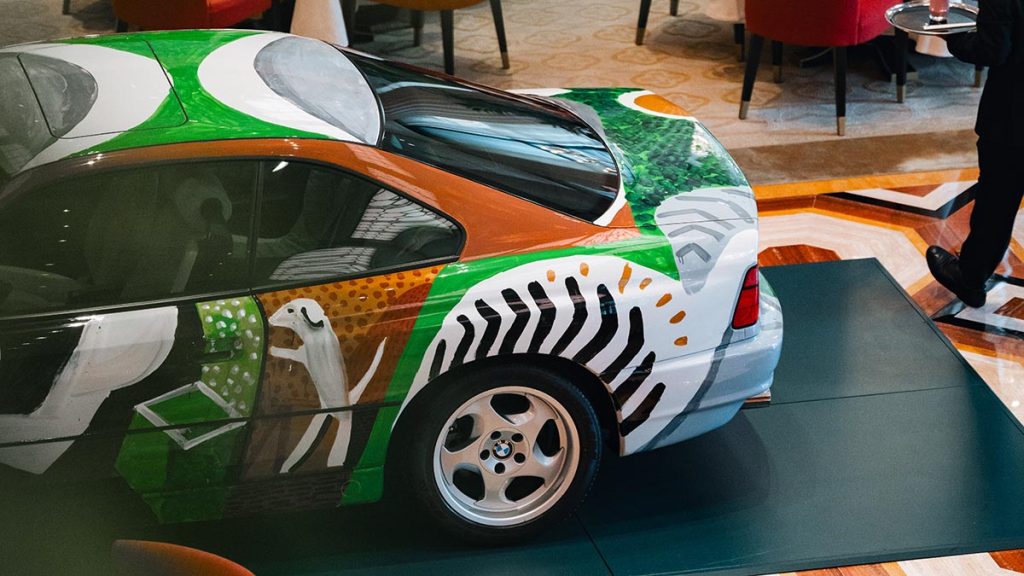

Although we had to cancel several visits while the Knox was out of action, Freddie and I were back on the road the following morning and had rescheduled a trip to Huntsman. The valet at The Connaught seemed much less interested by the selection of supercars under his care and gave us a hearty wave as Freddie and I chuntered through Mount Street and into Berkeley Square with the Knox. Hard to believe, I know, but this two-storey Chesterfield stole more attention from the Square’s combined emporiums of Bentley, Bugatti, Ferrari and Lamborghini.
The Knox’s attention-grabbing phenomenon is one that Freddie acknowledges, confirming that he’s not known anything to turn as many heads. Given that he has accrued 650k followers on Instagram, largely through the photography of supercars in London, he’s more than qualified to say. The city’s supercar scene is long established and at a point now where McLaren F1s, Veyrons and even 250 GTOs are not hard to find. In the Knox, or any veteran for that matter, you’re in a class of one.
The difficulty with supercars is adhering to London’s pedestrian 20mph speed limit. Any Pagani, Ferrari or even a hot hatch will do 40mph at tick-over. Trying to drive slowly in anything modern and remotely high performance is both difficult and distracting.
Here again the Knox comes to the fore with its epicyclic gearbox and modest top speed. Firstly the clutchless swapping of bands eradicates the embarrassing noise of graunched gears which accompanies most pre-1940 cars, and the humble apologies that usually follow from the driver. And secondly, while there may only be two forward speeds with a creeper first gear and a longer-legged top gear, the engine’s impressive torque means that most of London’s flat terrain is accomplished in top gear. A cruising speed of around 25mph is effortless and easily moderated with the hand throttle. With that 20mph speed limit, the Knox fails to be a source of delay and happily keeps pace with the traffic.

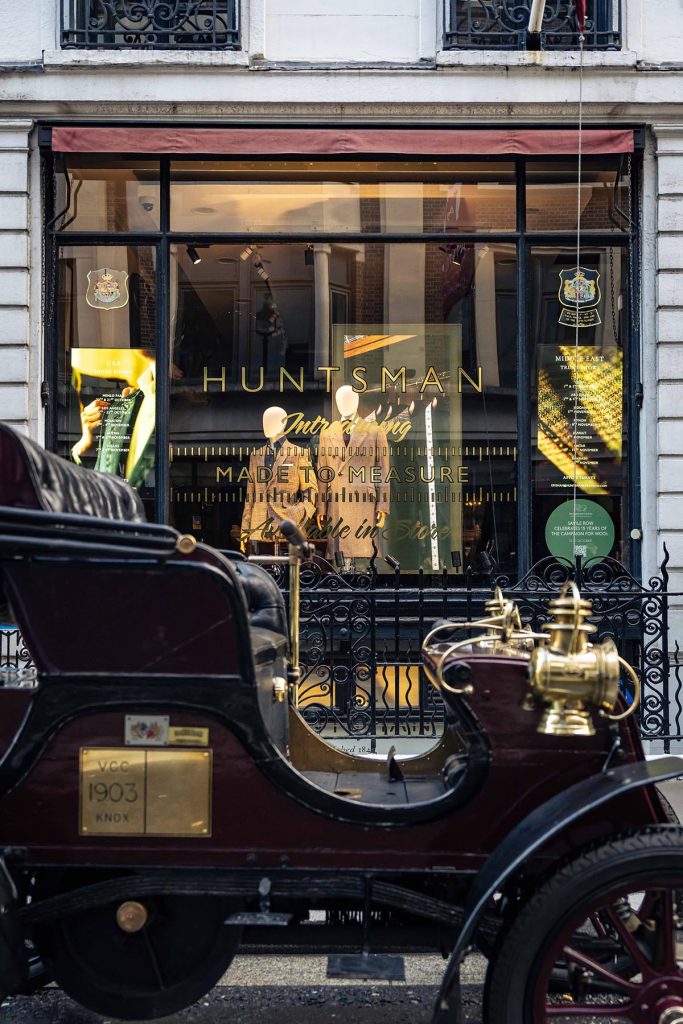
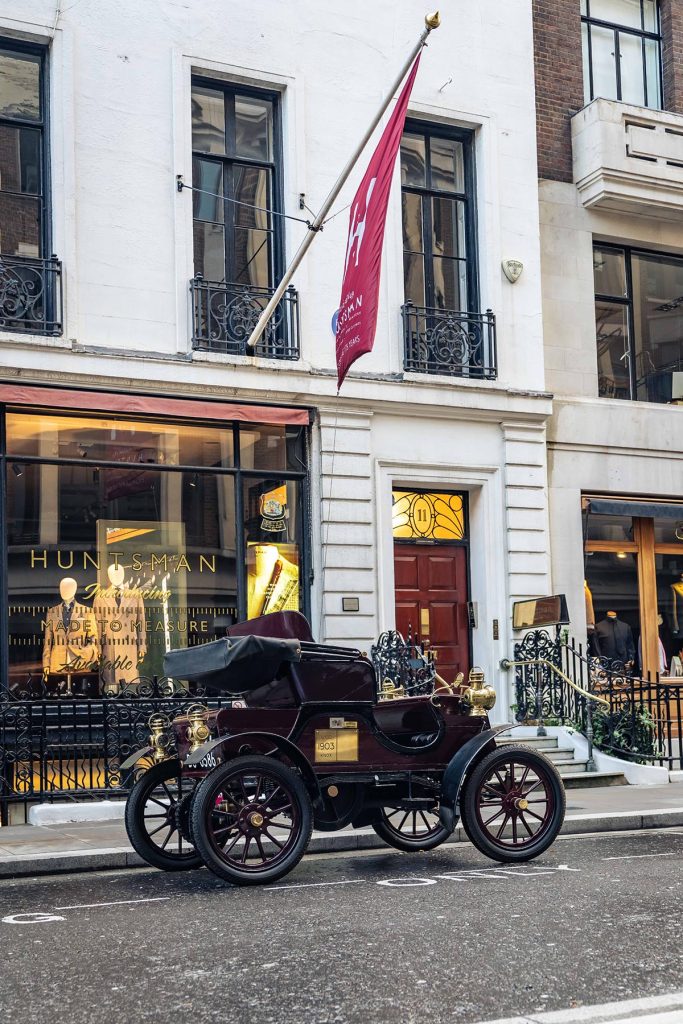
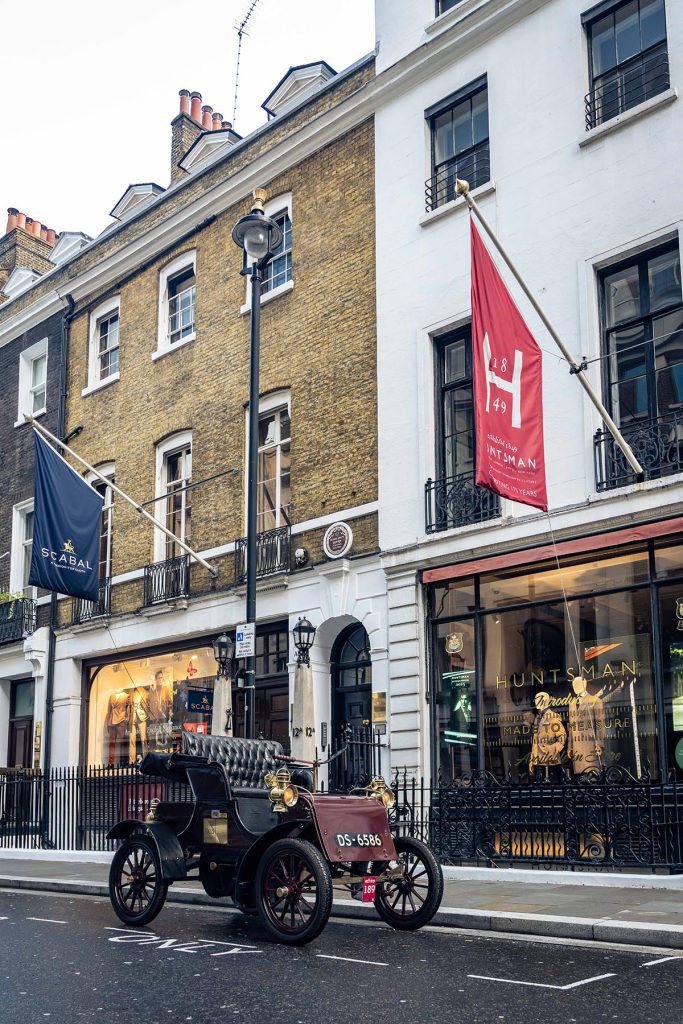
Savile Row is barely waking up as the Knox’s baseline thwack begins to rattle the glazing along its shopfronts, providing a tempo for a team of construction workers who begin singing Chitty Chitty Bang Bang at us. The open-air nature of veteran motoring allows us to join in. Everyone loves the Knox and, particularly in London, it is a refreshingly sociable way to travel.
Huntsman are old friends of Hagerty, having been partnered together for the Concours on Savile Row since the event’s inauguration. Together we have reunited the ‘Row with the Kingsman E-Type and honoured the Rolling Stones drummer Charlie Watts, who had an unbeatable eye for both Lagondas and tailoring. Even before the Concours came to its doorstep, Huntsman was no stranger to automotive and has collaborated with the likes of Bentley and GMA, not to mention trimming one of the original Aston Martin DB5 Shooting Brakes.
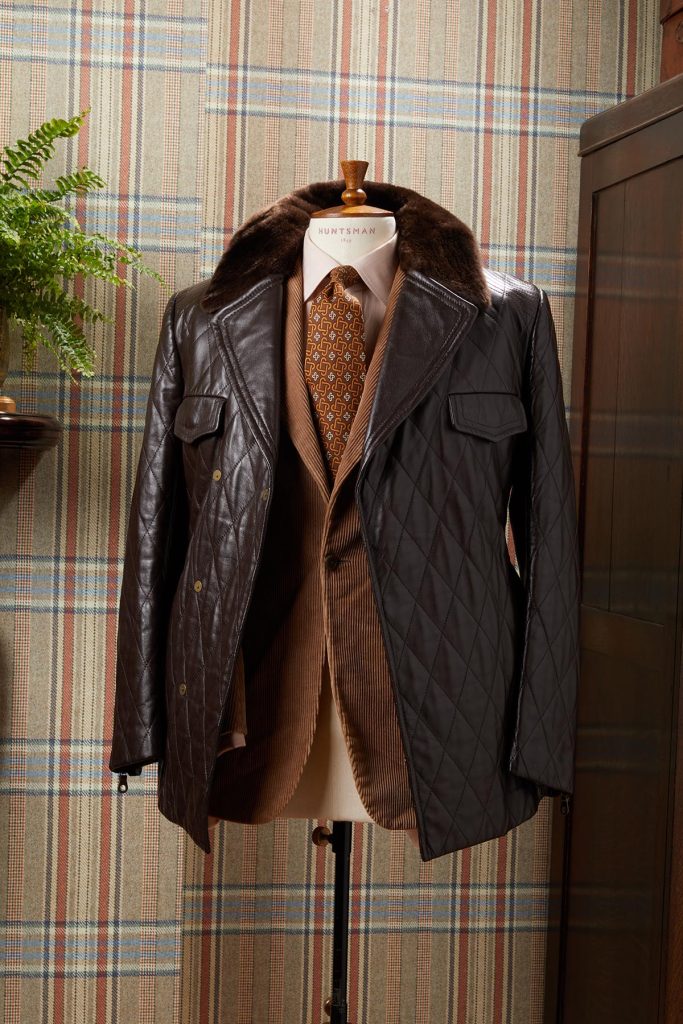
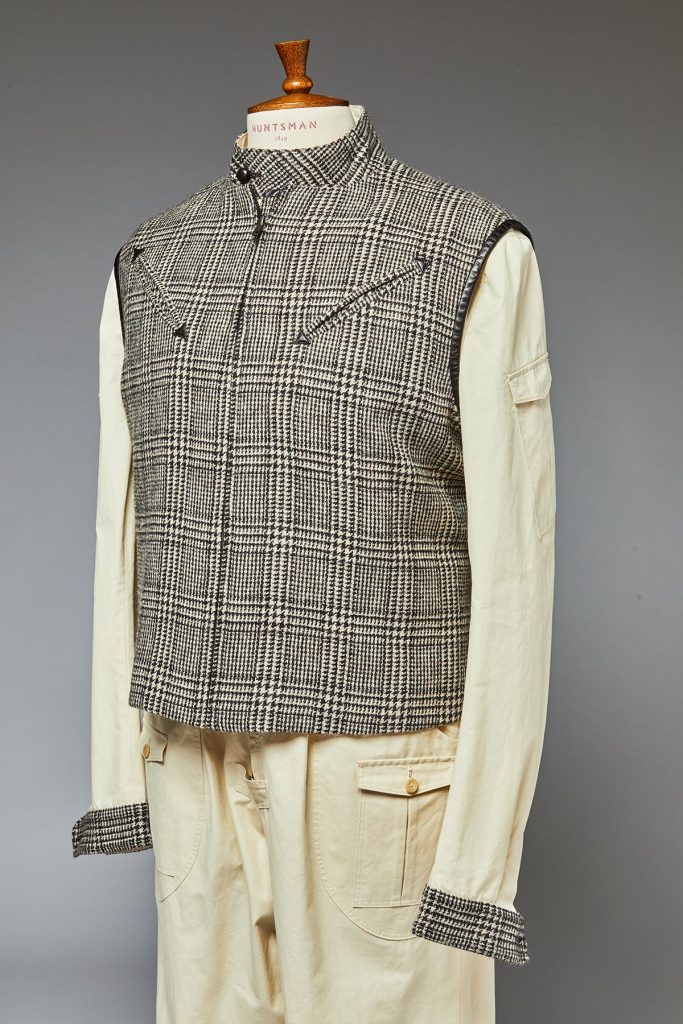
For the ultimate motoring enthusiast Huntsman will go a step further, as Johnny Wooding shows us. For industrial design guru and car enthusiast Marc Newson, Huntsman created a bespoke driving suit for his Mille Miglia entry in 2016. Inspired by the motorsport attire of the 1950s, but incorporating Huntman’s signature style, the suit’s lightweight and weatherproof fabrics were chosen for ultimate durability over the course of the event’s 1,000 miles. There can’t be many suits built to withstand the cabin heat of a Ferrari 857S as well the Mille Miglia’s legendary rainfall.
Given the forecast for the start of the Veteran Car Run on the Sunday ahead is for a downpour, we suggest that Huntsman’s incredibly fine leather flying coat may be more appropriate.
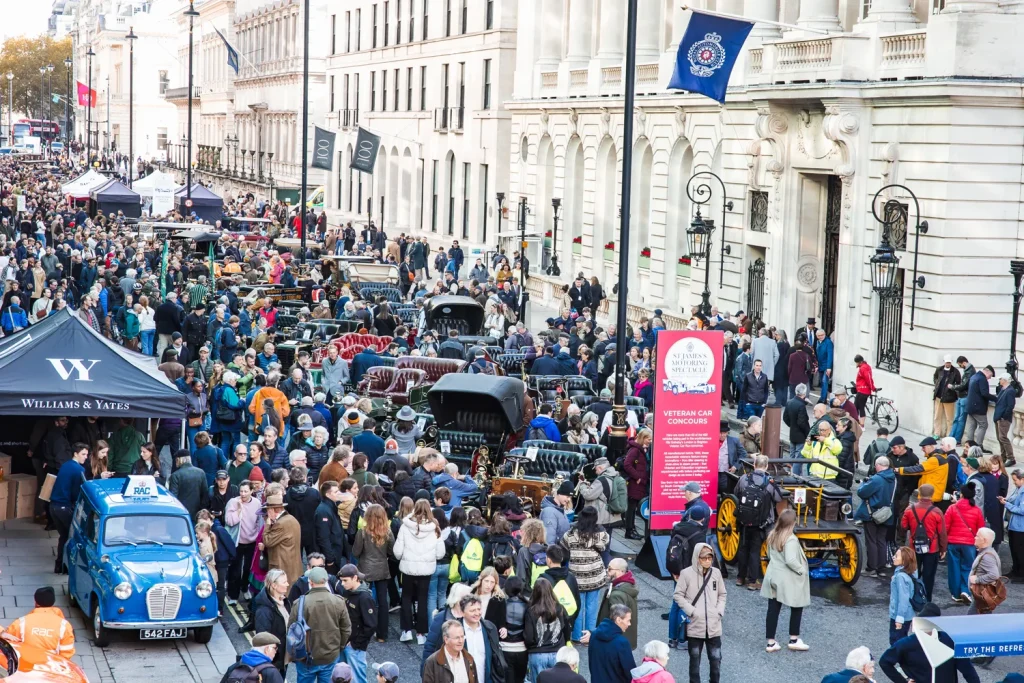
Leaving Savile Row, our next appointment is at the Royal Automobile Club on Pall Mall. In more recent years the Club has brought the organisation for the Veteran Car Run completely in-house and London Motor Week, as it is now known, is centred around its impressive Clubhouse. Throughout the week the Club hosts seminars, talks and exhibitions, while on the Saturday it shuts Pall Mall down entirely for the St. James’s Motoring Spectacle. Having spent more time admiring Huntsman’s atelier than planned, which is not difficult, it would be easy to fear that the building traffic leading up to Pall Mall will lead to inevitable issues for our 122-year old car.
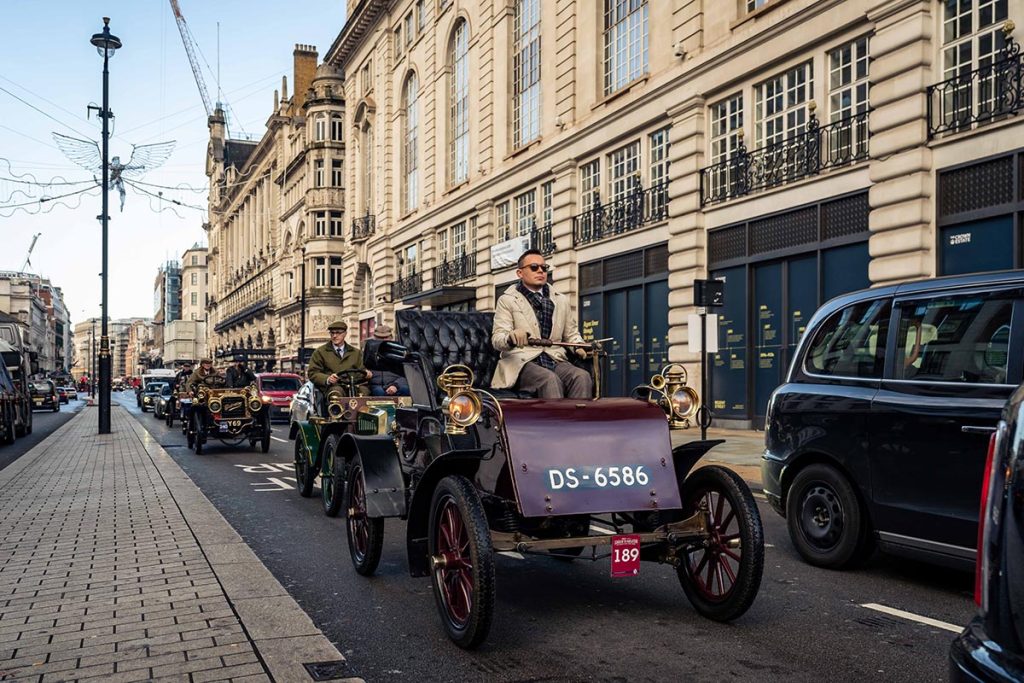
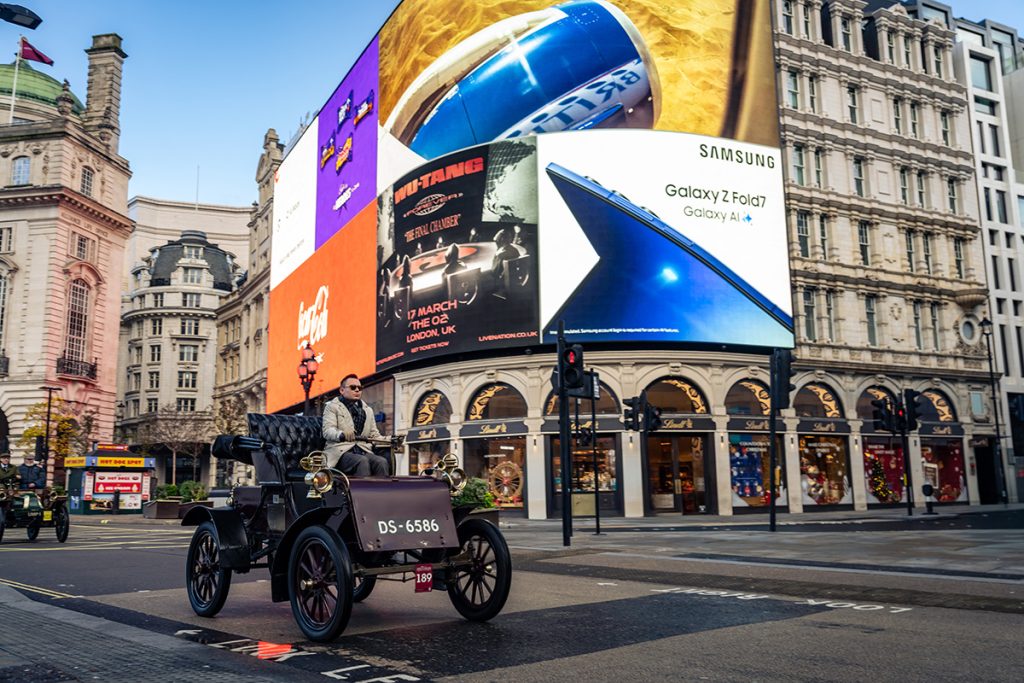
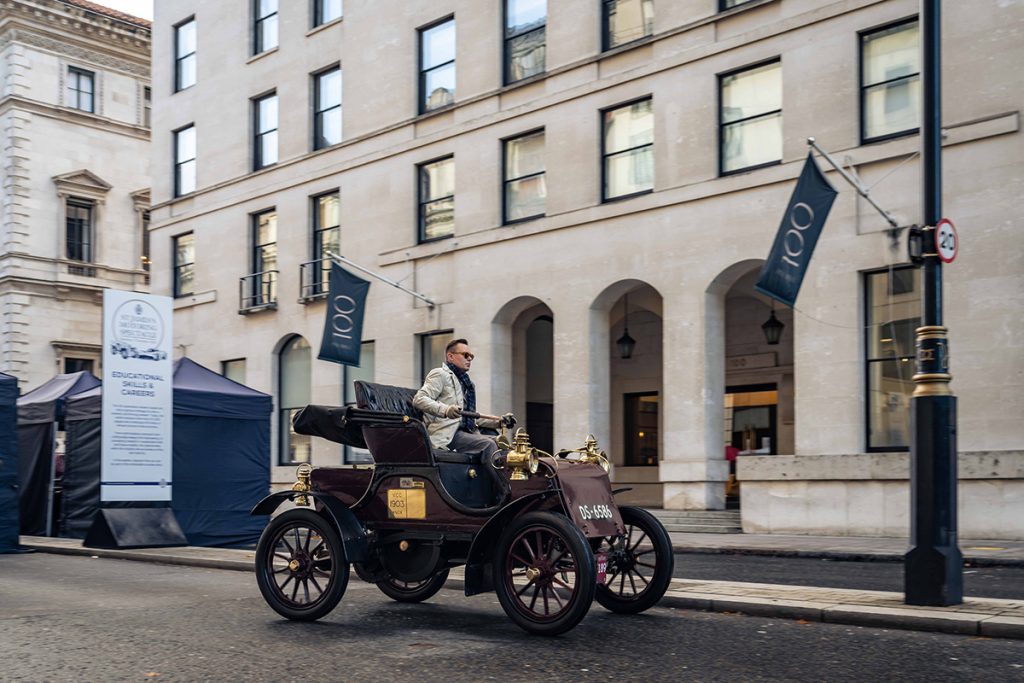
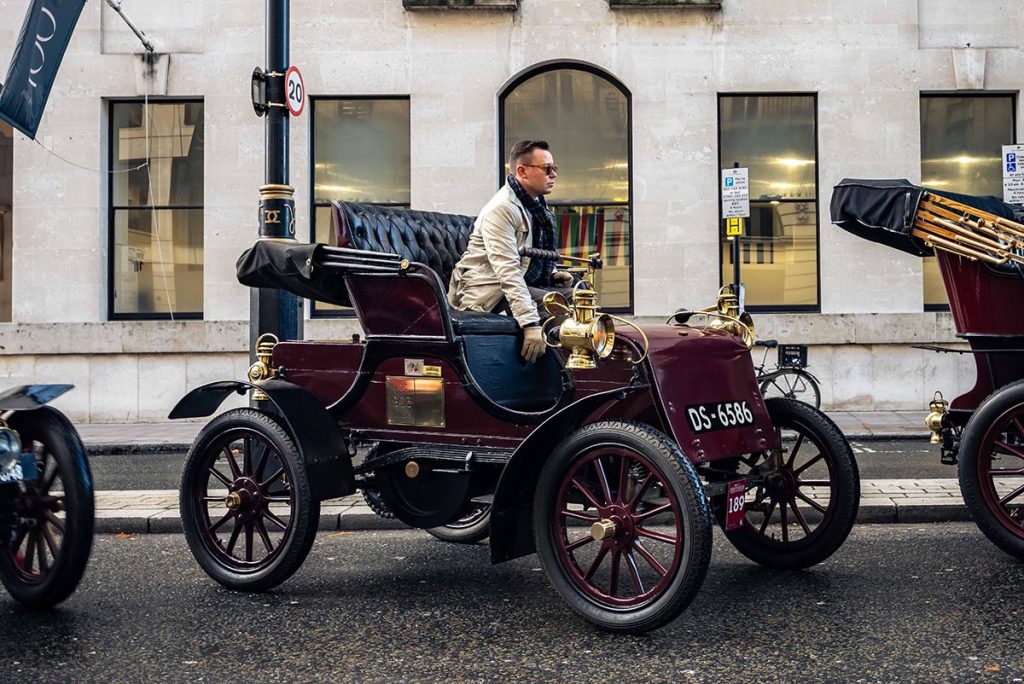
In this regard, Knox was a real forward thinker and developed the world’s first production air-cooled engine. So there is no chance of seeing steam springing from the radiator: the Model C doesn’t have one. Instead the Knox receives a wash of cool air from a belt driven fan, while heat is dispersed through the network of some 800+ studs emanating from the cylinder casing. This distinctive engine is mid-mounted under the floorboards and children of the 1990’s like me cannot unsee the obvious resemblance to a ravished cheese and pineapple hedgehog after a birthday party. Knox enthusiasts have forever referred to it as ‘old porcupine’ however. As Freddie and I approach Piccadilly, we’re joined by several other veteran cars and lead what feels like a special procession through one of London’s tourist hotspots.
After its display on Pall Mall for the St James’s Motoring Spectacle, where the Knox drew as many curious admirers as any other veteran in the impressive display, it was time for a final return to The Peninsula ahead of the main event on Sunday morning. Aware of the early start and the potential lack of luggage space (I was to be carrying two passengers this year), the attentive hotel staff were eager to assist in arranging for the event’s luggage service to collect our bags and for a breakfast platter to be delivered to our rooms at a time of our choosing. What was it I said about attention to detail?
And so, to our conclusions. Regardless of personal preferences, it is probably fair to assume that most people would highly rate the following criteria as essential for any car to be considered a great ‘London car’: small, good visibility, easy to drive, unpretentious, thief-proof and – of course – ULEZ compliant. On all of these points, the Knox scores a big tick.
In the case for the opposition there is of course the lack of a windscreen and any meaningful lighting; for all their atmospheric romance the oil lamps illuminate almost nothing but themselves. Fortunately, London is exceptionally well lit. The Knox is not especially economical either, barely averaging 12mpg for the jaunt around London and much of the ‘Run on the Sunday. And, for all you’d save in not needing to buy coolant, it does have something of a thirst for oil. Driving it is easy, but requires some mechanical sympathy and forethought, especially when it doesn’t start as planned on the first turn of the crank handle.
But for the car enthusiast who is bored of the bus and tired of the tube, I am convinced that veteran motoring in the capital remains both a viable and, perhaps more to the point, interesting alternative. Even if you don’t have access to The Peninsula.