Author: Richard Dredge
Photography: Magic Car Pics and Wikimedia Commons
The times they were a changing in the fifties, as countries around the globe hauled themselves out of the mire caused by WW2. Mobility and consumerism were both rapidly rising, and companies that had previously relied on limited production and high prices to turn a profit, were having to rethink. That included Daimler, which until the early fifties focused largely on large commercial vehicles, luxury saloons and bespoke limousines made in small numbers. Daimler had also produced an array of military vehicles such as tanks and scout cars, but demand for these dropped off sharply by the middle of 1945…
If Daimler was to survive in the brave new post-war world, it would have to increase car production and offer something more affordable in the form of an off-the-peg small saloon. The solution was to indulge in a bit of badge engineering. Daimler had been acquired in 1910 by the Birmingham Small Arms Company (BSA), which would then acquire the Lanchester Motor Company in 1931. Both Daimler and Lanchester had started making cars in the late 19th century and in the first decades of the 20th century they built a reputation for producing high-quality cars for wealthy buyers.
Lanchester produced its last car in 1954, and it was this that would provide Daimler with the basis for its new, more affordable model. Launched in 1950, the Lanchester 14 was a compact saloon with a four-cylinder engine; Daimler reckoned it would be just the thing to give its sales a shot in the arm, but with six-cylinder power. So in May 1953 the Daimler Conquest was born, with a 2433cc straight-six engine rated at 75bhp to give a top speed of around 80mph. Why was it called the Conquest I hear you ask? Because it was priced at £1066…
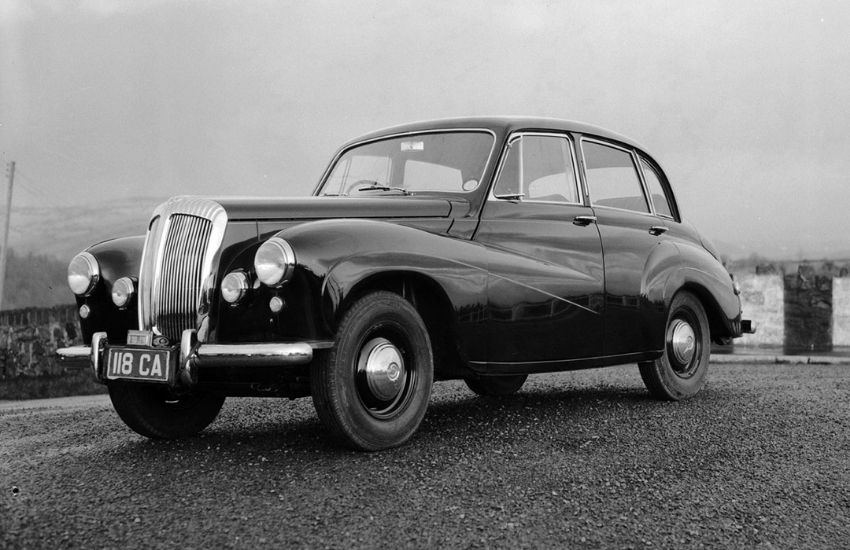
With its well-appointed interior the Conquest was a truly luxurious compact saloon, with leather trim, thick carpets, a wooden dashboard packed with instruments, and a fold-down arm rest in the back seat. It could also cruise comfortably at 60mph, but for those who wanted more, the Conquest Century was launched in 1954, with a 100bhp engine (hence the Century moniker). The extra power came from raising the compression ratio and fitting twin carbs along with an aluminium cylinder head; the result was a car with far more pep.
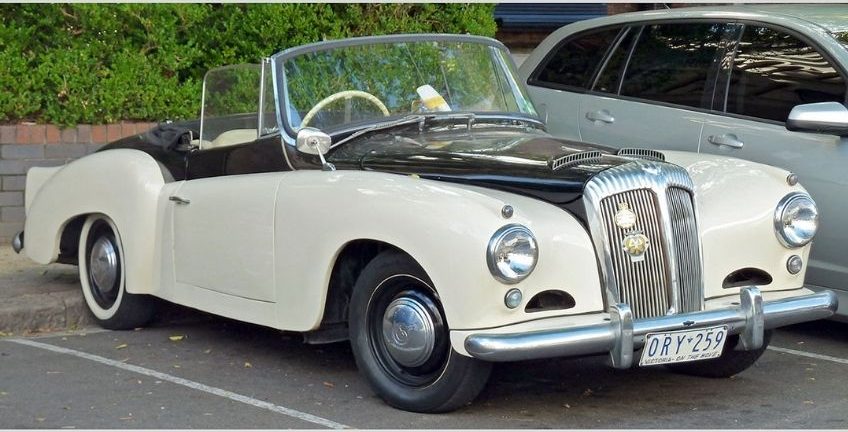
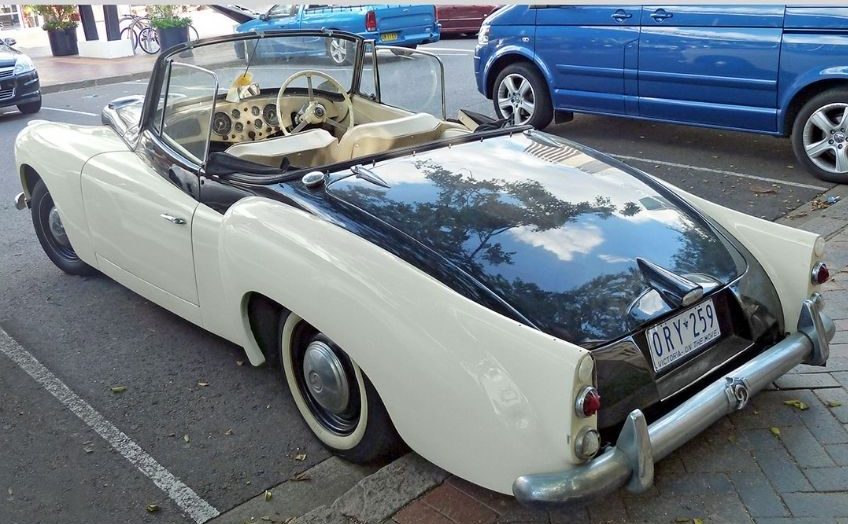
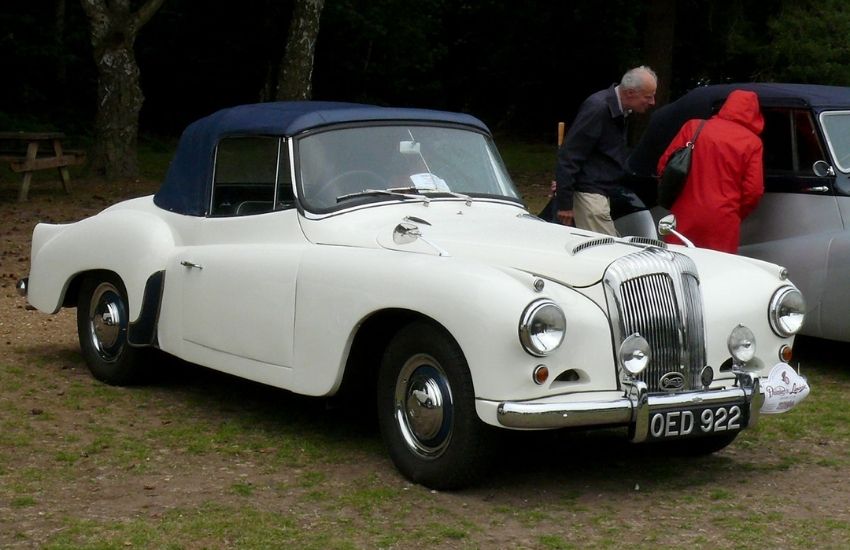
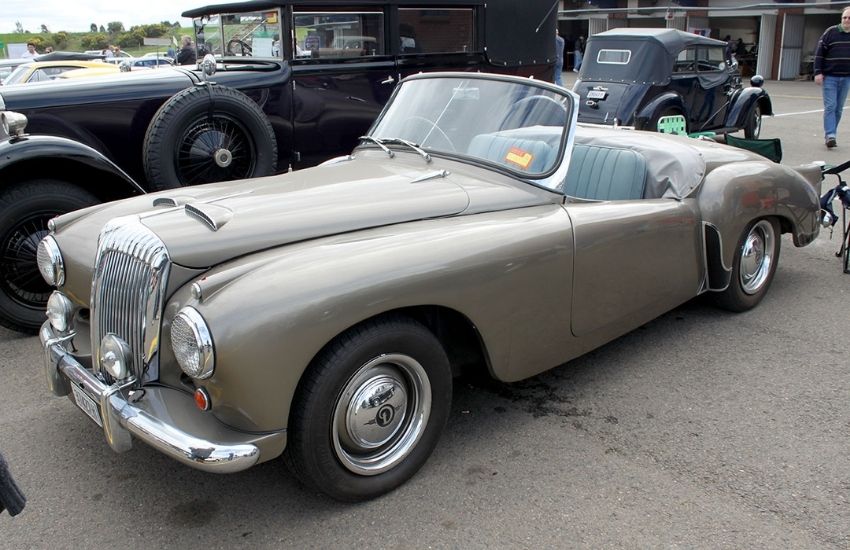
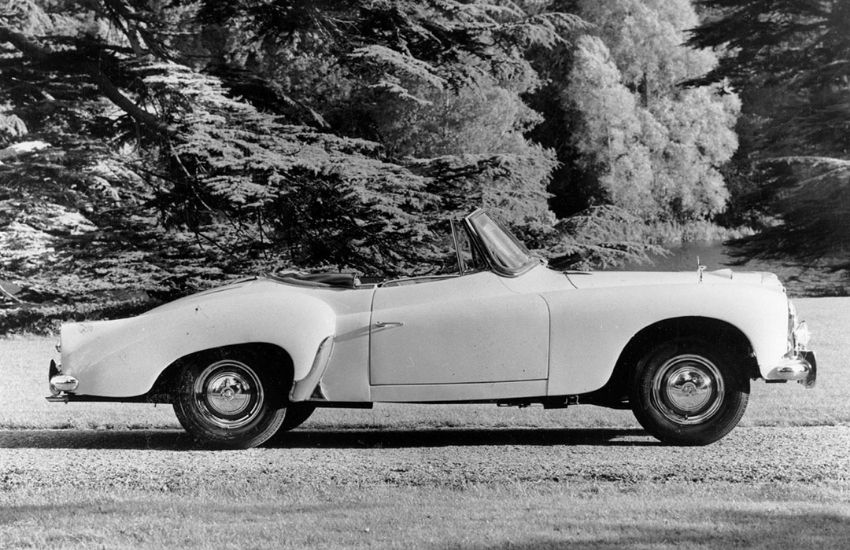
It was this uprated Conquest which provided the basis for something that was a complete departure for Daimler, which was unveiled at the October 1953 London Motor Show: the Daimler Conquest Roadster. Daimler had produced convertibles before, but they were invariably cumbersome machines with ample space for four, whereas the Roadster was strictly a two-seater. It used a lightly modified version of the saloon’s chassis, while the panelwork was aluminium over alloy castings to keep the weight down. With a reasonably slippery shape for the time, that twin-carb engine (complete with high-lift cam) could whisk the Conquest Roadster beyond 100mph, things helped further by raising the rear axle ratio from 4.56:1 to 3.73:1.
Well received by the press and public alike, the Daimler Conquest Roadster was as stylish as it was practical. It had a fold-down fabric roof which stowed behind the seats, a large boot, and side screens to keep the elements at bay. Daimler’s familiar four-speed pre-selector gearbox was fitted, while the suspension was taken wholesale from the Conquest saloon. That meant independent front suspension by torsion bars with an anti-roll bar, while at the rear there were half-elliptic springs; telescopic shock absorbers were fitted front and rear.
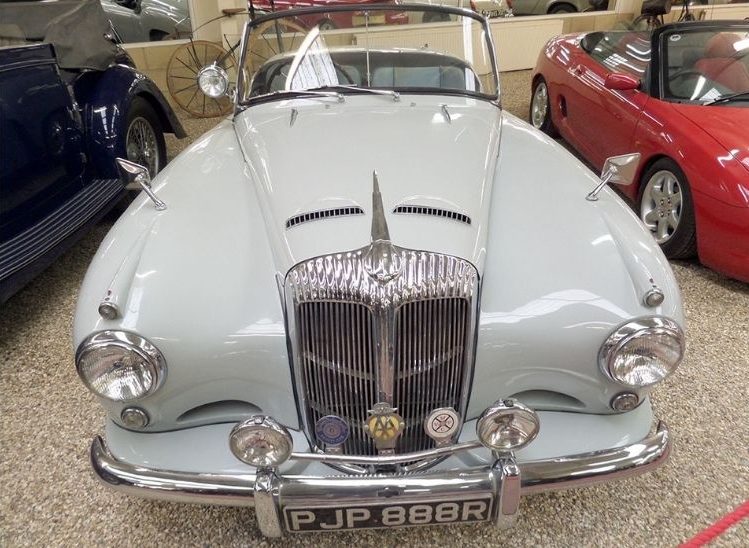
Expecting owners to drive their Roadsters hard, Daimler fitted cooling slots in the nose and rear wings to direct cooling air to the brakes, which were drums all round. A 15-gallon fuel tank gave a range of up to 350 miles or so, with the Daimler capable of averaging an impressive 26mpg. For a car that could do a genuine 100mph, that was very good going.
When The Motor put a Daimler Conquest Roadster through its paces in summer 1954 it was able to coax 100.7mph out of the Daimler, and the testers came away very impressed. Finding the open-topped car significantly quicker than the saloon that sired it, the only downside to driving the Roadster over long distances was an overly loud exhaust. Other than that it seemed to be all good news; the engine was flexible and perky, the build quality was excellent and the ride quality was superb, even though the Roadster handled pretty tidily too.
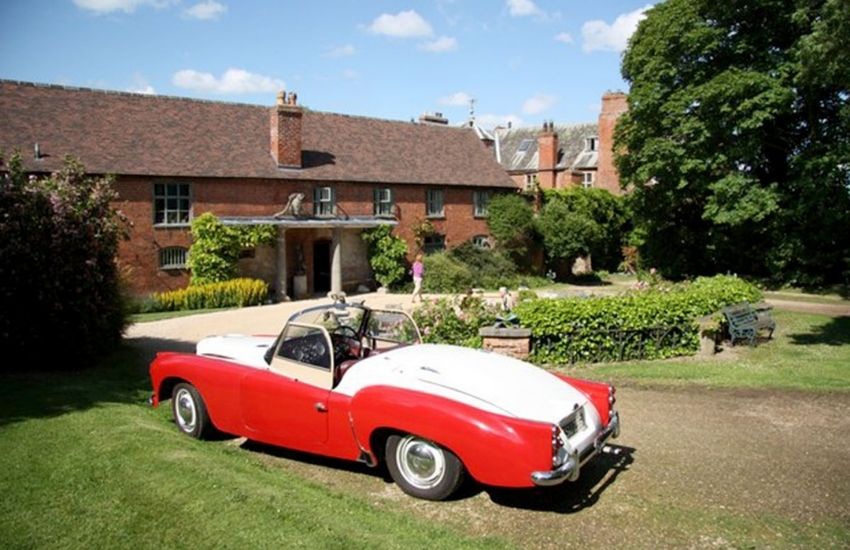
Comfortable, practical and ergonomically sound, Daimler appeared to have come up with the perfect car for enthusiast drivers who had a bit of extra cash to spend on a premium sports car; the Roadster was priced at £1672. That made it cheaper than an Alvis 3-Litre drophead coupé, but more expensive than a Jaguar XK120 Roadster, and a lot more costly than an Austin-Healey 100/4 or Jowett Jupiter. Not that it made much difference at first, because until spring 1954 the Roadster was built for export only.
When the Roadster was launched onto the UK market it didn’t make much of an impression, and the entire right-hand drive production run lasted a mere six months (June to November 1954). Daimler managed to shift just 22 of them in 1954, 18 in 1955, then two each in 1956 and 1957. The Motor may have liked the Roadster, but buyers didn’t care much for it.
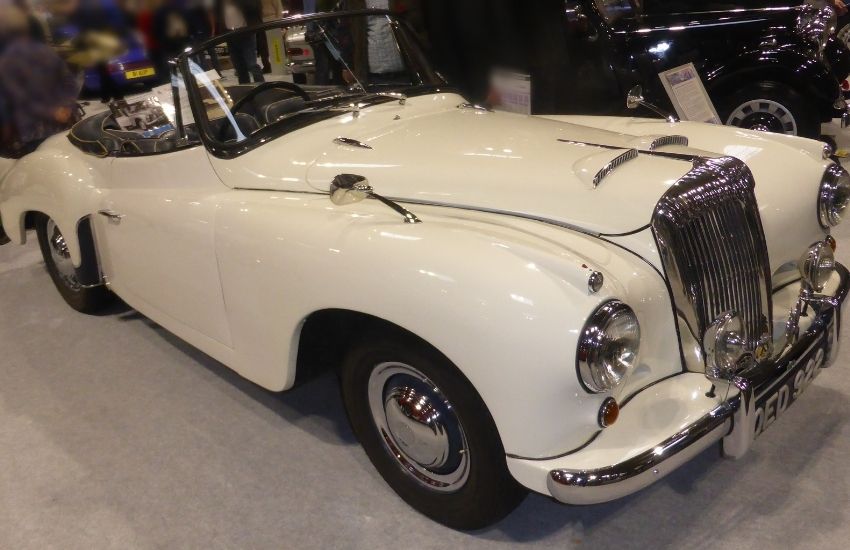
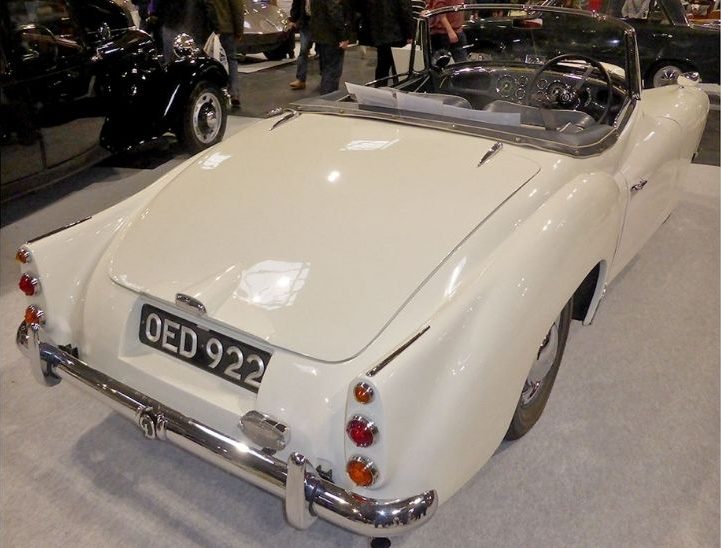
That wasn’t quite the end though, because Daimler came back for more with a modified Roadster, marketed as the New Dropead Coupé. Weirdly this was a three-seater, with a side-facing chair behind the two front seats, an improved folding roof, wind-up windows instead of sidescreens, and a heater fitted as standard. The first prototype was built in May 1955, but the first production car wouldn’t leave the factory until February 1956. Production lasted a little longer than for the Roadster, but it was all over by April 1957 after just 54 New Dropead Coupés had been built. That makes just 98 cars made in all (Roadster and New Dropead Coupé), which doesn’t sound like much of a conquest to us.
Classic car insurance from Hagerty
Keep your classic on the road with expert classic car insurance built by car lovers, for car lovers. Rated ‘Excellent’ on TrustPilot.