Words: John Mayhead
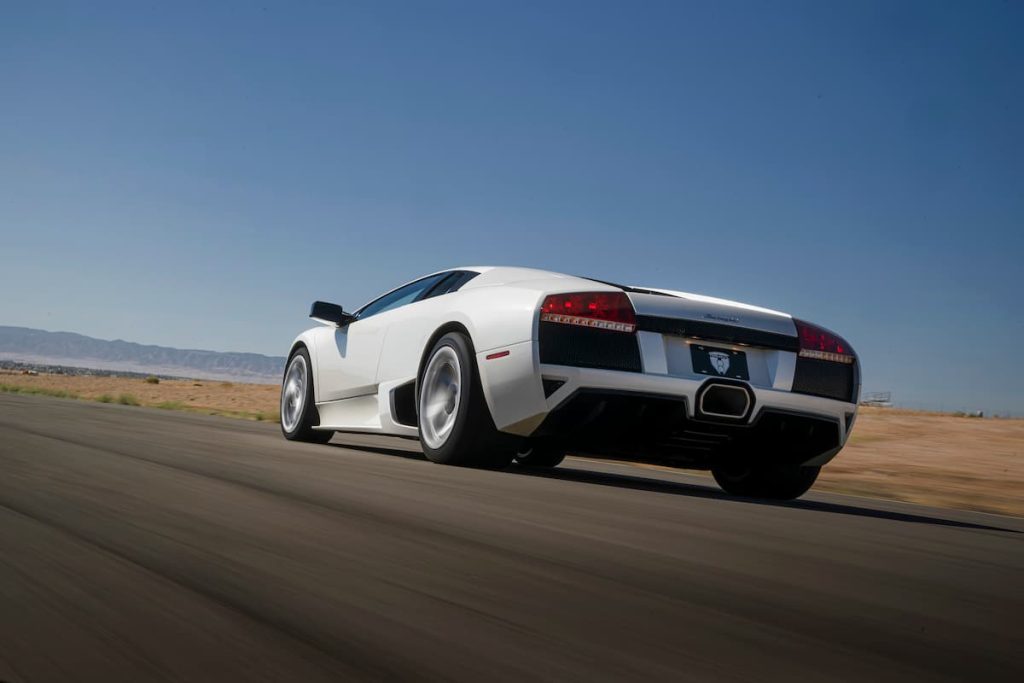
On the archive shelves in the Polo Storico department at Lamborghini’s Sant’Agata Bolognese factory sit books listing the details of every car deemed worth of inclusion of the term ‘historic’ from the very first 350GT to the last of the Diablo, the 6.0 VT. This September, another model will qualify to join them when the earliest examples of the Murciélago reach 25 years after the car’s launch in 2001, and with production numbers dwarfing everything that has gone before, it could be a turning point for the department.
That’s appropriate, because the Murciélago was a turning point car. The first all-new model built under Audi’s ownership, it marked the transformation of the brand from a relatively small and financially precarious supercar maker into a producer of global importance. Audi introduced improved testing and manufacturing processes, higher quality dealer and servicing networks, and transformed the brand’s marketing. The Murciélago showed that reliability and durability could be achieved whilst maintaining Lamborghini’s trademark dramatic design and electrifying performance. Critically, a development of Bizzarrini’s original V12 engine used, in 6.2-litre and later 6.5-litre form, drawing a direct mechanical line of heritage back to the 350GT. It was also the last Lamborghini V12 model to use a steel spaceframe and to offer the option of a gated manual gearbox.
Early 2000s analogue supercars are already hot property, and the Murciélago is quickly becoming one of the key models in this category, with prices rising accordingly. Hagerty Price Guides both UK and US have shown a marked increase over the past 18 months, up around a third across the different variants. At present, the early 6.2 E-Gear coupe is the entry point, with prices still just under £200,000 for one in ‘excellent’ condition up to around £860,000 for a concours-quality LP670-4 SV. There seems to be a slight premium paid for roadsters compared to the coupe variants of all versions except the manual LP640 Coupe, an exceptionally rare spec car. Special editions also attract higher prices, the most desirable being the LP650-4 Roadster of which only 50 were built, each in Grigio Telesto with Arancio orange accents and a stack of options.
But there is a huge variation in prices even within the models. First and foremost, the rare manual gearbox can almost double an asking price and low mileage, superb condition and unusual colours can make all the difference; buyers shy away from high-mileage cars but will pay strongly for the very best. The gulf therefore between long-legged cars sold at the larger auctions in both the US and UK and some pristine cars offered individually for sale is vast. The latter though presents a problem: Hagerty’s tracking of popular classified sites shows that the asking prices of some cars have been increased very significantly (up by over 10 percent) over the past weeks, possibly to rectify an undervalued car in a rising market, but also possibly to try to push values up. As ever, beware of the possible significant difference between asking prices and what amount actually changes hands.
The outlook for the model is very good, especially with the number of younger owners asking Hagerty for quotes globally: 38 percent were Millennials, almost twice the average across all cars Hagerty quotes, and just 18 percent Baby Boomers, half the average. For a car this valuable, that’s notable: according to the Office of National Statistics, even the oldest Millennials won’t reach peak earning capacity for another couple of years, and early demand like this could suggest a future rise.