Words: Nathan Chadwick
Photography: Audi
Blending quattro grip with turbo punch, the S3 took the hot hatch to another level
The late 1990s hot hatchback landscape was a chaotic, often terrifying place. If you wanted to go fast on a budget, you bought a French or Japanese featherweight, strapped yourself into a cabin made entirely of vibrating grey plastic, and accepted that lift-off oversteer was simply a fact of life. These cars were brilliant, raw, and visceral, but they were also exhausting. They demanded constant, nervous inputs, and on a sodden, leaf-strewn British B-road, they possessed all the reassuring stability of a damp firework.
But deep within the immaculate, clinical halls of Ingolstadt, Audi was observing this frantic theatre and formulating a completely different approach. They were about to invent an entirely new automotive genre: the premium hot hatchback. As we mark three decades since the birth of the foundational 8L platform, it is time to celebrate the original Audi S3, a car that took the feral, blue-collar hot hatch and sent it straight to finishing school.
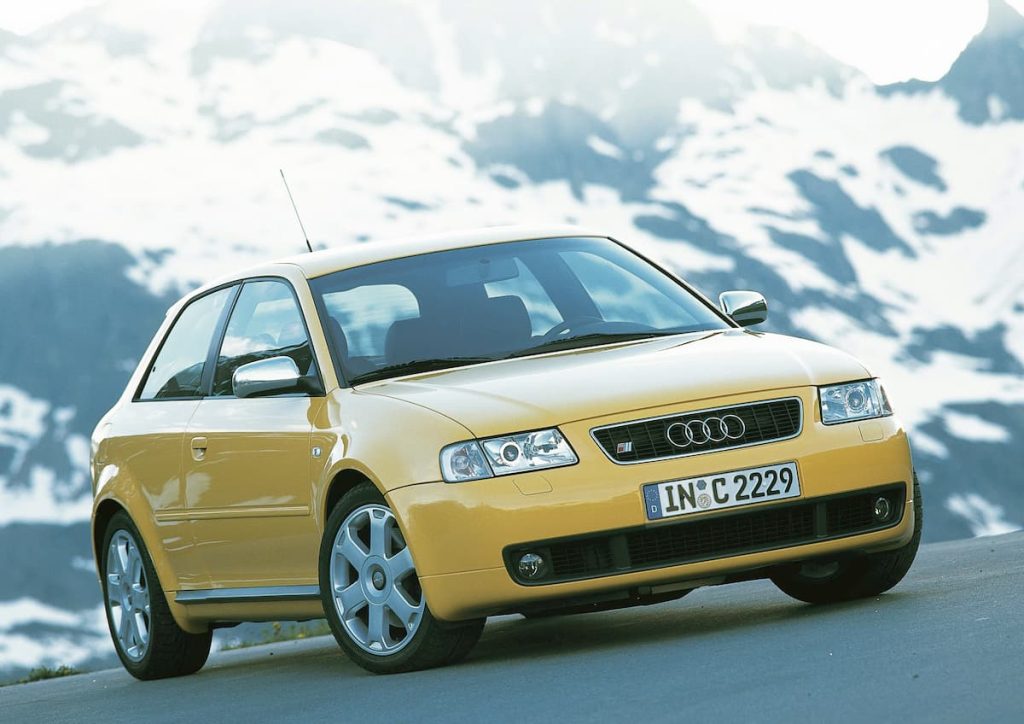
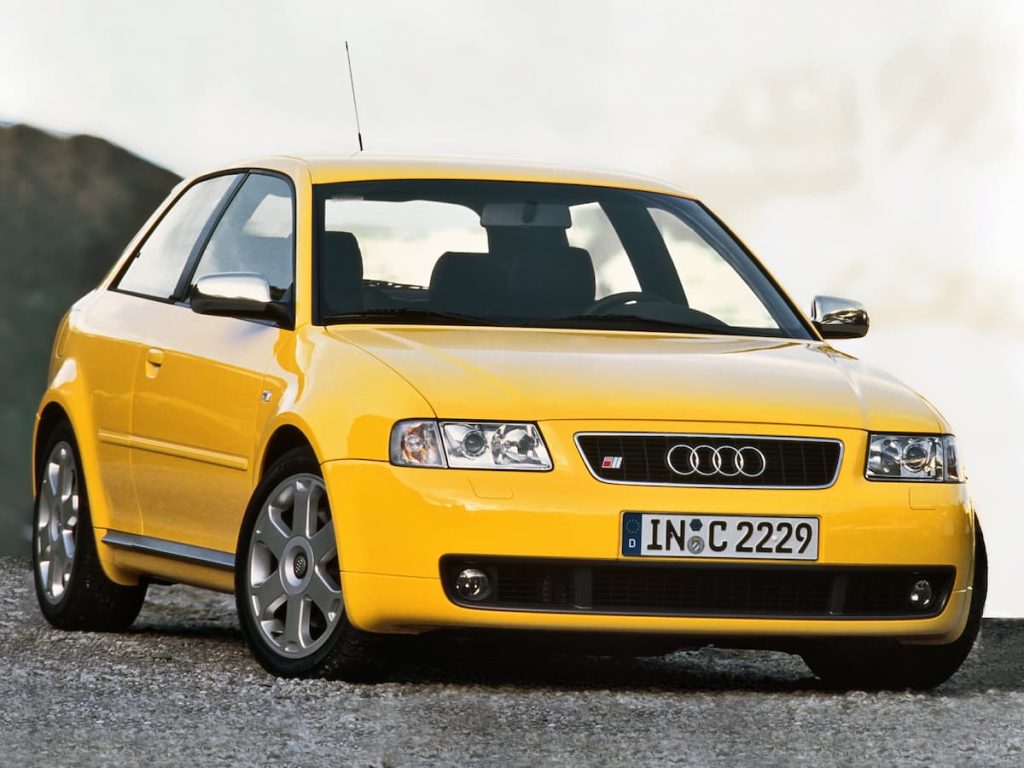
Before the S3, fast hatchbacks wore their intentions loudly, screaming for attention with garish decals, red pinstripes, and louvered bonnets. The S3, however, was a masterclass in restrained, brooding aggression. It did not shout; it merely rolled its sleeves up and stared you down. Penned under the watchful eye of Peter Schreyer, the visual changes over the standard A3 were masterfully subtle, yet they completely transformed the car’s stance.
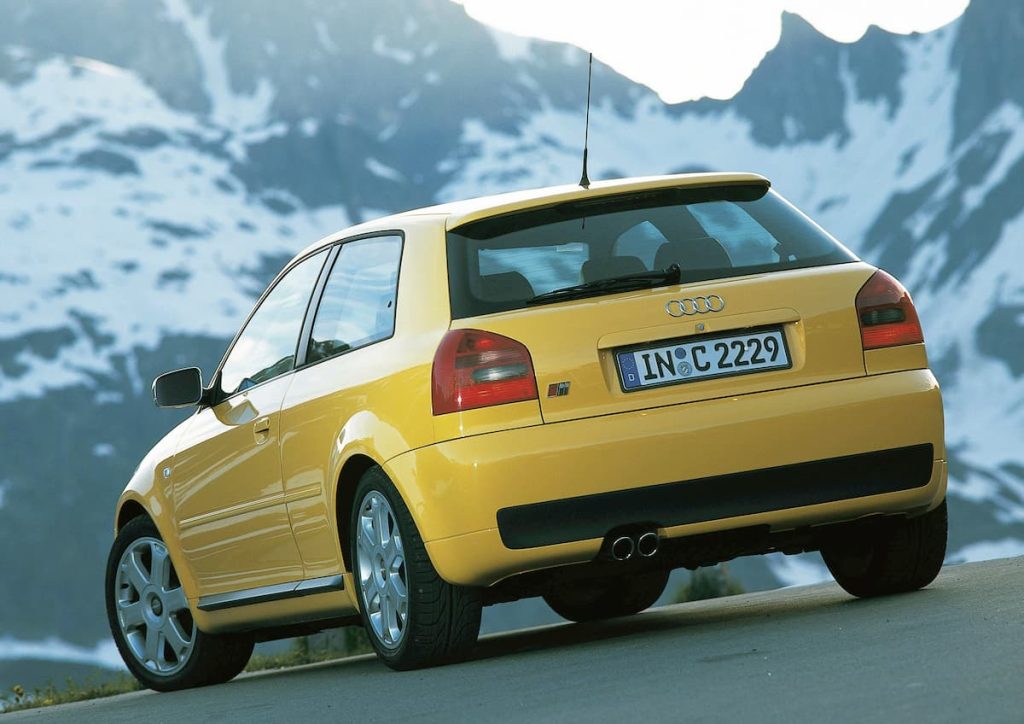
The wheel arches were dramatically blistered and flared to accommodate wider front and rear tracks, giving the car a spectacular, bulldog-like muscularity. The front and rear bumpers were smoothed and deepened, punctuated by a set of purposeful fog lights and twin polished exhaust tips. It sat low and perfectly planted on a set of gorgeous, chunky 17-inch, six-spoke Avus alloy wheels. To the uninitiated, it was just a neat three-door hatchback. To those in the know, it was a devastating cross-country weapon disguised in a perfectly tailored business suit.
Pull the chunky, body-coloured door handle, and you are greeted by a sound that defines this golden era of Audi build quality: a heavy, monolithic ‘thunk’ that sounds like proper engineering. The interior of the 8L S3 remains an absolute triumph of late-nineties ergonomic design. It smells intoxicatingly of rich leather, expensive plastics, and that distinct, waxy scent unique to Volkswagen Group products of the era.
You sink into heavily bolstered, electrically adjustable Recaro sports seats that grip you like a firm handshake. The dashboard is a sea of high-quality, soft-touch materials, beautifully assembled and almost entirely devoid of rattles. At night, the cabin is transformed by Audi’s signature, piercing red and blue backlighting, casting an exotic glow over the chunky three-spoke steering wheel and the precise, short-throw six-speed manual gear shifter. It felt phenomenally expensive. It was a cabin designed to cross continents at sustained high speeds in supreme comfort, isolating you from the chaos of the outside world while keeping you intimately connected to the machinery.
Beneath that understated, heavy bonnet lay the legendary 1.8-litre, 20-valve turbocharged four-cylinder engine. In its ultimate ‘BAM’ engine code iteration, it produced a muscular 225bhp and a thick, meaty 206lb ft of torque. Earlier versions produced 210bhp. This wasn’t a frenetic, high-revving screamer that needed to be wrung out to the redline; it was a devastatingly effective mid-range bruiser.
Turn the key, and it idles with a smooth, purposeful thrum. But plant the heavy throttle pedal, wait a fraction of a second for the K04 turbocharger to spool and gather its breath, and the S3 lunges forward on a massive, seamless wave of boost. It emits a sophisticated, rushing intake sound, accompanied by a subtle, addictive ‘whoosh’ from the diverter valve with every gear change. The power delivery is relentless and linear, pinning you back into those Recaros and surging toward the horizon with a mature, unstoppable momentum.
But straight-line speed was only part of the S3’s formidable arsenal. Its true genius lay in how it deployed that turbocharged power to the tarmac. This was the first S3 to use the Haldex-based Quattro four-wheel-drive system. In dry conditions, the chassis offered colossal, unwavering grip, but it was when the heavens opened that the S3 truly earned its reputation.
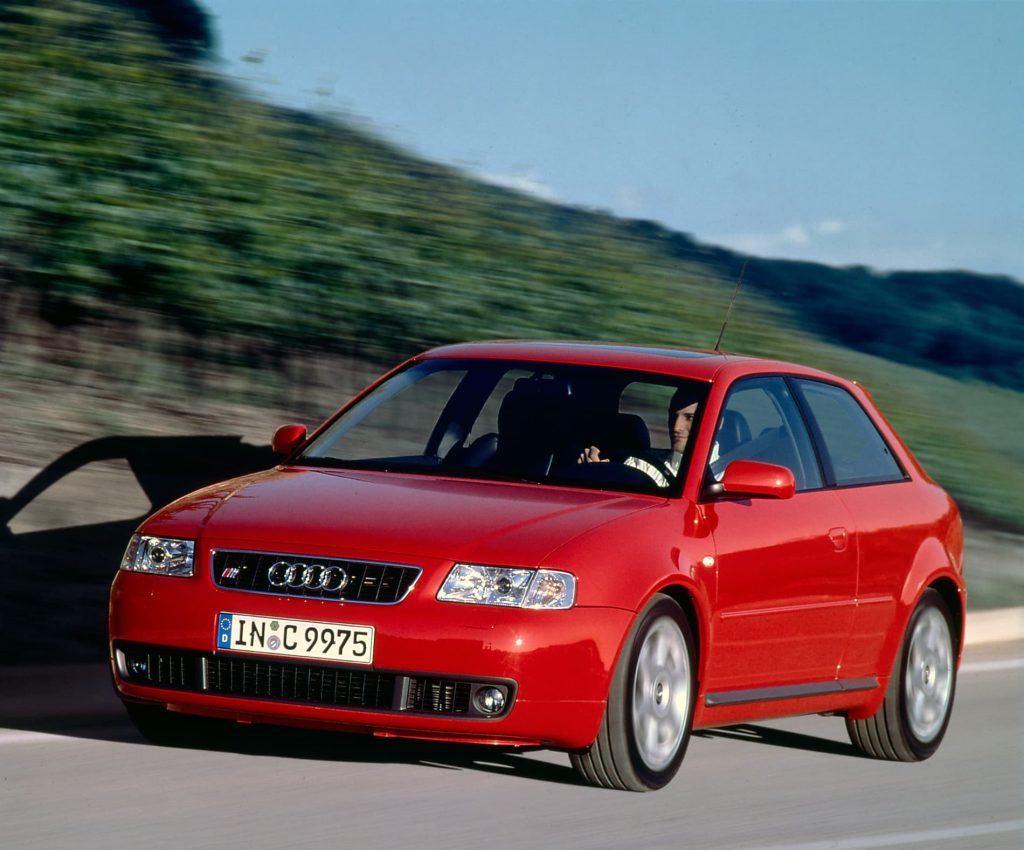
On a broken, rain-slicked ribbon of tarmac, where traditional front-wheel-drive hot hatches would be desperately scrabbling for traction or spinning their inside wheels into oblivion, the S3 was utterly imperious. You could deploy full throttle out of a damp hairpin, feel a momentary, fractional slip from the front axle, and then sense the Haldex clutch apportioning torque to the rear wheels. The car would hunker down and slingshot you toward the next corner with logic-defying, weather-proof grip. It was a cross-country terminator, capable of covering point-to-point distances in atrocious conditions at speeds that would trouble purebred supercars.
Owning one today is to experience the genesis of the modern mega-hatch. It requires fastidious maintenance. Vacuum leaks, temperamental mass airflow sensors, and Haldex oil changes are simply part of the initiation ritual, but the reward is immense. You are buying into a piece of automotive history built during an era when engineers, not accountants, dictated the build quality.
It never had the anarchic charm of a Peugeot 306 GTI-6 or the fizzing, on-the-doorhandles lunacy of a Japanese turbo hatch. It did not need it. Where those cars demanded commitment, the S3 simply got on with the job. Now, some might say that this goes against the hot hatch ethos, but there are many ways to crack a nut. The Audi just does it with the clean efficiency of a very large hammer. You’ve got to respect that.
Almost 30 years on, the original Audi S3 still feels like a pivot point. Not a revolution, not a riot, but something more quietly disruptive. This was the moment the hot hatch stopped throwing punches in a pub car park and started winning fights in a tailored suit.