Words and photos: Craig Cheetham
The annual MOT test shouldn’t make you nervous – prep properly and pass…
We’ve all been there – that nervous wait while your classic is undergoing its annual roadworthiness inspection is almost as anxiety-riddled as a maternity ward waiting room, as expectant fathers wait for news on their nearest and dearest.
But, assuming it still needs one or you elect to take it for one (most cars registered as Historic Vehicles and over 40 years old are MOT-exempt), you shouldn’t be too nervous about taking your car for an MOT test. After all, if you maintain it properly, it won’t fail – and if it does, you should be glad it has, because it means a qualified professional has found a fault that you didn’t.
A failed MOT test means you cannot legally drive your vehicle (except to a pre-booked MOT appointment or for repairs), so passing at the first attempt is essential for convenience, safety, and your wallet – and for most items, you can pass like a pro. Here are the main things to check.
Lights and signalling equipment
Turn on all exterior and lights, including indicators, brake lights, reversing lights, fog lights, and number plate lights. If you don’t have a friend handy to check the brake lights, then reverse up to a wall and apply your brakes. Check in your mirrors that both sides illuminate, as well as the high-level brake light if fitted. One of the most common failure items is your rear fog light – so many classics are only used in fine weather that we often forget to check, but it’s still a testable item.
On newer cars, also check the plastic headlight lenses, because if these have deteriorated they may need a polish, which you can do with a rotary polisher and a cleaning kit.
Steering and suspension
Chances are you’ll notice very quickly if something is wrong with the suspension and steering on your car, but it’s easy to miss minor issues. Before the test, inspect your coil springs carefully as sometimes they can break at the very end and you won’t notice how the car drives. Another simple but oft-overlooked check is the steering rack gaiters, which keep grease inside the steering mechanism. These can perish, crack and split, so check them while you’re at it.
Brakes
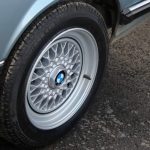
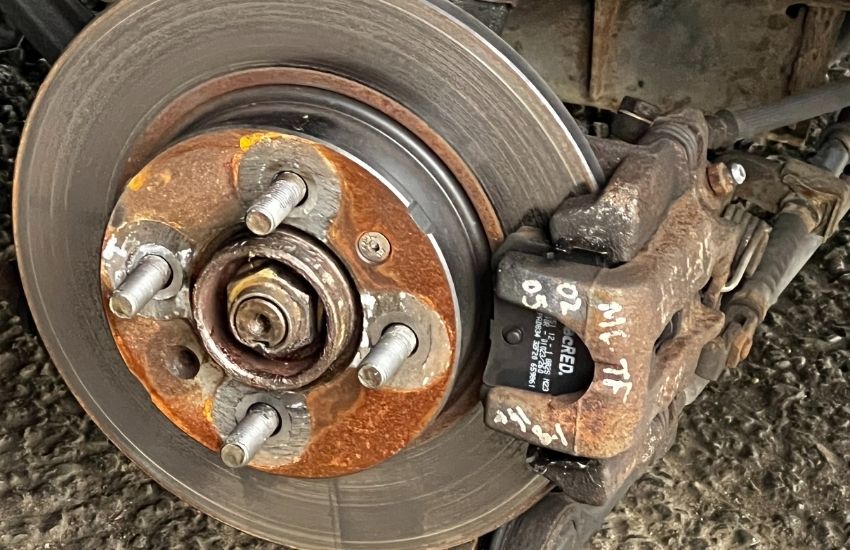
Listen for grinding noises, squealing, or a spongy feel when pressing the pedal and test the handbrake’s strength by parking on a hill. Brake pads need to have at least 1.5mm of thickness to pass the test – if you’ve got alloy wheels you can inspect them through the spokes, but if not then you may want to whip the wheels off to have a closer look.
Tyres and wheels
No self-respecting car enthusiast should fail their MOT on tyre tread – it’s easy to inspect and should be part of your regular safety inspection routine. Tyres must have a minimum of 1.6mm across at least three-quarters of the tread, but it’s good practice to replace them well before that.
But it’s not just tread that you should check. Look closely for signs of the tyre perishing and cracks appearing, or any damage to the sidewalls – and bear in mind that the inner sidewall, which you can’t see, may also show signs of damage.
Mirrors
The MOT dictates that your car must have at least two rearward-pointing mirrors, either on both sides, or on the driver’s side and centre of the windscreen. Most cars have three, but if your passenger mirror or rear-view mirror is missing, it isn’t a fail. The glass mustn’t be cracked though, and if it’s a dimming mirror, you must be able to see in it properly.
Seat belts and safety equipment
All seat belts must be properly fixed and free of fraying or damage that could weaken them. Also, if they’re inertia-reel belts, give them a hard tug to check that they lock properly. Note that any seats securing a child seat will not be inspected, as for safety reasons inspectors don’t remove them.
Other safety equipment subject to inspection includes the car horn (it must work) and the airbags, which must not have deployed and there mustn’t be an SRS light visible on the dash.
Body and structure
This one’s often the biggie on an older car as structural integrity is crucial to safety. While light body corrosion isn’t a fail, sharp edges are, so if you’ve got a crusty wheelarch with jagged edges, you’ll need to cover it up.
Underneath, the tester is allowed to apply thumb pressure to the floors, sills, subframes and all areas of exposed bodywork, so check the underside of your car carefully. Any weakened bodywork withing 30cm of a seatbelt or subframe mounting is an instant fail, and this often includes the sills.
Exhaust, fuel, and emissions
A blowing exhaust is usually an instant fail unless the leak is very minor, but your car will also be tested for its exhaust emissions, as well as a visual smoke test. For older models, it makes a lot of sense to present the car for the MOT after it has been properly driven and warmed up, when the catalytic converter is operating to temperature. Also bear in mind that on post-2003 cars, an illuminated engine management light (EML) is a fail.
Glass and screens
Examine your windscreen for chips or cracks, especially in the area swept by the wipers. Replace damaged wiper blades and top up the washer fluid reservoir before the test – if the tester finds such a simple fault, it’ll look like lax maintenance and could lead to them being very strict with the rest of the test.
Registration plates and VIN
All plates must be clean and secure with the correct marking – somewhere on the plate should be the supplier’s postcode and a British Standard Marker, BSAU145d.
The car’s VIN should be visible in the windscreen or on a plate on the chassis.

Top tips to pass first time
Check for small problems, as even something as minor as a blown bulb or a loose mirror can result in a fail. Replace bulbs, wiper blades, and top up fluids as if they’re below par, as these are quick and inexpensive fixes you can do yourself, and which present a good image of your approach to car maintenance.
Also, clean your car. A shiny car won’t pass an MOT test, but it’ll make it easier to inspect and will suggest to the tester that it’s well-cared-for. Remove rubbish from footwells, tidy the boot, and clean all glass, mirrors, and number plates.
Also, if you don’t have a regular, trusted test centre, selecting a reputable, unbiased one can make a difference. Consider centres that only perform tests and do not offer repairs, as they have no incentive to find unnecessary faults. Check online reviews, ask for recommendations, and book ahead, especially at busy times of the year – March and September are often very busy, as they’re the months in which most cars are registered.
Preparation is the key to passing the MOT on your first attempt. Regular maintenance is the key, and if you look after your car, there’s a good chance it will look after you.
What are your top tips for preparing your car for its MOT? Let us know in the comments below.
Classic car insurance from Hagerty
Keep your classic on the road with expert classic car insurance built by car lovers, for car lovers. Rated ‘Excellent’ on TrustPilot.