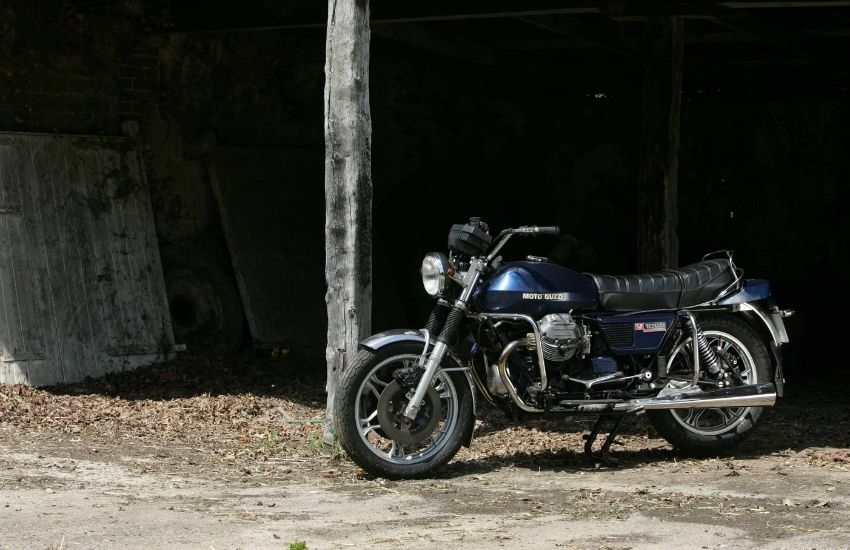
Words and Photography: Roland Brown
Motorbikes with automatic transmissions are everywhere these days. Auto boxes are available on bikes ranging from Honda’s giant Gold Wing to Yamaha’s agile MT-09 triple; from BMW’s chart-topping R1300GS Adventure to Kawasaki’s lesser-spotted Ninja 7 Hybrid.
Things were very different in 1975, when Moto Guzzi introduced clutch-free motorcycling with the V1000 Convert. Half a century ago Guzzi was one of motorcycling’s most dynamic manufacturers. At the same time as developing the Convert, the firm from Mandello del Lario in northern Italy was shaping the striking Le Mans 850 sports bike for launch in 1976.
In contrast to the sleek Le Mans, the Convert was an even more touring-oriented version of the 850 T3 California, itself one of the best long-distance machines of its day. Guzzi had introduced the California in 1971, initially as a US market edition of the 757cc V7 Special, which itself had been developed from the original V7 model that had begun Guzzi’s transverse V-twin line in the Sixties.
The California had become popular in the States and had been introduced to other markets in 1972, updated with a larger, 844cc version of Guzzi’s distinctive 90-degree, transverse V-twin unit. Since then the California had become familiar in many countries, with its Harley-style “buddy” seat, and swept-back cow-horn handlebars. Typically it was also fitted with a screen and solid panniers, too. The Italian V-twin was a worthy rival for Harley’s less powerful, heavier and more expensive Electra Glide.
Guzzi’s boss was Alejandro de Tomaso, known for his car firm’s Mangusta and Pantera. By 1975 the Argentinian-born former racing driver also owned Benelli and Maserati. He was open to increased automotive influence in his motorcycles, including automatic transmission.
De Tomaso also envisaged this appealing to Italy’s Servizio Scorta, whose duties escorting convoys required bikes that could be ridden at walking pace without continuously using the clutch and overheating the engine. American police forces, which had been heavily involved in the California’s creation, had reportedly requested just such a feature.
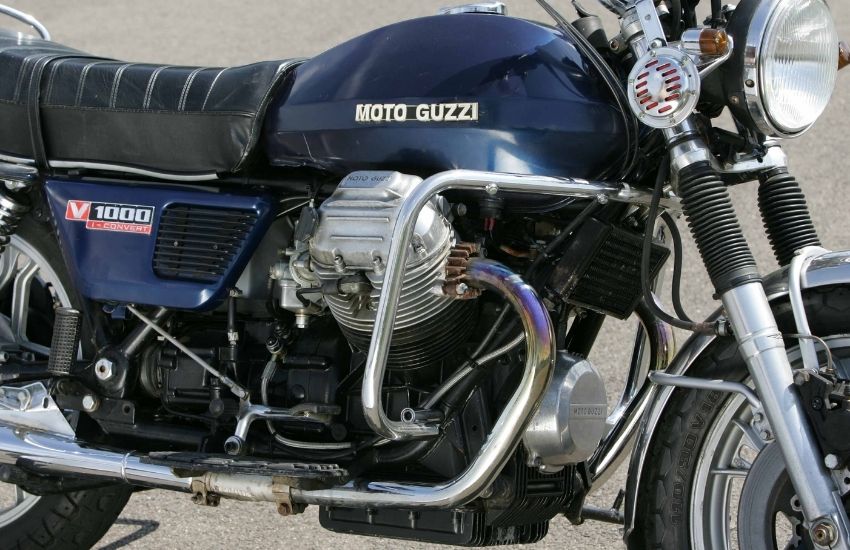
Guzzi’s engineers began by enlarging the familiar pushrod-operated V-twin unit again, increasing both bore and stroke to give a capacity of 949cc. The standard gearbox was replaced by a torque converter and two-speed box. The torque converter, built by Sachs, was the key element. It was directly connected to the crankshaft, and delivered the engine’s power to the gearbox via a multi-plate dry clutch.
A torque converter is basically a type of fluid coupling system, which allows the engine to spin independently of the transmission. When the engine is turning slowly, as at idle, hardly any torque is passed through the converter. As the engine speed increases, more fluid is pumped into the converter, causing more torque to be transmitted. At high speed the torque converter is effectively locked, so provides near-direct drive to the transmission.
The engine’s extra capacity was needed partly because a torque converter is not 100 per cent efficient, so takes some of the power. The 949cc Convert’s peak output at the crankshaft was a claimed 71bhp at 6500rpm, slightly up on the 844cc California’s 68bhp at 7000rpm. The bigger motor’s compression ratio was slightly lower, at 9.2:1 instead of 9.5:1. Both powerplants were fed by a pair of 30mm Dell’Orto carbs, and were identical in most other respects.
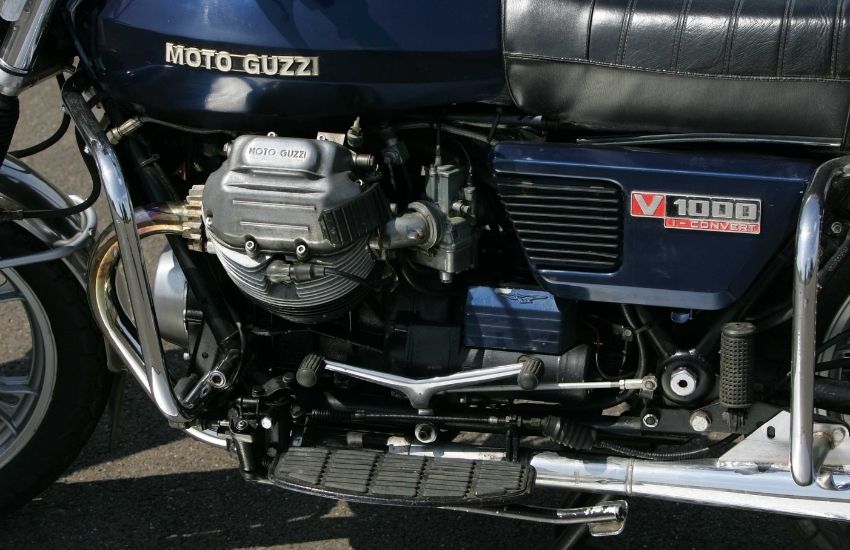
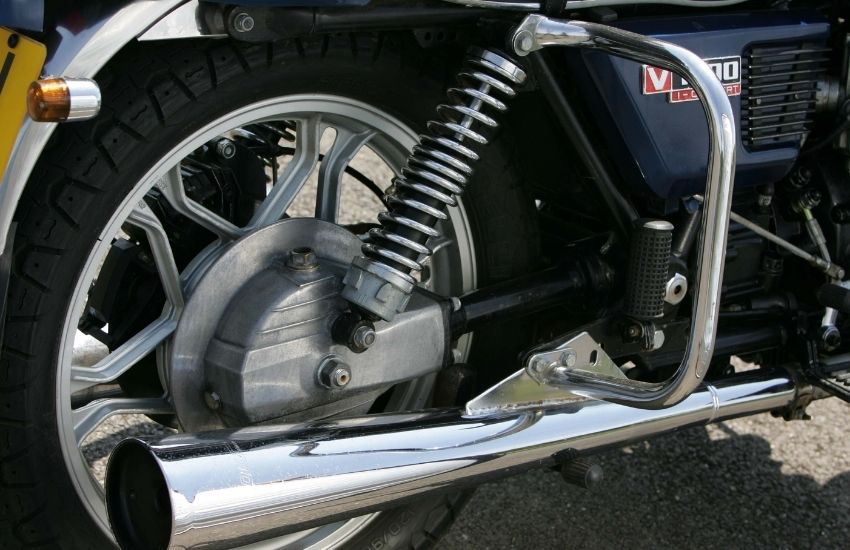
The V1000’s chassis also followed that of its sibling. Guzzi’s tubular steel frame held the firm’s own forks and a pair of preload-adjustable shocks. The Convert also followed the 850 T3 and other big Guzzis in using the firm’s linked brake system, whereby the foot pedal operated the rear Brembo disc plus one front disc, and the handlebar lever worked the second front disc.
Predictably, the overall result was a bike that in most respects performed and handled in very similar fashion to the California, and also offered a similar combination of comfort and laid-back V-twin character. Press coverage included much that was positive, including from Bike magazine, whose March 1976 issue’s report praised a model that looked set “finally to drag motorcyclists, kicking and screaming, into the latter half of the 20th century”.
A year earlier Bike had famously excoriated Honda’s new Gold Wing tourer for its complexity and weight but the Convert impressed the magazine’s tester. “I wouldn’t be so sold on the automatic idea if Moto Guzzi hadn’t shown us precisely what can be done when you mix the right proportions of car and bike,” he wrote.

“They recognised immediately that the characteristics of a big-inch motor and semi-automatic two-speed box spell touring with a capital T. So they assembled the ultimate laid-back, feet-up tourer. It’s a bike you just get on and ride: fire up, twist the grip and let it roll until you run out of gas. Easy.”
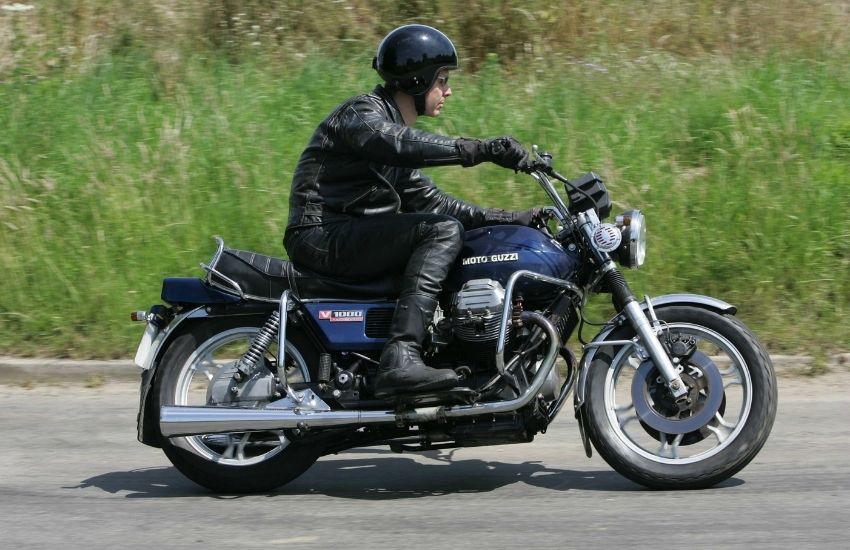
My chance to test that theory came with a very clean dark blue example that had been produced in 1980, by which time the Convert had changed very little apart from gaining cast rather than wire-spoked wheels, in the same 18-inch diameters. Its motor fired up instantly on the button, provided I held in the clutch lever, making a familiar whoomph through the twin pipes, and ticking over effortlessly.
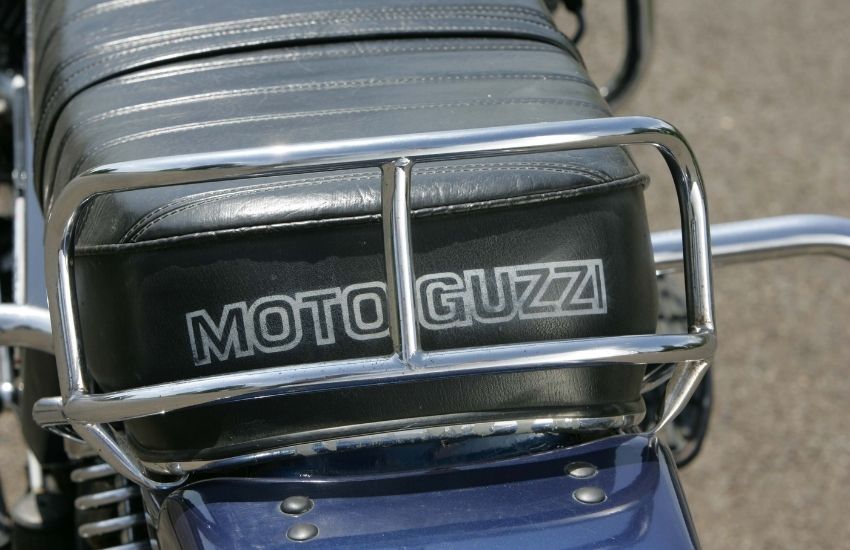
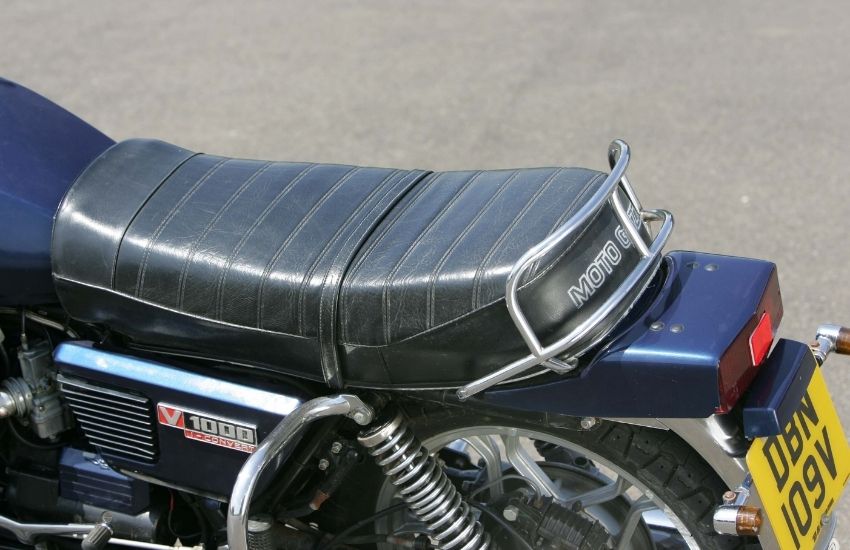
You usually know what you’re going to get when you ride an old Moto Guzzi tourer. Having once owned an 850 T3, I was expecting a slow-revving V-twin engine, a laid-back riding position and a large, comfortable seat. The Convert certainly provided all of those things, notably its wide handlebars and a huge, squashy dual-seat that felt more like a waterbed.
The difference was that this time I could let the clutch out again and leave the bike idling in gear – then simply wind back the throttle to send it accelerating forward, with no need to move my left hand again. It was a slightly weird feeling at first, controlling the big Guzzi’s speed purely on the throttle and brakes, with no need to change gear; as though it were some gigantic retro-scooter.
My left hand had nothing to do apart from an occasional flick of the indicator switch. Rumbling down the sleepy lanes of Cambridgeshire this way was a pleasant way to spend an afternoon. But the Guzzi’s age, weight and idiosyncrasies meant that riding it wasn’t always as relaxing as its Fenland-flat torque curve and zero-effort transmission system might suggest.
I’d assumed that I would use the heel-and-toe gearlever quite frequently, especially on narrow country roads, to swap between the high and low ratios of the two-speed box. In reality the change was very heavy, the pedal rather difficult to operate, and the two ratios closely spaced. There was little acceleration to be gained by using first gear, which was good for about 85mph anyway.
It seemed much more in keeping with the Convert’s leisurely style to stay in second, so I did, making use of the V-twin’s ample reserves of low-rev torque. Ridden like that, the Guzzi was very enjoyable. Sitting upright with my hands raised slightly to the slightly raised and pulled-back bars, and my boots on the footboards, the Convert felt ready to cover some serious distance, in relaxed comfort if not at particularly high speed.
Mind you, the bike could shift when requested. Given a crack of the throttle, the engine started making more noise as the torque converter did its stuff, and the Guzzi rumbled forward with enough urgency to put a grin on my face. If the California was marginally quicker, its auto sibling hit back by always being ready for a burst of acceleration, with no chance of being caught in the wrong gear when a gap appeared in the traffic.
For getting away from the lights in a hurry, the approved method was to hold the Convert on the brake, give it some revs and then release the anchor, at which point the bike roared away at a very healthy rate. Certainly at a rate that would leave four-wheeled traffic far behind, despite the Guzzi’s weight of over 250kg. It was sufficiently powerful to cruise at 100mph, or more realistically whatever speed its rider could stand, given the exposed riding position. The Convert was frequently fitted with Guzzi’s accessory windscreen and panniers, and came with them as standard in some markets.
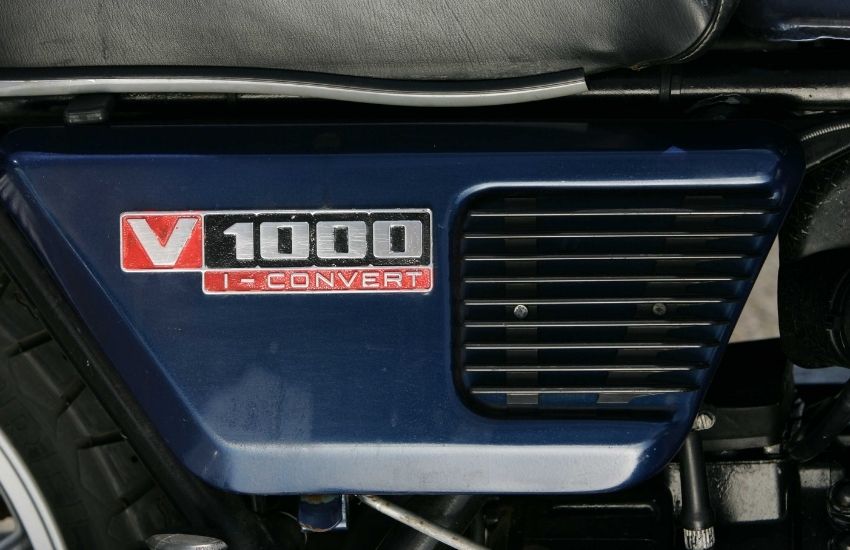
Handling was similar to that of other big Guzzis, though the Convert required a slightly different riding style due to its lack of engine braking, which put more emphasis on the Brembo system. That was generally fine, especially given that Guzzi’s linked set-up was arguably the best in all motorcycling in the late Seventies. Unfortunately this bike’s only real flaw was that its foot pedal generated a rather feeble response, suggesting the system was due an overhaul.
At least the Moto Guzzi V1000 Convert’s cornering performance was excellent for its age, thanks partly to its suspension being of good quality and reasonably firm by touring-bike standards. Pirelli Phantoms gave as much grip as the bike would have had when new, and ground clearance was reasonable despite those footboards. The V1000 required plenty of force to make it change direction, especially at slow speed, but for such a laid-back machine it was impressively manageable.
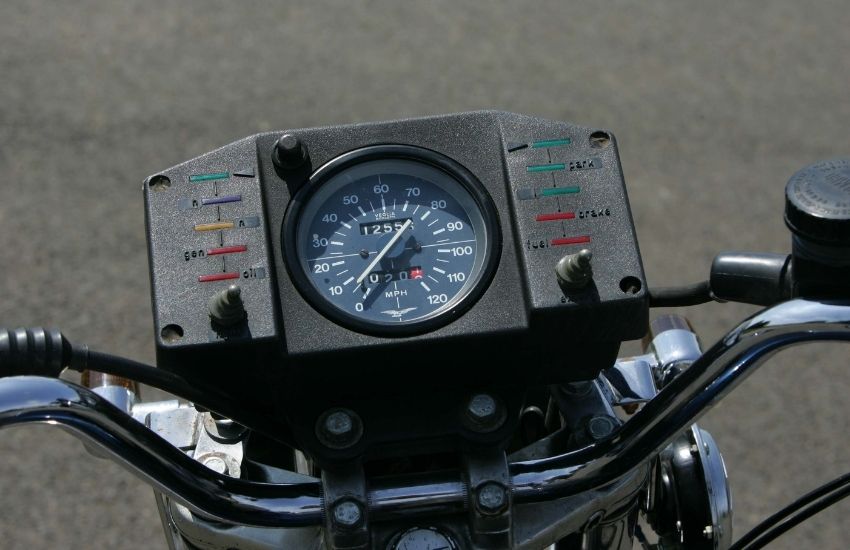
By Italian standards it was reasonably well built and finished, too – sufficiently so for one 1976 test to conclude that after a tough life as a press bike the Convert test machine “didn’t look like the usual advertisement for BMW”. Useful details included the crash-bars and pillion grab-rail. Less clever were the hard-to-use centrestand and the instrument panel’s warning lights, which were too dim to be seen in sunshine.
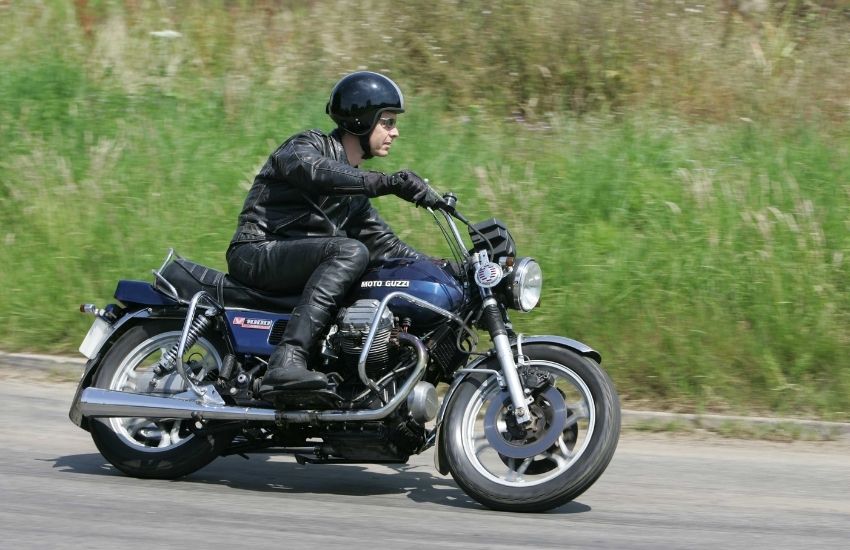
Such minor niggles didn’t spoil my ride, and did little to reduce the Convert’s appeal when the bike was new. But for all its laid-back charm, in most potential purchasers’ eyes the automatic machine had an obvious drawback: the California was faster and better value.
When Bike tested the identically priced (£1999) Guzzis back-to-back in its September 1978 issue, the Convert was 7mph slower at 108.7mph, and took two seconds longer to cover a standing quarter-mile. It was also more than 20 per cent thirstier, averaging 39mpg to the California’s 48mpg, which reduced its range to below the Cali’s 200 miles. Despite this the tester preferred the Convert, mostly for its relaxed feel and riding position. But he hadn’t had to pay for his petrol.
Given the two models’ similarity in other respects, it’s no surprise that the V1000 Convert sold slowly in all markets. Its production ended shortly after this bike was built in the early Eighties, while the California would remain in Guzzi’s range well into this century.
De Tomaso’s experiment had proved a costly flop, and it would be several more decades before automatic transmissions began to be widely accepted in motorcycling. But despite its flaws and lack of commercial success, the Moto Guzzi V1000 Convert had shown that a bike with an auto box had potential. It was a worthy attempt, half a century ahead of its time.
Have you ever ridden or owned a Moto Guzzi V1000 Convert? We’d love to hear from you in the comments below.

im on my 2nd convert sold few yrs ago wanted another one . this one im building a rat rod bike not what the purists like but it mine so there .