Author: Paranjay Dutt
Photographs: Mercedes-Benz
In the first of a two-part article, we pay tribute to the first ‘baby Benz’
Did Mercedes-Benz imagine that their beloved W123 would become timeless, so much so that fifty years after the car’s introduction (in the January of 1976), it continues to be a remarkable means to realise your motoring dreams. It has earned its ‘classic’ tag quite adeptly without having to pander to rarity, with about 2.7 million units dispatched globally. Its price tag would’ve raised some eyebrows when new, especially in the UK, where similar money could’ve got you cars from a higher bracket, but it was, at the end of the day, a mid-sized product in Mercedes-Benz’s lineup — and quite a solid one. That it would go on be the beacon of prosperity is one thing, but it has presented another big conundrum for its makers. None of the cars that they’ve made, especially in the same space, has been able to one-up the 123 series yet, especially as a mix of liveability, reliability, and tractability, without losing its appeal as a veritable classic. We take a look at what makes the Mercedes W123 so unmissable as it turns 50 this year.
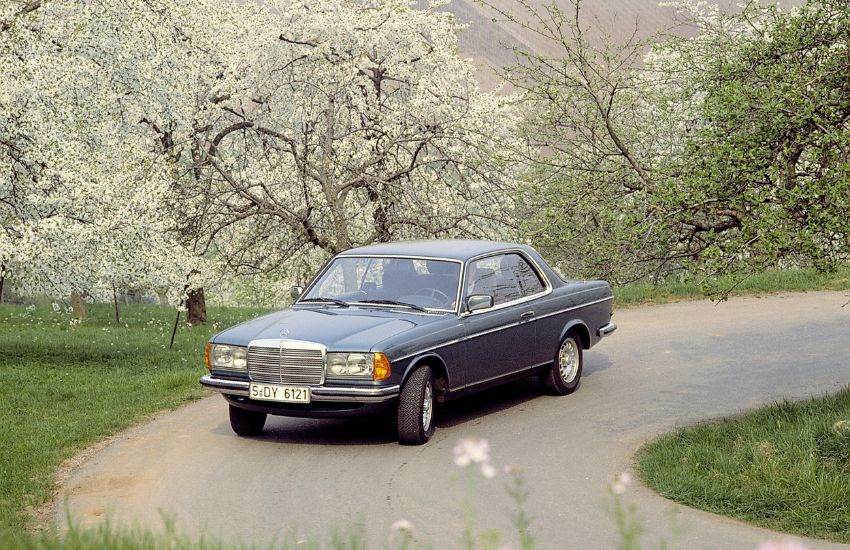
There’s no shortcut to success and Mercedes-Benz were fully aware of that; which shouldn’t be a surprise, as by the time the 123 (specifically the W123 saloon) was out, it had already undergone eight years or so of development. It imbibed many features from the S-Class, carried forward some great things from the predecessor (mechanically, it was more of an evolution of the Stroke Eight), and was presented in a wider range of body styles than Mercedes-Benz had offered earlier.
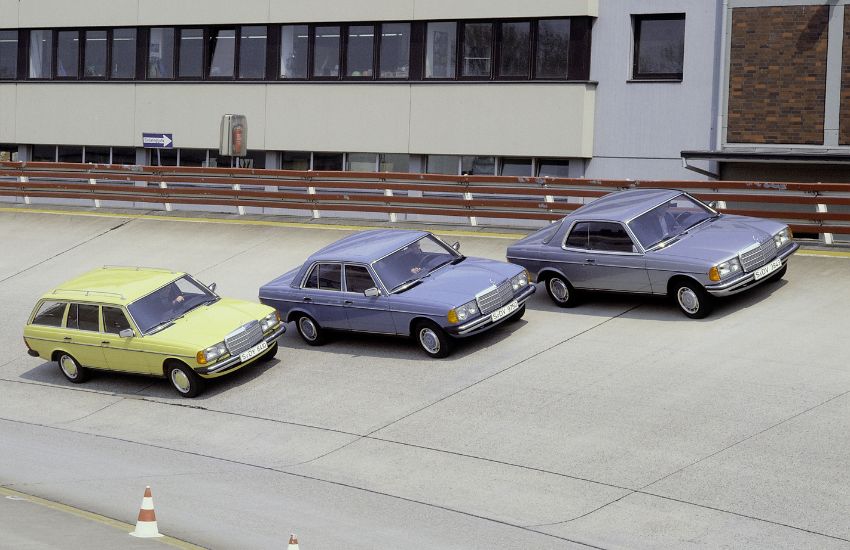
Mercedes-Benz launched the saloon (W123) first, in January 1976. It turned out to be biggest commercial success of the lot, at over 2.3 million units produced. In the consecutive years, Mercedes-Benz also brought out a coupe derivative (C123) in 1977. By the time its production ended in 1985, Mercedes-Benz had manufactured 99,884 units of the coupe. Eventually, an estate version based on the 123, codenamed S123, made it to the range in 1978. This was the first time Mercedes-Benz themselves had offered a factory-built estate, and the T-model proved itself, with 199,517 units made.
There was also the ‘Lang’ extended-wheelbase model, which unlike the S-Class, became more popular among fleet operators — and with 13,700 of those leaving the manufacturing line, you can still find one, if you fancy extra seats and a lot of legroom. The drive-away chassis for specialist use like ambulance or hearse was also added to the model line, and according to Mercedes-Benz’s official data, 8,373 of these were made.
With four different body styles (plus the chassis for special bodies), you’d think the appetite for the 123 was satiated. But there were coachbuilders on both sides of the pond, who would custom-build a 123 based convertible for you, if you would like.
It’s interesting to note the W123’s prices, too. It was far from what you could call entry-level, and with a starting RRP of about £5650 for the W123 200, it was getting uncomfortably close to cars from the class above. The top-spec W123 280E was only two grand short of what would have got you the S-Class, the 280SE. The coupe, launched a year later, was priced at £8333 (RRP) for the four-cylinder 230C, while if you were after the more powerful 280CE, it would have cost you a touch over £10k. This was by no means an inexpensive car to buy; no Mercedes-Benz is. That is before you consider the reportedly long waiting period and the willingness of buyers to pay a fair bit extra to get their hands on one.
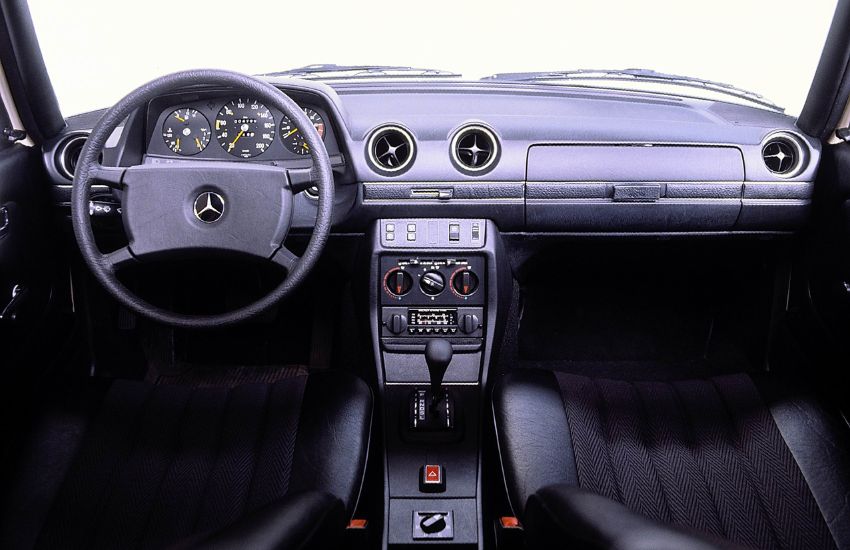
The choice of engines on offer was quite wide. The engine range was carried forward from the preceding Stroke Eight (W114/115), with a 55 hp diesel and a 185 hp straight-six petrol bookending it. Mercedes-Benz regularly updated the engines, so power figures tend to vary based on the model year. In addition to the existing range, a new 2.5-litre straight-six petrol engine was added to the mix. A 3-litre turbocharged diesel from the S-Class found its way to the S123 and made the 123 estate the first turbocharged Mercedes-Benz car to be sold in the domestic market. The 300D Turbodiesel also became a US-only option for saloons and coupes (aptly named 300 CD).
For those looking at outright performance, there was no alternative to the stellar straight-six in the 280E (~ 180hp) while many would agree that the four-cylinder in the 230E (~ 130hp) proved to be a great balance between fuel efficiency and useable power. There was no dearth of diesels, either, in both four- and five-cylinder flavours, and these offered great economy, if at the cost of outright pace — especially the ones at the bottom rung. There were some engine, gearbox and body style combinations, which varied depending on where the 123 was originally delivered, but there was, no matter how clichéd it sounds, something for everyone.
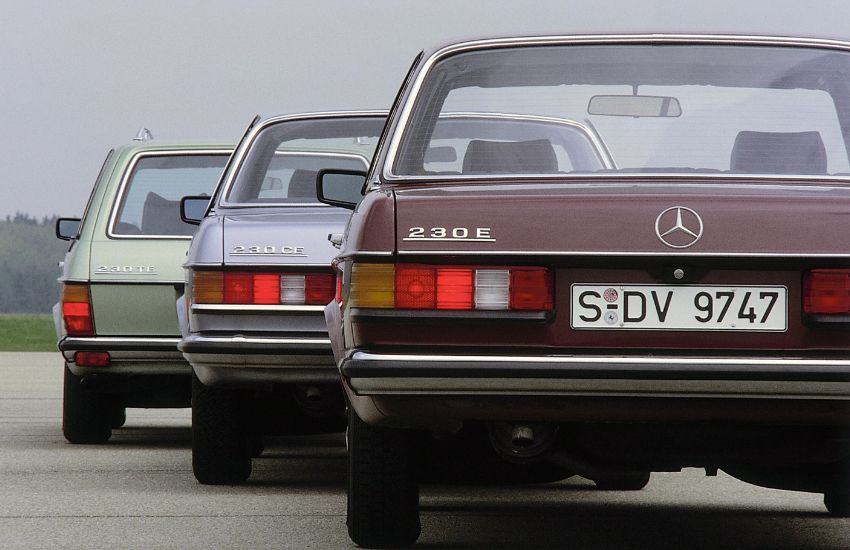
Designed under the leadership of Friedrich Geiger and with the highly capable and revered Bruno Sacco at the helm, the 123 series brought a new direction to Mercedes-Benz’s design. While cars like the W115 are synonymous with elegance, and the 124 series onwards with modernity, the 123 proved to be a great bridge between the two. Throughout its decade-long presence on the market, the 123 continued to get updates. None of these would transform the car’s appearance, but it ensured that until the very end, the 123 didn’t look tired.
The 123 series proved that it wasn’t impossible to make a car that looked great, drove well, and didn’t falter when it came to overall reliability. That it further strengthened Mercedes-Benz’s brand image — and continues to do so — was a direct consequence of how good it was as a product. Fifty years hence, it has become a car that most enthusiasts can’t get enough of, and thankfully, despite that, it remains obtainable. Timelessness doesn’t get better than this.
Please check back for part II as we continue our coverage on the W123.
Are you a fan of the Mercedes W123? We’d love to hear from you in the comments below.
Insure your classic with a specialist insurer
If you’re looking for cover for your pride and joy, why not consider Hagerty UK? Not only are we classic car insurance specialists, but we are enthusiasts at heart. Call us for a quote on 0333 323 1138.


My grandfather was a Mercedes man. We grew up with a W115, which eventually gave way to the legendary W123. When he passed, I became the proud owner of his W123 240d.
It wasn’t a fast car, but it was a masterpiece of comfort. There’s an inexplicable joy that comes from seeing that three-pointed star on the bonnet while you drive.
I started a full restoration to honor him, but once we stripped it down, I discovered that the car was completely rotted. 14years later I’m still healing from that.
The only piece I could keep was the original Becker radio. It’s on my shelf for now, but I know one day I’ll find the right W123 to put it back into. The journey isn’t over.
An amazingly built, iconic, beautiful car, built to last.