
Author: Alisdair Suttie
Photography: Edwin Remsberg/Getty Images
Is now the perfect time to consider a Mercedes-Benz W124, or one of its derivatives? We reckon it might well be as prices are about as rock bottom as they will ever go, which means you can bag anything from a cheap daily classic saloon all the way to a chic convertible with old money style that will fit right in regardless of where you park it.
It’s worth pointing out at the start that we’ll refer to the overall range as W124. The W124 is, strictly speaking, the saloon-only model, while the vast estate is codenamed S124 in Mercedes-speak. Go for the coupé and it’s a C124 and the delectable convertible is the A124. However, other than a few specifics to watch out for when buying that we’ll cover off, all of these handsome Mercedes are largely the same when it comes to mechanics.
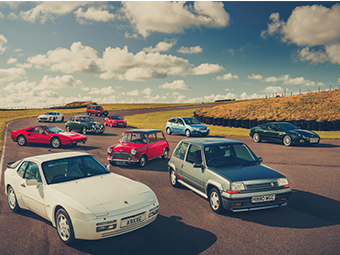
Introduced in 1984 to replace the already legendary W123 range of mid-size Mercedes saloons, the new W124 was styled by Bruno Sacco with such deceptive guile and elegance that it was easy to overlook how balanced and harmonious the design was. The W124 hid its size very well and the clean lines leant themselves easily to the Estate that arrived in 1985, followed by the Coupé for 1987, and finally the Cabriolet in 1992 to round out the range.
There was never any shortage of engine options with the W124 and it was launched as a saloon with 2.0- and 2.3-litre four-cylinder petrols in the 200E and 230E respectively. Or, you could opt for six-cylinder petrol motors of 2.6- and 3.0-litre capacities for the 260E and 300E. Mercedes was also keen on diesels and you could pick from 2.0- four-cylinder, 2.5-litre five-cylinder or the straight-six 3.0-litre in the 300D. Mercedes went on to introduce four-valve-per-cylinder heads to give greater power and fuel economy, and AMG worked its magic on the W124’s motors to improve performance, though these models are outwith the scope of this guide. Mercedes also later offered the E320 with its 3.2-litre inline six petrol engine with 217bhp.
In 1990, Mercedes did what many had hoped and dropped a V8 in the W124 saloon. At a stroke, it created the ultimate Q-car in the same vein as its earlier 450SEL 6.9 S-Class. The 4972cc V8 produced 326bhp and the engineering was taken care of by Porsche, who also helped with building this high class hot rod. Hugely expensive when new, the 500E justified the price tag with its 156mph top speed and 0-60mph in 6.3 seconds – figures that put it in the top tier of fast saloons of the time. A 4.2-litre V8-powered W124 was also made, but only for Japanese market.
While the engine range evolved, Mercedes delivered a more sudden change in 1993 when its executive model’s range was renamed E-Class, which was in line with the new C-Class of the same year that replaced the 190 model. Along with the new name came a revised radiator grille, rear lights, and dashboard. Another change that wasn’t obvious at the time was Mercedes’ use of biodegradable wiring for the electrical loom, which would go on to have a detrimental effect on the company’s hard-won reliability image in the years to come.
Life for the W124 began to wind down in 1995 when the saloon was replaced by the new E-Class generation. The Estate and Coupé models survived into early 1996, while the stylish Cabriolet lasted until mid-1997 when it was retired ahead of the new CLK cabrio’s arrival. Since then, the W124 has been a stalwart of the affordable end of the classic world, but its time is due anytime soon to gain fuller appreciation.
What’s a Mercedes-Benz W124 like to drive?
Mercedes never set out to make the W124 the most nimble or dynamic car that well off business types could buy. After all, the BMW 5 Series existed for those brash enough to want to drive quickly. Instead, what the W124 delivered then, and does so just as brilliantly now, is unwavering refinement. Settle into the saloon, estate, coupé or convertible and you instantly feel yourself relaxing as the Mercedes distances you from any sort of lump or bump in the road.
Thanks to the multi-link rear suspension and superb isolation between the tyres and body, the W124 is wonderfully quiet, smooth and calm on any road and at any speed. True, the Cabriolet does have more wind noise at motorway pace as even its layered fabric roof is not quite as effective as a steel roof at sealing out sound. However, both Coupé and Cabriolet with their pillarless side window design are brilliant at avoiding any whisper of wind rustle where they front and rear glass joins.
The engines are also in on the act when it comes to refinement. Driven in normal circumstances, you will barely hear them. The four-cylinder petrols do get a little rowdier when pressed and the six-cylinders emit a cultured growl, but you won’t be wishing for ear plugs. In the diesels, the expected roughness just isn’t here with the five- and six-cylinder engines, but the 200D does make itself known when revved hard. It does need to be pushed more than the other engines to give anything resembling meaningful acceleration, but it does return to a low volume of noise when cruising.
Most W124’s come with an automatic gearbox, which prefers to pull away in second gear unless you give the throttle pedal a hefty prod off the line. It sashays through the gears, matching the overall smoochy smoothness of the car. A five-speed manual is there as an option, but it has a notchy action and, in almost every situation, the auto is better.
Now, with all this talk of laid back, easy-going manners, you’d think the W124 would handle like a rocking horse on a bouncy castle when it reaches a corner. Not so, though if you want the keenest cornering possible in a saloon of this era, you’ll be better off with a BMW 5 Series. However, the W124 has plenty of traction for safe cornering and there’s less body lean than you initially expect. Where the Mercedes is most different from its BMW rival is in steering feel and action. The W124 has very light, power-assisted steering that makes it finger-light to drive. It’s not devoid of sensation and information, it’s just set up for effortless long distances rather than sporty responses. All-round disc brakes bring the W124 in all its forms to a swift, stable halt, while even the Cabriolet feels stout over dimpled roads.
Taking the W124 on a long drive plays to its strengths as you can bring the family or friends along, even in the two-door models thanks to their generous rear seats and large boots. The Estate is more than capable of being your everyday wagon and it can accommodate up to seven in total if you have one with the optional twin seats that fold out in the boot. On top of this, the sheer sturdiness of the W124 means it’s a classic you will be happy to use anywhere and all the time.
How much does a Mercedes-Benz W124 cost?
There is a broad spread of prices for the Mercedes W124, starting with the saloon that you can pick up in running order from £2000. That will get you a four-cylinder model in surprisingly decent condition, but double this budget and you’re looking at smart examples and good six-cylinder cars. Unusually, the diesels are in demand, so expect to pay the same as you will for a petrol-powered model. The very best saloons will nudge £9000.
Look for a W124 Estate in a good, usable condition and you’ll likely need to spend from £7000, with very smarter cars breaking into the £10,000 bracket and the absolute best reaching £15,000. This is the sort of money where solid Cabriolet start from, which represents excellent value for such a good looking four-door open-top. Anything less than £10,000 for a Cabriolet is probably not worth spending, while £15,000 gets you a higher mileage car in good nick. Push your financial threshold to £25,000 and you will be driving away in flawless drop-top.
Then there’s the Coupé, which by rights should be similar in value to the Cabriolet thanks to its sleek looks. However, Coupé prices start from as little as £4000 for an E220 in sound order. Twice as much gets you a very presentable car with four- or six-cylinder engines, while £15,000 enough to buy a very clean show-worthy specimen. The very best Coupés can make £20,000, though you will be looking for perfection at this sort of money.
And what of the 500E? Its rarity – only 10,479 were made – and performance mean it’s the object of many collectors’ attentions. A good 500E will fetch £60,000 nowadays, but a pristine low-miler could ratchet that up to £100,000.
What goes wrong and what should you look for when buying one?
Whether you’re looking at a Mercedes W124 model as an everyday driver or pampered pet, they all still need to be checked over to avoid disappointment and some hefty bills. Common to all W124s is rust around the bodywork, so you need to look and feel all four wheelarches, the door bottoms, lower edges of the boot, and where the plastic side cladding meets the sheet metal. Reach up into the inner wheelarches, too, to feel for corrosion and flaky underseal, while misaligned bumpers also hint at hidden rot. Cars from 1993 also tend to suffer more body rust as Mercedes moved to a water-based paint system that is less resistant to rust.
We’re still not done with the search for corrosion as you need to check the rear inner arches, especially with the estate models, and all W124s are prone to rust under the washer bottle in the engine bay. You also need to peer underneath the car to check the front and rear subframes for crustiness, as well as the jacking points and floorpans.
The Coupé can suffer from leaks around the rear windscreen, so look for any cloudiness in the glass and bubbling metal breaking out from the seal. Although not rust-related, check the condition of the Cabriolet’s hood and that it operates smoothly as replacements are expensive.
While you’ve got your eye in, it’s time to check the engine bay wiring loom, which can crumble on 1993-on cars. Most will have the loom replaced by now, but if it looks brittle and broken, it can cost around £1200 to have a new loom installed by a professional. The alternator can also fail when oil wicks down the loom and into it.
The five-speed manual and four-speed automatic gearboxes are tough and trouble-free, so just check their mounts are not worn and sloppy. All of the engines use fuel injection, which is fairly simple by modern standards and, like the engines themselves, is reliable. If the engine is running rich, a good service and tune is often all that’s required. Make sure the engine has decent oil pressure when you start the car and the temperature gauge doesn’t keep climbing once the car has been running for a while. A worn water pump is a likely culprit of overheating problems, but a blocked radiator is not uncommon, either. The only other issue to watch for is the six-cylinder cars’ distributor cap can get soaked by water, which causes poor running. Many owners have fashioned their own shields to prevent this, so don’t be surprised to see something of this ilk in place. If you want a diesel, the good news is they are almost unbreakable if properly serviced.
The steering and suspension of the W124 is, in most cases, very solid and straightforward, but beware cars with self-levelling rear suspension. It was fitted to the Estate and was an option for the Coupé. If the hydraulic spheres have corroded or worn, they cost around £200 each to replace, so not a deal-breaker on all but the cheapest examples. Brakes are simple to replace, while a reconditioned steering box can be bought for £500 plus fitting. A vibration through the steering wheel is most likely a steering damper that needs replacing, which is again a fairly simple job.
Move inside the W124 and you’ll find all sorts of different trim combinations were used. Fabric upholstery can present challenges with finding an exact match to repair seats, but leather upholstery is heard-wearing and looks great. Mercedes also used its MB-Tex leather substitute in some cars, which is also exceptionally durable. Make sure all of the electrics work inside as faults can be expensive to trace and fix if the problem lies in the loom. Also, make sure the seat belt ‘concierge’ does its job of presenting the belt in the two-door models – it works on a vacuum that can develop leaks in ageing pipework.
Which is the right Mercedes-Benz W124 for you?
Which Mercedes-Benz W124 model works for you will be dictated by what you want to use the car for. Families cannot go wrong with the vast Estate model that will carry you all plus the dog and luggage in unwavering comfort. The saloon will do almost just as good a job while also coming in at more affordable prices. Choose the Coupé as an attractive everyday classic or opt for the Cabriolet as a timeless open-top that will have the neighbours thinking you’ve picked all the winning numbers in that week’s Lottery.
For year-round use, we’d look to a saloon or Coupé with one of the four-cylinder engines and an automatic gearbox if you want a mix of style and fuel economy. However, if the car is more for weekend use, it’s hard to look past the silky smooth appeal of the six-cylinder motors. Find either of these W124 body styles with a leather interior, bulging service record, and rot-free body and you are on to a winner.
Are you a Mercedes W124 owner or admirer? Drop your comments below.
Classic car insurance from Hagerty
Keep your classic on the road with expert classic car insurance built by car lovers, for car lovers. Rated ‘Excellent’ on TrustPilot.

Thank you for a very informative read. Always liked the look of theses cars. Looks like rust is main problem. Shame bodywork costs so much at a garage.
Hi iown a Mercedes 124 300ce coupe 1989 i have this vehicle for 27 years.within that time i have replaced the water pump and rear silencer.apart from front and rear brakes and servicing.what a lovely car.durable reliable comfortable. beautiful leather interior. and silver grey metallic. best car i have owned. and they certainly don’t make them like that anymore.
Nice to see this undervalued Mercedes getting some attention. The 4,2 litre V8 was available in Germany and the USA as well, at least. I own no less than four of these, two C’s and two S’s. Wonderful cars, just incredible wafters. Also own a E39 and the main difference between BMW and Mercedes in my book, is that the BMW feels like it always want you to go faster, while the Mercedes doesn’t feel as fast as it actually travels, but both can more or less do everything at the same speed. More a difference of feel than capability. Mercedes is also better at torque, so you rev less to do similar acceleration, and that again ads to the feel of laziness that isn’t actually there. It is effortless, not laziness. I have a series one 230CE, series two 300CE and 300TE and a series 3, second facelift E220T. Driving in summer with all the windows down in a coupe is magnificent. And the space in the estates makes every SUV look cramped. Fantastic cars! And they rust far, far less than a 90’s BMW. And generally easy to work on.