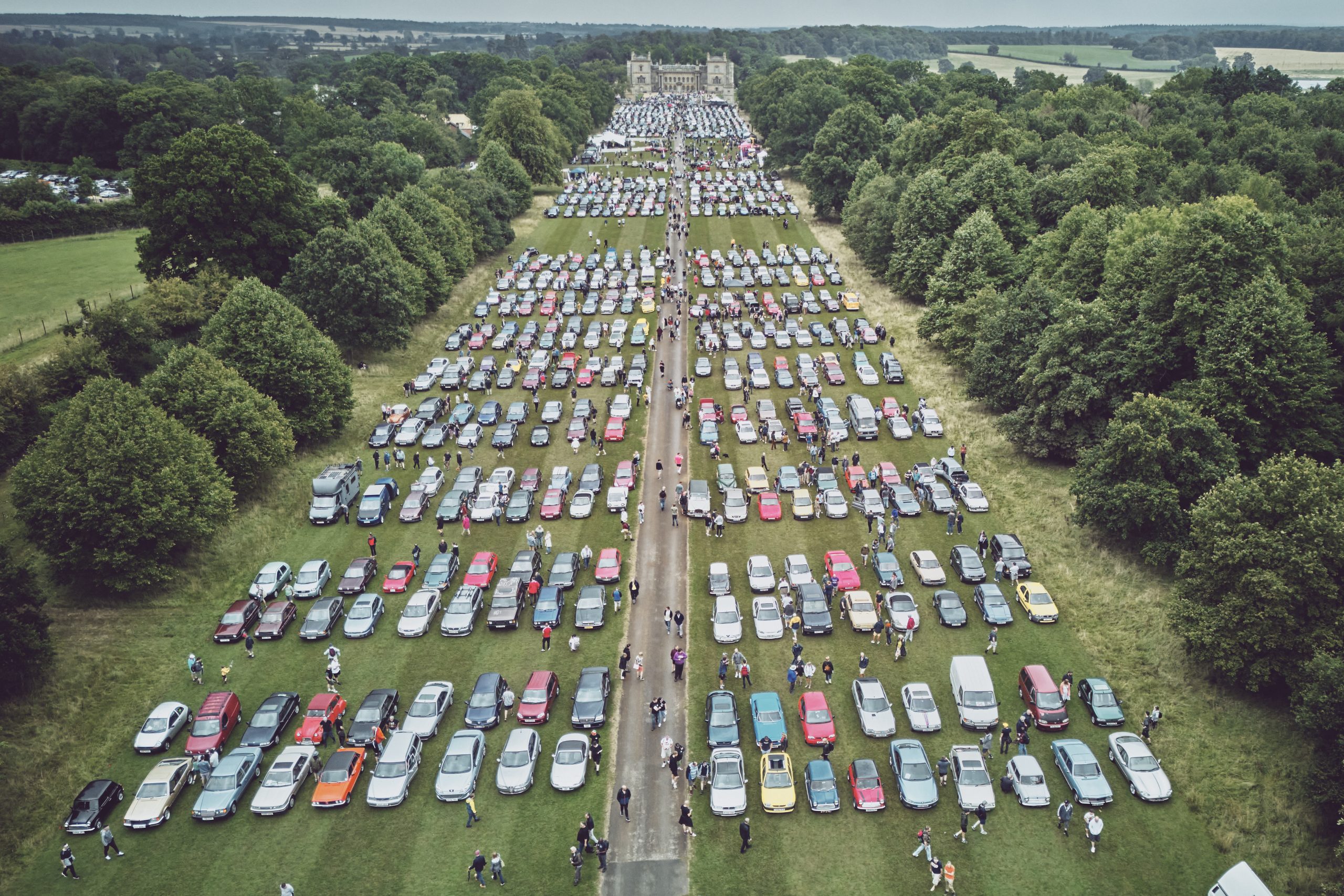
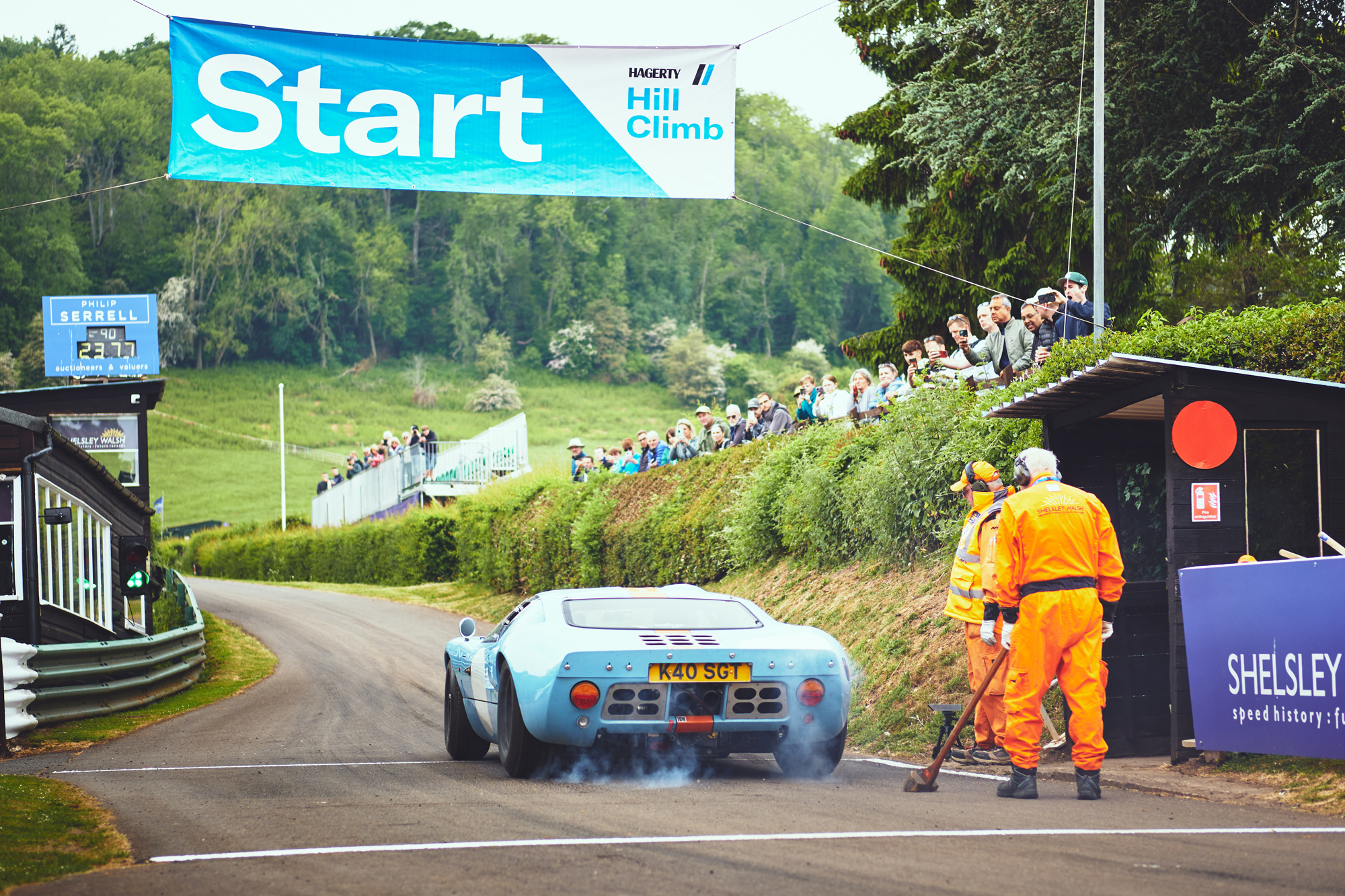
The Hagerty Hill Climb returns to Shelsley Walsh in 2026, taking place this year on May 9th. It’s become unsurprisingly popular, not just as a way to catch up with some pretty special machines navigating Britain’s oldest continuously-operating motorsport venue, but also as a way to give hill climbing a go yourself.
That’s right: buy a run-what-you-brung ticket (only £150, or £112.50 if you’re a Hagerty Driver’s Club member) and you can take your own car up the hill. As a non-competitive event, think of it a little like a trackday, with no pressure to go as fast as possible, but still an opportunity to put you and your car to the test.
It doesn’t really matter what you drive up the hill; in the past, we’ve had a classic Fiat 500 stuffed with four people, and a Hillman Minx, so speed is less of a priority than having fun. But a little speed doesn’t hurt, and if there’s one guarantee from the event, it’s that you’ll get the hill-climb bug and want to compete some more.
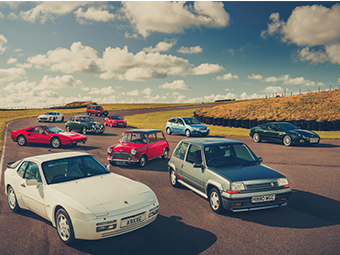
For some inspiration then, we’ve found seven cars, all available for under ten grand, if you’re looking to take the next step in your hill climbing journey. From budget hatches to proper sports cars and even a purpose-built hill climb racer, the cars below are probably your best route into the competitive – and addictive – world of hill climb motorsport.
R50/R53 MINI

If there’s a front-wheel drive equivalent to the Mazda MX-5, it’s probably the first generation “BMW MINI”, especially in early-2000s Cooper and Cooper S form. The Cooper (sometimes referred to by its R50 model code) and Cooper S (the R53) have one of the best front-wheel drive chassis of any car built this century, and they’re both abundant and affordable – shop around and you can find a Cooper for under a grand, and a Cooper S for around double that.
Affordability is only one aspect though. As mentioned, these MINIs handle great, with quick steering, plenty of feedback, minimal body roll even in standard form, and some nice rotation built into the suspension settings, making them almost as throttle-adjustable as the Peugeots elsewhere on this page, but less likely to bite. The driving position is great (nice and low, with well-spaced pedals) and when it comes to improving the car’s performance, there’s plenty of expertise in the MINI community to help make them faster and more reliable.
Seven Replica
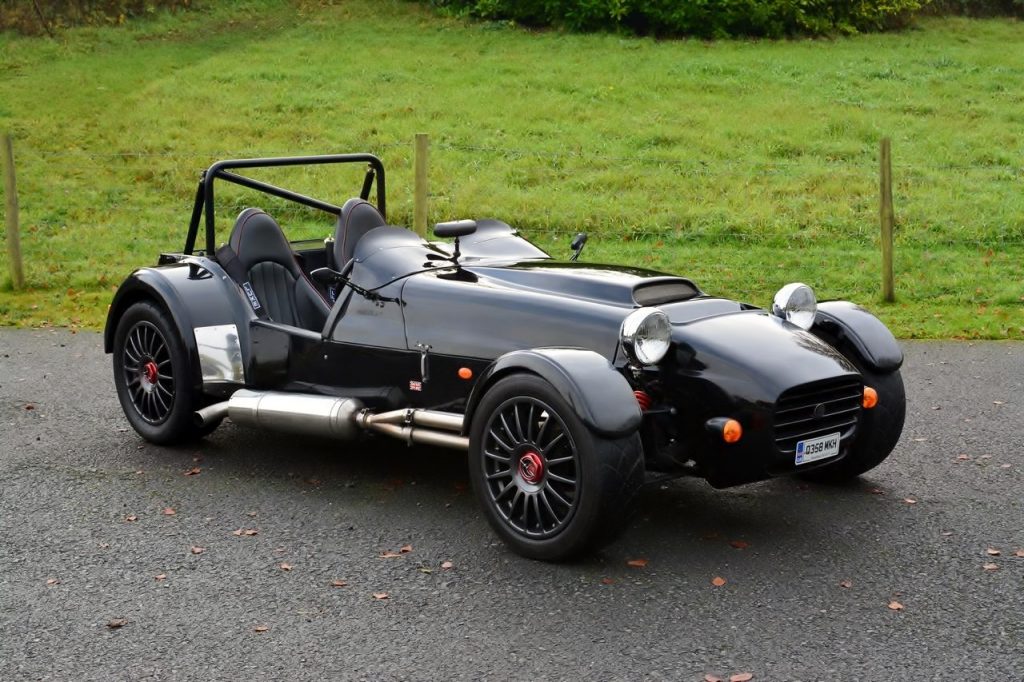
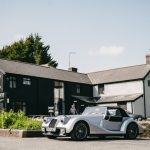
As far as a ready-to-compete road car goes, few are better than the Caterham Seven. The thing is, Sevens don’t really depreciate, so finding one on the right side of ten grand will be a pretty fruitless process. Thankfully, Caterham’s far from the only company to make… well, let’s just call it a slim, roofless sports car with semi-open wheels, since plenty of companies have done an unofficial “Seven” over the years.
One of the most popular, and appropriately-named, is the Locost. The design doesn’t have the elegance of the Seven and you’ll be buying someone else’s project, but it’s about as cheap as Seven-style cars get, as little as a few grand depending on the level of completion. Westfield, Tiger, Dax, and Robin Hood are all other brands to look for to find this kind of car, with a huge range of engines and power outputs, and indeed quality levels. The appeal is that they’re quick and nimble by design, and mechanically simple, making them easy to work on and modify. And finish off, if you’re looking at something half-built.
Mazda MX-5 (NC)
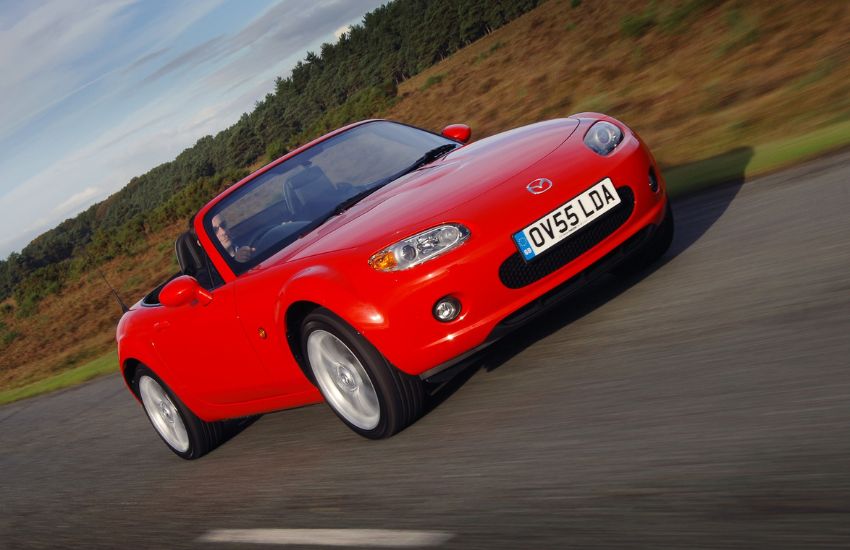
Stop us if you’ve seen this one before, but there’s a reason (beyond lack of imagination) that MX-5s crop up when talking about everything from “cheap summer cars” to “affordable hill climb machines”. Mazda sold boatloads of the things, so they’re plentiful, but the third, “NC” generation of the MX-5 is also currently hovering around the bottom of its depreciation curve, while its predecessors slowly creep up and its successor is still on its way down. That puts the NC in a useful spot: it’s about the cheapest way into a tidy MX-5, but it’s new enough to avoid some of the pitfalls of older cars.
It’s also a little better motivated than those earlier cars in standard form. 126bhp 1.8 and 158bhp 2-litre versions were available, and it’s the latter we’d prioritise – it’ll get you up the hill with more urgency than the 1.8, and it’ll be better suited for competitive events in the 2-litre class. The six-speed gearbox and limited-slip diff are welcome additions too, and the 2-litre still comes in under 1100kg. Plus, if you’re not jockey-sized, this third-generation MX-5 is still the best for accommodating larger drivers, particularly with an aftermarket bucket seat.
MG Midget/Austin-Healey Sprite
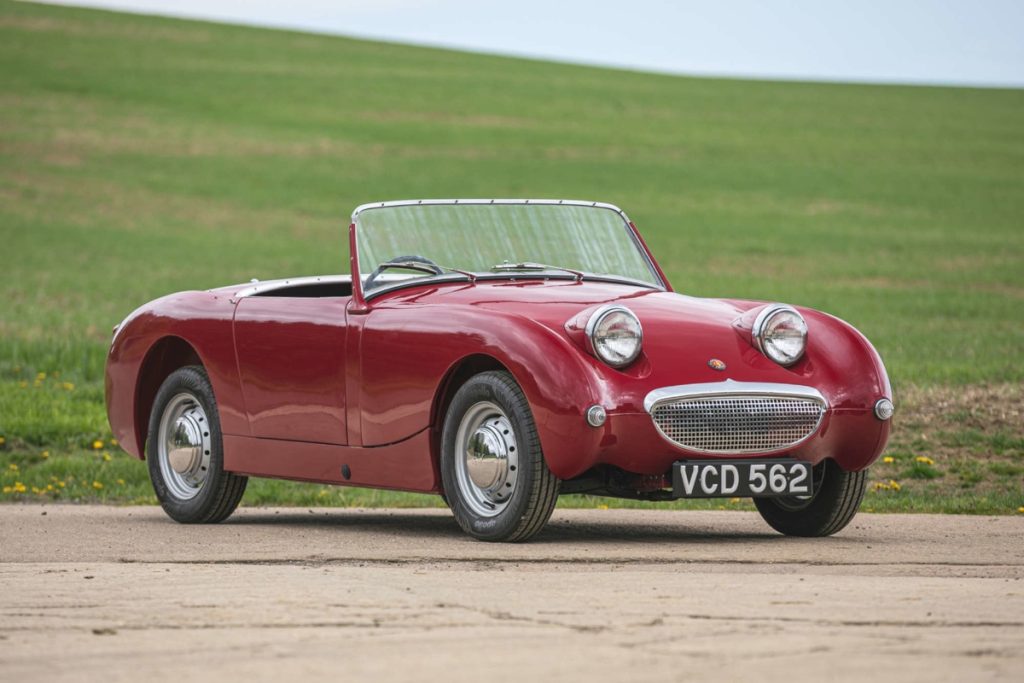
Old Midgets and Sprites are hugely popular classic grassroots motorsport options. They have almost all the characteristics you’d want in a sprint or hill climb machine: they’re lightweight, compact, responsive, packed with feedback, and pretty solid mechanically. What they aren’t is especially rapid in standard form whether you opt for the 1.1, 1.3, or 1.5 litre engine, though if you’re just wanting to have fun, or running to a smaller capacity class, that’s not such an issue anyway.
Basic road cars start at under five grand, and you’ll have a joyful little weekend car for that too, not just a racer. But their budget-friendliness means that with our full £10k in your back pocket, you may come across an already race-prepped car, with a cage, bucket seats, tuned engine and suspension, and maybe even an MSA logbook. It’ll give you that real 60s and 70s clubman racer feel when you drive to and from an event, too.
Peugeot GTI
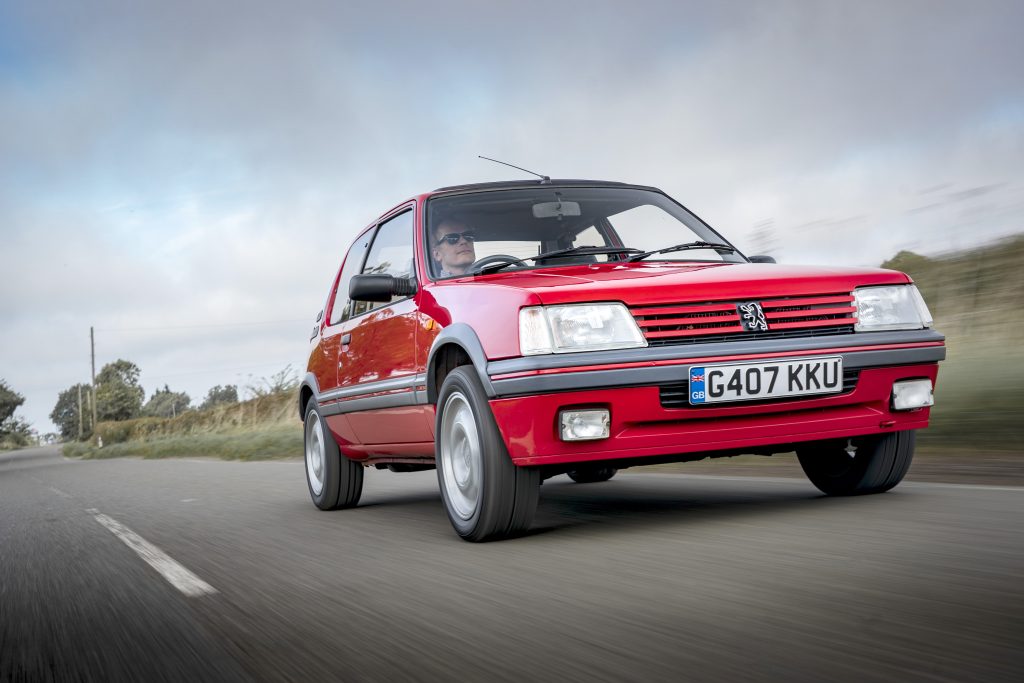
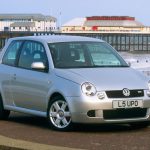
Note the missing number between “Peugeot” and “GTI” here. That’s deliberate, because our recommendation here is that really, any will do. Partly, it’ll be a matter of what you can find within our £10k budget. Clean 106s and 205s are now beyond that, but for some clubman motorsport, something pristine probably isn’t a priority, and you might even find a car already prepared for track days, racing, sprints, rallying, or hill climbs – probably a little rough around the edges, but enough to have fun with.
306 GTIs are probably the bargain among the 90s Peugeots right now, with either a 155bhp or 167bhp 2-litre engine (the latter with a six-speed gearbox, badged GTI-6) and the same excellent if edgy handling as the smaller cars. But the cheapest are the 206 GTIs, which came out in 1999 with 137bhp and can be found for under £2000. Later 2003-on GTI 180s (with 180bhp) aren’t much more expensive. All can be stirred along pretty quickly in the right hands, and there’s plenty of knowledge out there on how to really make them fly.
Renault Sport Clio 197

Just as the third-generation Mazda MX-5 offers the best bang per buck among roadsters, so the Clio 197 is probably the sweet spot for quick Renault hatchbacks right now. It’s still possible to get the earlier 172 and 182 a little cheaper, but most will have led a pretty hard life. With a starting point of around £5k the 2006-on Clio 197 – that’s right, these are now 20 years old – is a little more tightly-constructed and a fabulous fast hatch out of the box.
The third-generation Clio (and second generation to get a Renault Sport model) is a larger and heavier car than its predecessor, but the 197’s no heffalump even so. Renault claimed 1245kg in base form, with a 194bhp F4R 2-litre engine to pull it along. It’s also 129mm wider across the body, covering a 900mm wider track, great for keeping all four wheels in contact with the road, and the driver sits lower, putting you more in touch with the car. If your ability quickly outgrows its pace, there’s an excellent aftermarket around these quick Clios too.
OMS single-seater
If you’re just starting out it’s fair to assume you’re not going to be immediately aiming for the big leagues, but you might be surprised how affordably you can get into a purpose-built single-seater. OMS Racing has been around since 1985 and its cars have taken multiple championships, and are a common sight on the used market – at the time of writing, there are four OMS single-seaters on one of the popular racing car sales sites alone, with prices starting at only £6500.
Most are powered by 750cc or 1-litre motorcycle engines and even the older cars will likely have upgrades to keep them competitive – everything from newer engines to better dampers, later ECUs, and popular modern tech like flat-shifting and launch control. Naturally, if you go down the single-seater route you’ll need to trailer it to events, but the thrills and speed will be on another level from the more road-biased cars here.
Inspired? Find out more plus get your driver (or spectator) tickets for this year’s Hagerty Hill Climb.