Words: John Mayhead
Analysis: Richard Salmons
Photography: Hagerty UK
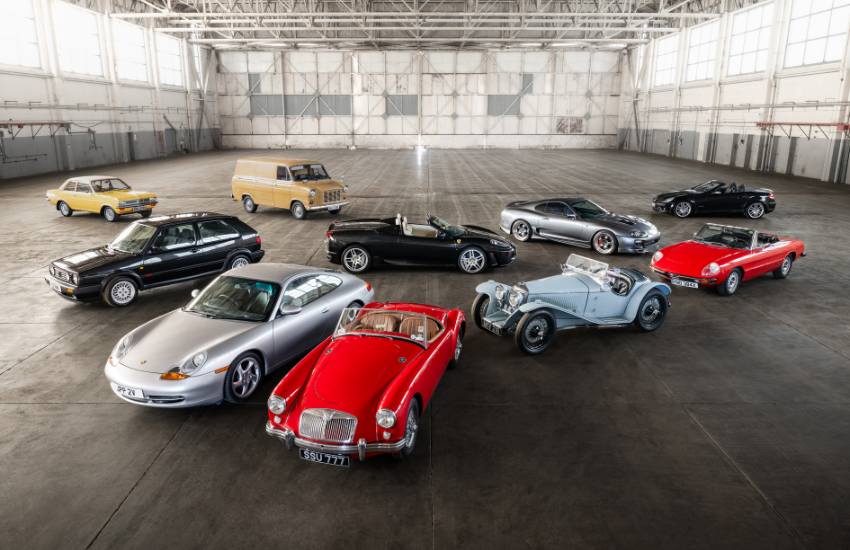
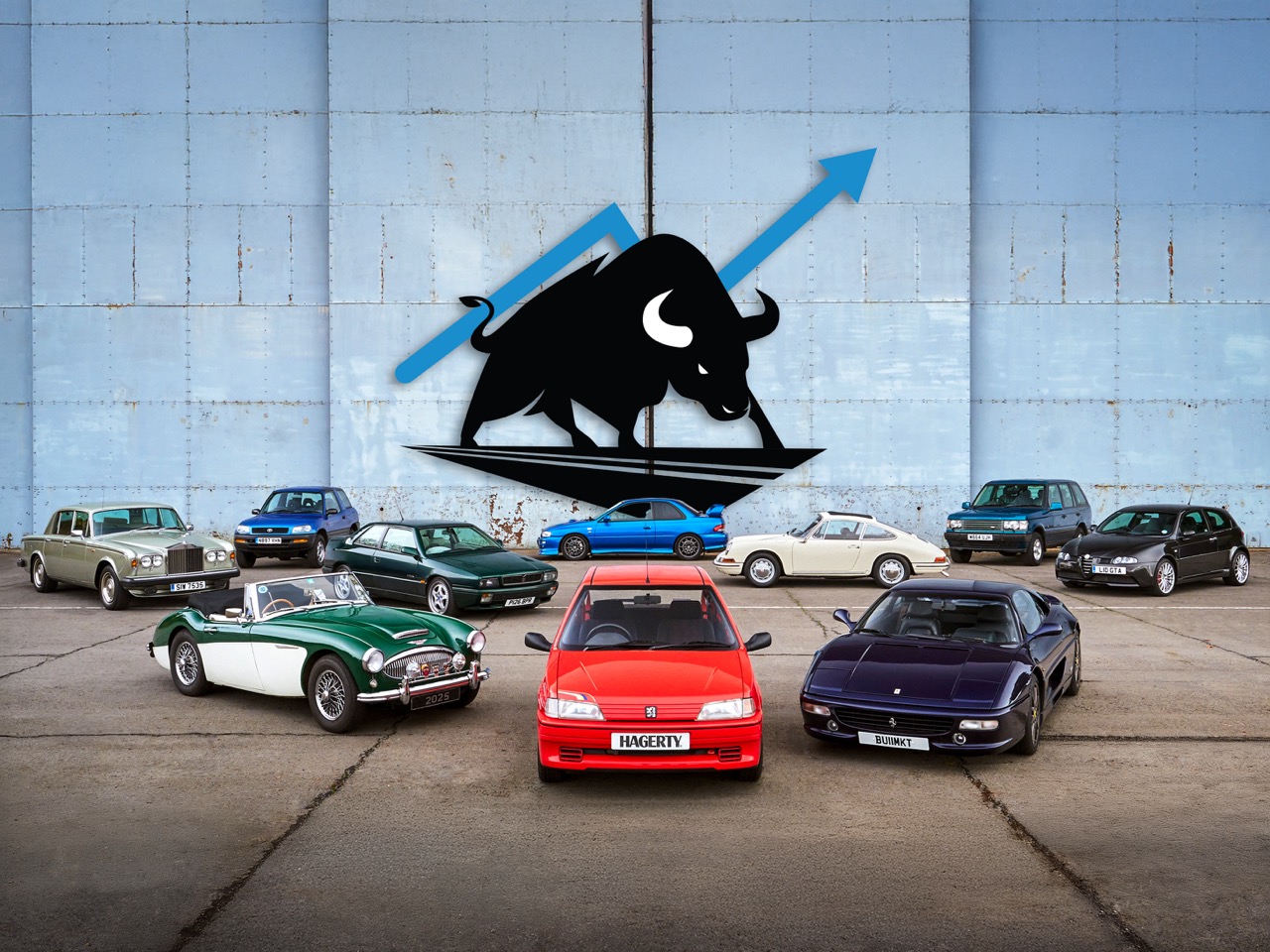
Each year, the Hagerty Automotive Intelligence teams on each side of the Atlantic select ten cars that they believe are great buys. The whole weight of Hagerty’s data analysis operation sorts through Hagerty Price Guide records, sales data, auction results, demographic changes and shipping records to see what’s hot, what’s not, and what could next on the horizon as a future classic.
This, the UK Hagerty Bull Market list for 2026, is the result. These cars aren’t those that necessarily will soar in value, but those Hagerty considers offering the best combination of value for money and driveability. The team has selected a range of cars representative of those that Hagerty supports through insurance and events, from the everyday Festival of the Unexceptional cars through to modern classics and hatchbacks more suited to Hagerty’s RADwood, from potential hillclimb cars through to Gold Index supercars.
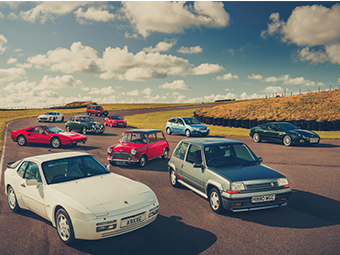
New for this year is our Collectability Index score. This ranks the collectability ranking of every car in the Hagerty Price Guide based on over 20 factors, all weighted, that span everything from ownership ages and auction saleability to engine size and numbers built. We believe it indicates better than any other system just how potentially collectable a car is at any one time. All values and data is correct as at 11 January 2026.
2026 Bull Market List: Behind the Scenes
Discover the 2026 Bull Market List
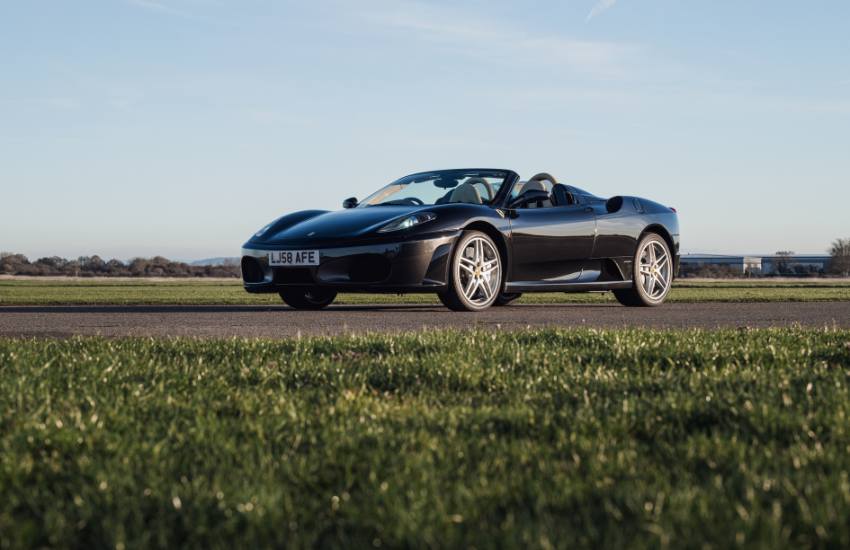
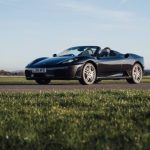
Ferrari F430
Value now (Spider): £95,400
5-year price difference: +19%
Collectability Percentile: 74.4
Hagerty’s Gold Index has performed well since Covid, with its top performance cars generally rising in value over the period. The Ferrari F430 is no exception: this model has gained nearly a fifth in the past five years.
Hagerty still considers it good value. The F430 was a step up from its Ferrari 360 predecessor both in terms of powertrain and design, and the new 4.3-litre F136 V8 engine set the standard for future models. The bodywork, created by Frank Stephenson and Pininfarina, took visual styling cues from many previous iconic Ferraris and was well considered on launch. Today, compared to its 458 successor, it is good value with ‘excellent’ examples with low mileage, manual gearboxes and great spec available for around £95,000 and higher mileage cars with F1 ‘boxes much less. 65 percent of Hagerty owners are Gen X or Millennials, a relatively young demographic for a car of this value, and the Collectability Algorithm score of the 74th percentile means it is likely to be a car that is prized in the future.
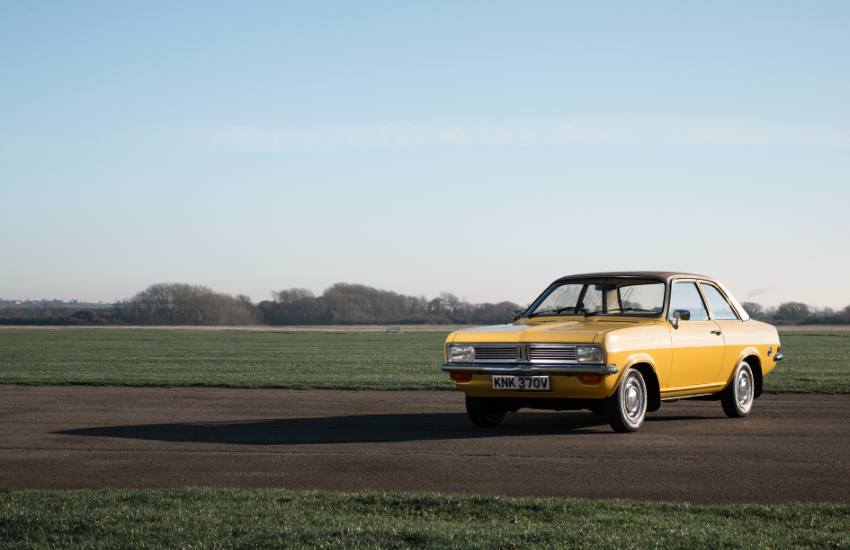
Vauxhall Viva HC
Value now (4-door 1300): £4300
5-year price difference: -23.2%
Collectability Percentile: 1.8
The Vauxhall Viva HC is the epitome of a Hagerty Festival of the Unexceptional star car: nearly 650,000 examples of this once ubiquitous model were made at Luton and Ellesmere Port between 1971 and 1979, but it is now very rare to find and is often overlooked by all but the most dedicated enthusiasts.
That’s a huge shame, as the Viva has a lot going for it. Notoriously robust for the time, both mechanically and in the bodywork department, the car’s simplicity makes it relatively easy for an enthusiast to maintain. Plus, compared with its flashy siblings the Firenza and Magnum, the Viva is great value for money, especially as prices have dropped over the past few years. Baby Boomers still dominate ownership, with over half those insured by Hagerty in the UK falling into this category, but Gen X aren’t far behind with 34.8 percent.
The outlook for the Viva HC is fair; this is never a car that will make you rich, but as a usable, excellent value British classic that will make you stand out from the crowd, it is hard to beat.
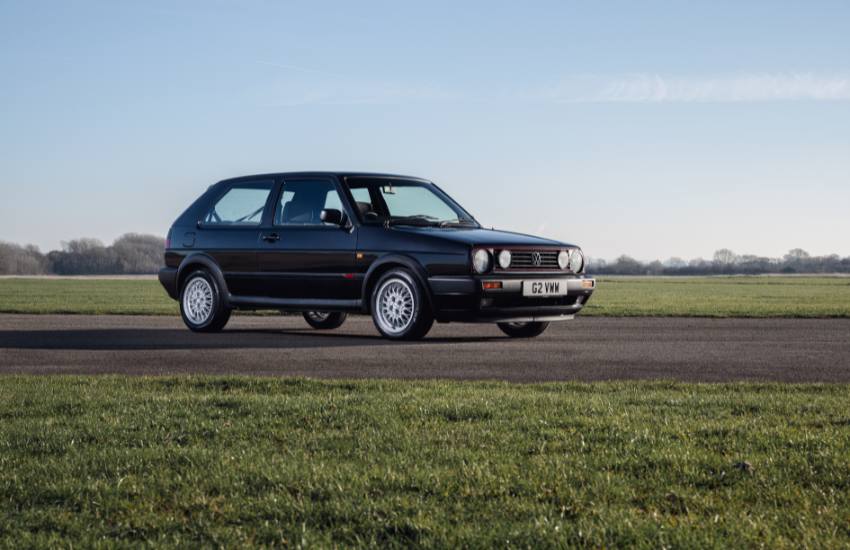
Volkswagen Golf GTI Mk II
Value now (Mk 2 8V): £15,300
5-year price difference: -1.9%
Collectability Percentile: 66.1
Hagerty’s Hot Hatchback Index has shown this segment of the market to be one of the top-performers of the past few years, and there’s been a marked increase again in the past 12 months. High-performance classic hatchbacks offer a combination of spirited driving experience and modern classic styling that is currently all the rage, and the Volkswagen Golf GTI remains one of the most loved of the genre.
That’s for good reason. The Mk 2 GTI retained the Bosch K-Jetronic fuel-injected 1891cc engine from the late Mk 1, but gained a larger modernised body, improved handling and, in 1986, a 16-valve engine that pushed out 139bhp. The interior was updated, too, with more ergonomic seats, new steering wheel and modernised dashboard. The result is a car that feels way beyond its time: still extremely fun, quick and very nimble.
Plus, the Mk 2 is great value for money compared with the early Mk 1: the current ‘excellent’ price of the Mk 1 Golf GTI 1600 is £21,500, up nearly a quarter since 2020, whereas the Mk 2 has remained relatively flat at £15,300 (8v) and £16,600 (16v).Demographic analysis shows that the Golf GTI has the youngest owners of any car in this year’s Bull Market list, with a huge 92 percent of owners born since 1965 and a strong Millennial and Gen Z following. According to Hagerty’s Collectability Algorithm, the Mk 2 scores ten points higher than its predecessor, too. Those numbers bode very well for the future.
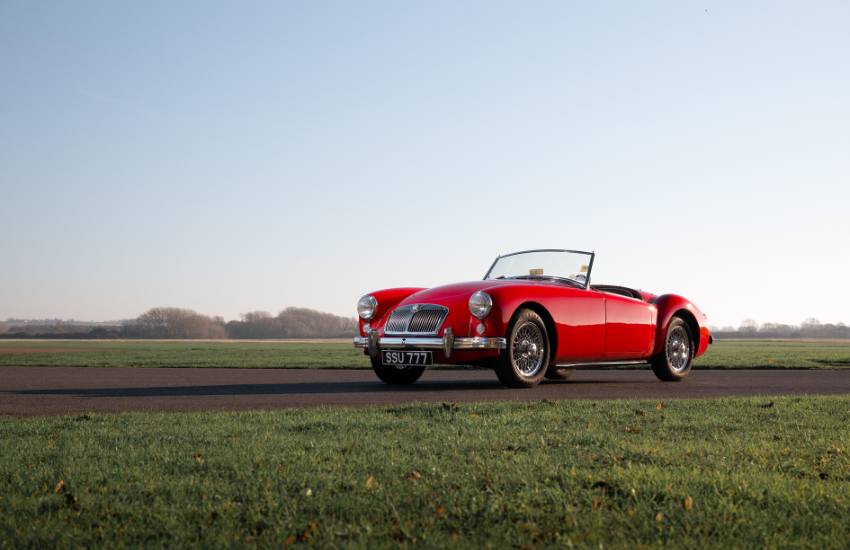
MG MGA
Value now (1600 Coupe): £25,700
5-year price difference: -10.7%
Collectability Percentile: 27.1
Like many British sports cars of the 1950s and ’60s, values of the MGA have slipped back over recent years and they’re still a favourite of the older generations: 65 percent of Hagerty’s worldwide owners were born before 1965.
The model though has a lot going for it: a race-derived design means simplicity of construction and engaging (for the time) driving performance plus there are numerous parts suppliers and upgrades available. These are cars that are as suitable for a summer jaunt down the pub as they are a longer-distance road trip, as our own Charlotte Vowden can attest, having driven hers to the north of Norway.
We’ve selected the 1600 as the sweet spot between the early 1500 and the more expensive Twin Cam and Deluxe models and our Collectability Algorithm agrees, placing it in a healthy 27th percentile.
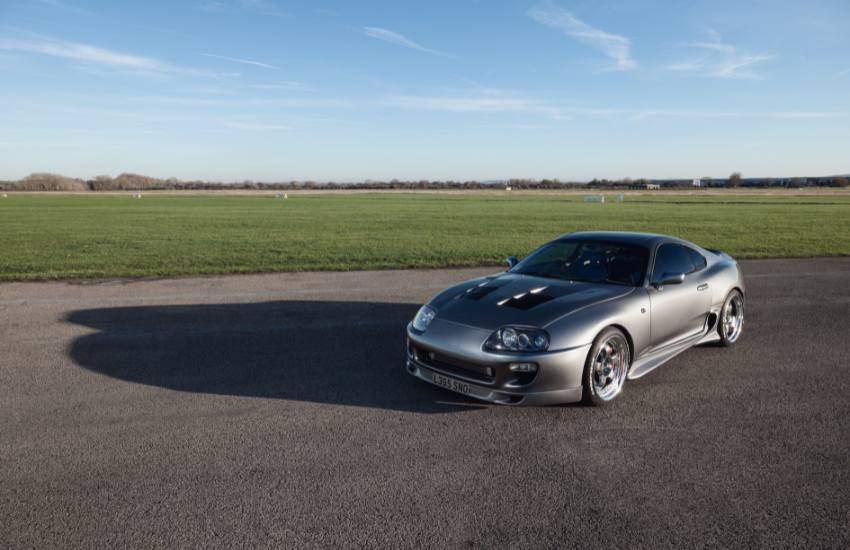
Toyota Supra A80
Value now: £40,000
5-year price difference: +41.8%
Collectability Percentile: 84
Released in 1993, the A80 was the fourth generation of the Supra and arguably the one that made the name of this Japanese performance coupe. It has so much going for it: sold, especially in the UK, in very small numbers, the car is the digital poster car of a generation who lusted after it on Gran Turismo and Forza and watched as it featured as the hero car driven by Brian O’Conner (Paul Walker) in The Fast and the Furious movie. That movie car, modified by The Shark Shop in California and painted in Candy Orange, sold back in 2021 for $550,000, prompting a sharp rise in prices, although values peaked in mid-2023 and have been relatively flat since.
Hagerty believes that the A80 Supra is a good pick for a number of reasons. Firstly, they still seem to offer good value for money compared with their two period competitors, the Honda NSX Type-R and the Nissan GT-R (R33). Secondly, the ownership demographic is very young, with 64 percent born since 1981, often the sign that cars will continue to grow in value as those owners reach peak earning potential. Rarity, and the fact that the UK variant was the most powerful made (326 bhp), mean that UK cars are already being sourced for US buyers, despite being right-hand drive; the A80 Supra is currently the 5th most imported classic car into the US, with 15 percent of those coming from the UK in the past five years, second only to Japan. All that plus racing history means that the Supra is very highly ranked by Hagerty’s Collectability Algorithm.
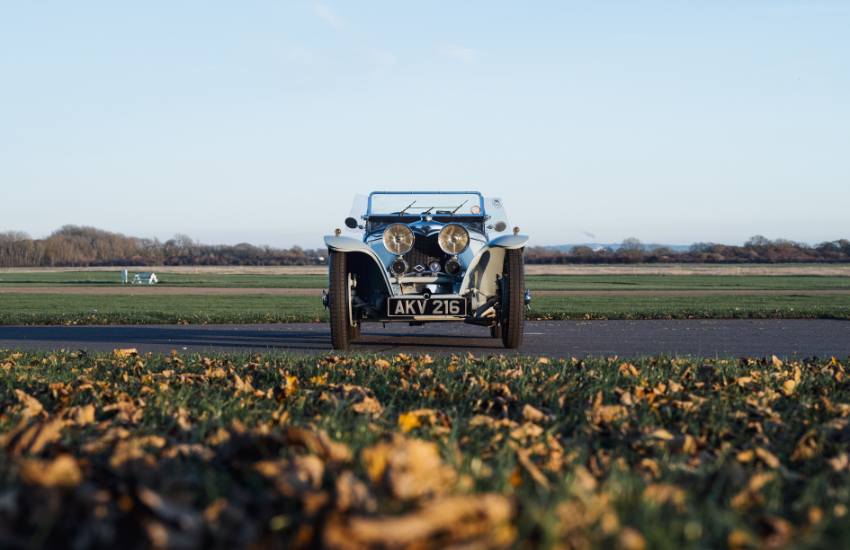
Riley Nine Imp
Value now: £60,100
5-year price difference: -20%
Collectability Percentile: 56.5
Values of pre-war cars have dropped significantly in recent years, and the Riley Nine is no exception, with Hagerty’s ‘excellent’ price for the sporting Imp model having dropped a fifth over the past five years. Naysayers will tell you that vintage cars are difficult to drive, the steering and brakes are indistinct, and that they’re the preserve of the older generations.
In my opinion, none of that is true. Pre-selector and crash gearboxes take a little getting used to, as do cable-operated drum brakes, but the satisfaction of that ‘snick’ when you successfully drop it into gear is hard to beat, and the experience of driving one at any speed over fifty miles-per-hour is utterly exhilarating, especially in an open-top two-seater like the Riley Nine Imp. Fitted with a 1087cc straight four engine, it was almost lightweight version of Riley’s MPH, the car that had taken the race to MG at various race and road circuits.
It is true that the Imp has a fair number of older owners – 76 percent were born before 1965 – but it also has a strong 20 percent of Gen X owners, and a glance at any VSCC meeting or in the Shelsley Walsh paddock at the Hagerty Hill Climb will show that these cars are still being driven hard by their owners. Cars like the Imp offer the sweet spot between a tourer that can be used at weekends or in the summer, and an out-and-out sports car for use on track. Prices are now at the level that one that has been very well maintained by one of the very best restoration companies will probably offer great value for money.
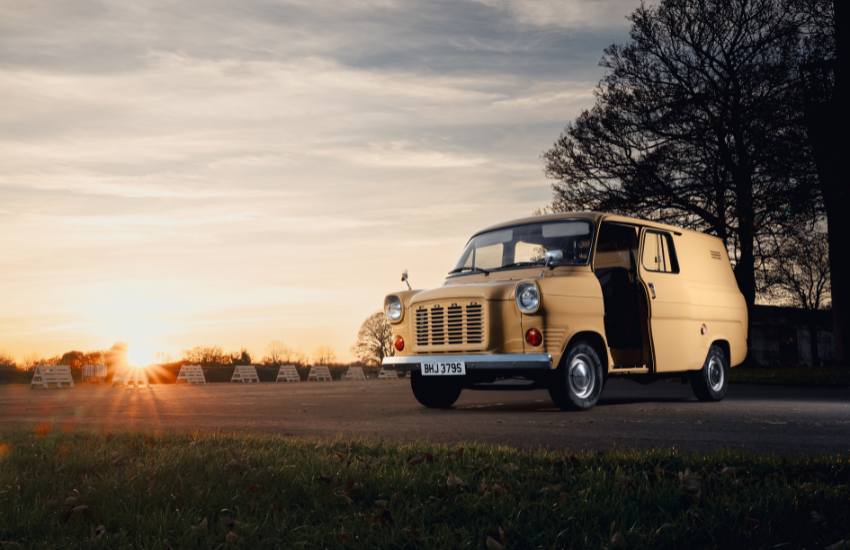
Ford Transit Mk 1
Value now (2-litre petrol): £17,200
5-year price difference: +6.2%
Collectability Percentile: 47.2
Two small commercials have dominated British roads like no other vehicles over the past 60 years: the Volkswagen Type 2 and the Ford Transit, but while VW generally stuck with small, efficient engines, Ford went for grunt, almost straight from the off. At launch in 1965, a 1.8-litre diesel was offered (uprated to 2.4-litre in 1972) plus three petrol engines: 1.7, 2.0 and the jewel in the crown: a 3.0-litre V6. The latter, generating a very healthy 138bhp, was intended for specialist applications like Police vans, but found favour with criminals; in 1972, urban legend has it that 95 percent of all bank jobs in London were carried out using Transits. Today, these V6 editions with their elongated ‘pig snout’ noses are highly collectable, but Hagerty has selected the 2.0 petrol as our one to watch: a van that combines healthy performance (93bhp) with a relatively strong Collectability Algorithm score, and with a price that is more attainable. Vans tend to hold their price well, pickups slightly less so, but any survivors are rare, and there have been some recent strong asking prices that could nudge the market upwards. As ever with British-built Fords, the Transit has a very strong and passionate following of enthusiasts, good news for anyone wanting to maintain one. Hagerty feels that the Mk 1 Transit has room to increase in value.
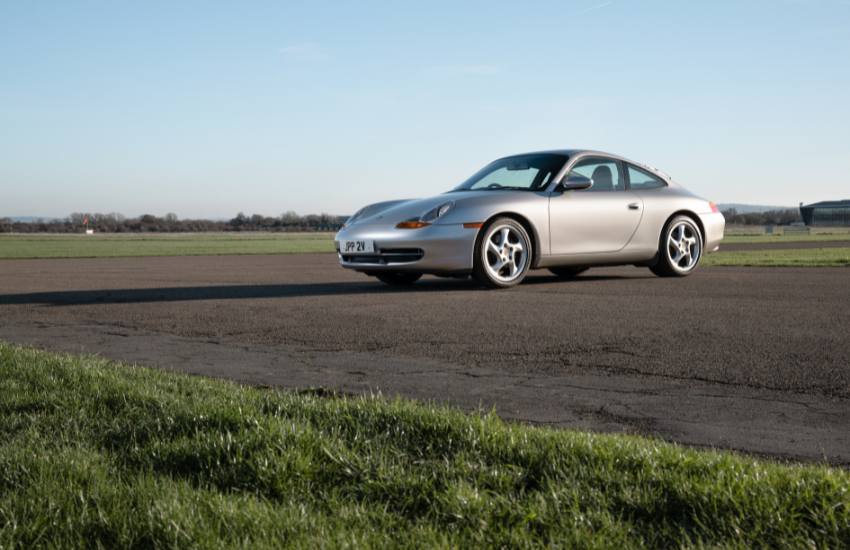
Porsche 911 (996)
Value now (C2 3.4 coupe): £17,800
5-year price difference: -2.2%
Collectability Percentile: 88.3
The 996 variant of the Porsche 911 has always generated controversy as the first water-cooled model, the car with the ‘fried egg’ headlamps and an early (and slightly unfair) notoriety for various spectacular engine failures due to poor castings, weak intermediate shaft (IMS) bearings, bore scoring and fragile coolant pipes.
But time has been kind to the 996. Although few love the headlamps, they’re maybe not perceived as being as offensive as many first thought plus, in the modern era of huge 991/992 models, the 996’s profile is elegant and classic. Also, as even the youngest of them has reached 20 years old, most of the mechanical build quality issues will probably have already been addressed.
What’s left is a really good sports car. It sounds great, even the base Carrera models have around 300bph on tap, and the interior, although a bit dated by today’s standards, is still a comfortable place to be and upgrades like the Porsche Classic Communication Management system (PCCM) bring the entertainment and phone system right up to date. Most importantly, the 996 is excellent value for money compared with any other 911. We’ve chosen the early 3.4-litre Carrera 2 this year, as prices start in the low-teens and even for an excellent one, you’d be hard pressed to pay more than £25,000. For that, you get a car with such a pedigree that Hagerty’s Collectability Algorithm scores higher than any other car in this year’s Bull Market list, including the Ferrari. As ever with Porsche, make sure you buy the highest spec you can find, a car that has been meticulously maintained by the right people, and one with relatively low mileage and matching numbers.
Find out what it’s really like to own one a Porsche 911 (996) as we chat to the owner of this car.
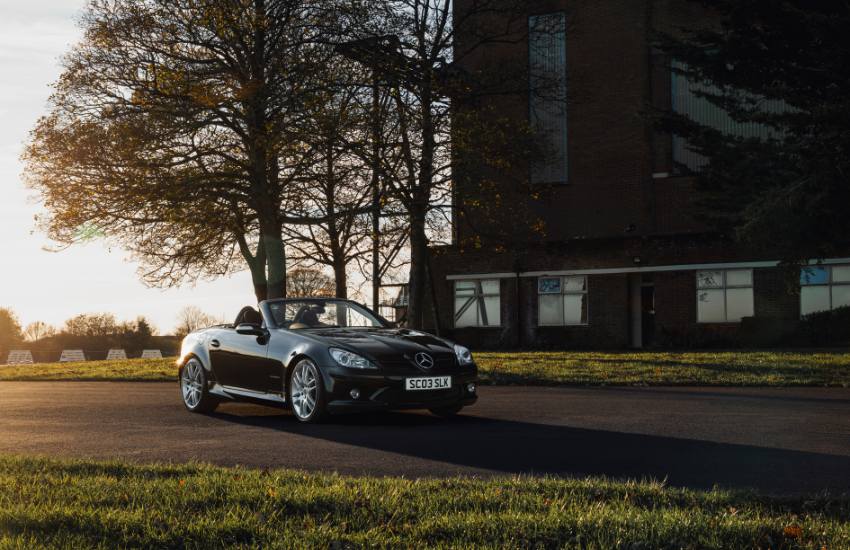
Mercedes-Benz SLK (R171)
Value now (200 Kompressor): £5200
5-year price difference: 0%
Collectability Percentile: 39
There’s a saying in the industry that every convertible Mercedes-Benz eventually becomes collectable. That badge on the front, combined with the company’s joint obsessions with performance and built quality, eventually shine through however low prices dip.
And prices have dipped for the R171 edition of the Mercedes-Benz SLK, built between 2004 and 2011; it’s currently in that difficult period between used car and classic, when there are still a lot of them on the road, but they haven’t quite reached the point of people investing time and money in preserving them. That means they are excellent value – a supercharged Mercedes-Benz cabriolet with a retractable hard top, sporty performance even in the entry-level 200 Kompressor model and typically comfortable interior seems an absolute steal at the prices they are currently available for: even the latest, low-mileage, high-spec examples of this model top out at around £10,000 and Hagerty’s ‘excellent’ value is around half this. Even the high-performance SLK 55 AMG version with a 5.5-litre 350bhp V8 is roughly double the price of the 200, a huge amount of car for the price.
The trade seems to agree: auction sell-through rates have been 95 percent in 2025, the highest of any 2026 Bull Market car. Plus, we’ve already tracked the rise of prices for the high-performance SLK 55 AMG version. One to watch? Hagerty is convinced.
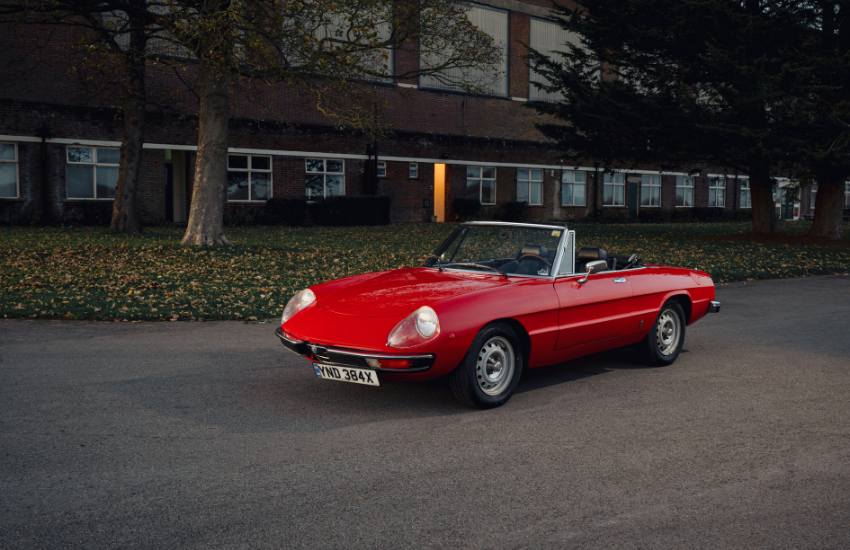
Alfa Romeo Spider
Value now (2000 Veloce): £21,200
5-year price difference: -8.6%
Collectability Percentile: 38.2
The 105 (later 115) series Alfa Romeo Spider was, for years, one of the most affordable Pininfarina-bodied Italian convertibles on the market and was fun, too: servo-assisted disc brakes all round, independent suspension, a five-speed gearbox and Alfa’s spirited twin-cam Nord engine made it a lot of car for the money.
Then, around fifteen years ago, the collectors stepped in. The early round-tail cars, the 1600 ‘Duetto’ and 1750 were the first to rise in price and in the two years from 2015 to 2017, the ‘excellent’ value of these cars soared by 44 percent. The square, ‘Kammtail’ versions then followed: first the 1970s chrome-bumpered 2000 Veloce, then the 1990s Series 4, then finally the once-unloved 1980s Series 3, with their prominent rubber bumpers. In the last few years, prices have settled and as inflation has ticked upwards, now these cars look like great value again.
The Alfa Spider has always had an element of mystique to it – you’d expect drivers to be wearing sunglasses rather than a flat cap – but it is practical too, with a huge boot, very simple soft-top and parts interchangeable across the range. In recent years, upgrades have been available for everything from the headlamps to the exhaust pipe and the UK is dotted with specialists able to keep them on the road. Hagerty believes the 1970s 2000 Veloce is now a great buy, with an ‘excellent’ condition price of £21,200. That will get you a car that has no rust issues, probably a relatively recent engine rebuild and taut suspension. The 2000 Veloce combines the iconic spitting twin carburettors that gives the engine its distinctive note with a usable, comfortable interior, bigger tyres and a larger boot than the earlier roundtail models. For me, it represents the sweet spot between classic styling and practicality; this is a car you could happily drive to the south of France in. Prices are unlikely to soar, but at their current level they offer excellent value.
Do you own any of the cars on the 2026 Bull Market List? Would you recommend them as great buys for 2026? We’d love to hear from you below!
Classic car insurance from Hagerty UK
Keep your classic on the road with expert classic car insurance built by car lovers, for car lovers. Rated ‘Excellent’ on TrustPilot.





I was totally unaware of the Hagerty information that was available. I will look forward to any information available about classic cars
Hi. That is my Alfa Spider in your pictures. I have owned it for 10 years and had enormous fun, including the North Coast 500 and European road trip adventures with my wife. It is such a robust and engaging car, also able to comfortably keep pace with modern traffic. And – everyone is so nice to you when your drive a Spider!
It is time for it to find a new home, I hope with someone who will use and enjoy it as we have.
Thanks, Alex! It is a great car and brought back so many memories when I drove it!
I own three cars on this list – an MGA, an Alfa Spider and a Porsche 996. All are hugely enjoyable to own and drive, and I’d agree with Hagerty on the Alfa and the 996 as great value, usable classics. The MGA, for me, is more about charm and enjoyment than bull market potential, but that doesn’t stop it being a fantastic car to live with. Always good to see lists that focus on driving as much as collectability.
Great job John on Sunday and lovely to get a chance to chat at the Scramble. Lovely to have my MGA on display and share stories with fellow petrol heads. Just one question I meant to ask; why did you select the Coupe rather than the Roadster? I would assume there are more roadsters out there, which may answer my own question and the fact they are rarer?